
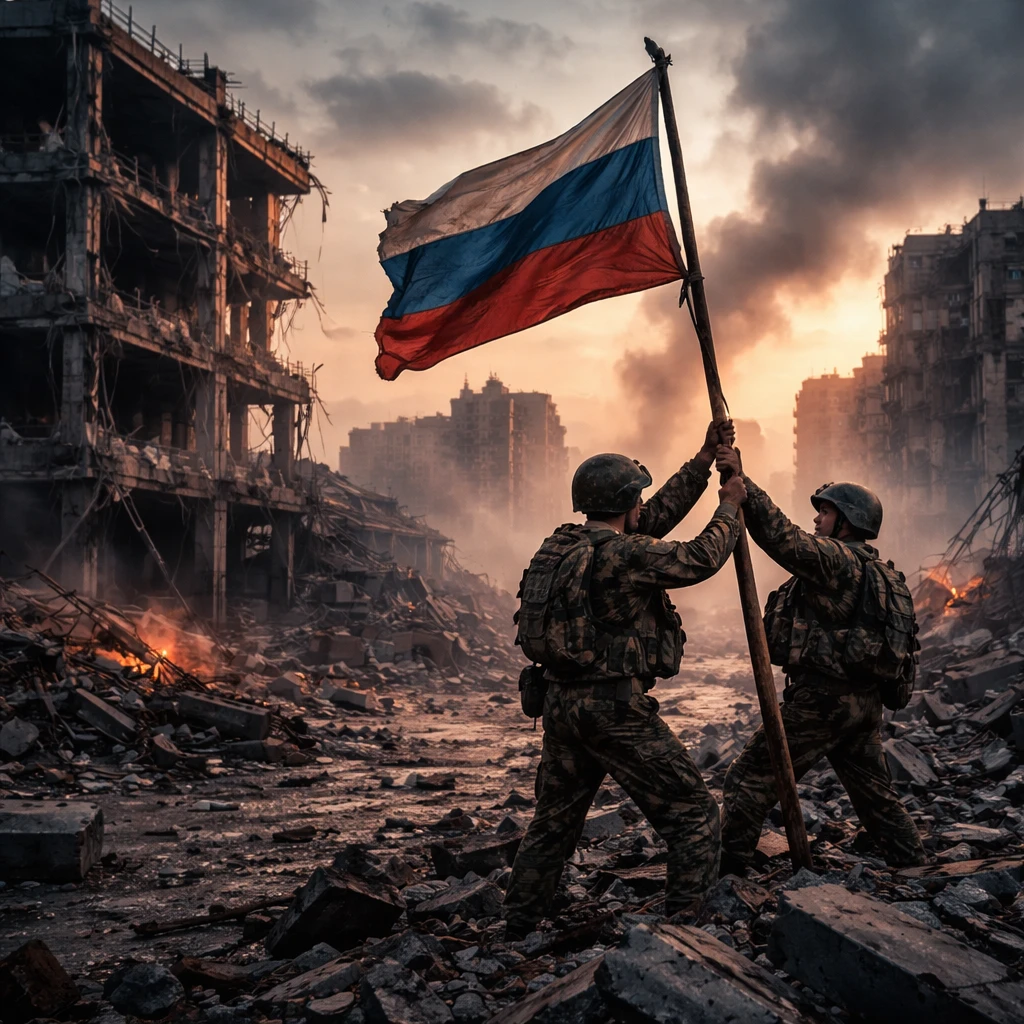
Russian military commanders declared on Friday that their troops have taken full control of Kostiantynivka, a strategically significant urban center in eastern Ukraine. The announcement, delivered by General Valery Gerasimov, chief of Russia's General Staff, during a visit to a military command post by President Vladimir Putin, signals an intensification of Moscow's offensive operations in the Donetsk region. Gerasimov described Kostiantynivka as a major defensive stronghold within a larger fortified network that includes the cities of Sloviansk and Kramatorsk. These urban nodes have historically served as critical barriers, slowing Russian advances and preserving Ukrainian territorial control throughout the conflict.
During his briefing to President Putin, Gerasimov stated that Russia's southern group of forces is continuing its push to secure the entire Donetsk region. The Russian Defense Ministry subsequently released video footage and photographs via Telegram, purportedly showing Russian soldiers raising national flags at multiple locations across Kostiantynivka. The images depict a heavily damaged cityscape, consistent with prolonged artillery and infantry engagements. While Russian officials had previously asserted partial control over certain areas of the city, Friday's declaration represents the first formal claim of complete military occupation.
Ukrainian military authorities have not yet responded to the Russian announcement. Independent verification of the claim remains unfeasible, given the operational environment and restricted access to the region. Kostiantynivka has maintained a pivotal role in Ukraine's eastern defenses since the commencement of Russia's full-scale invasion in 2022. Its proximity to Sloviansk and Kramatorsk creates a contiguous defensive perimeter that has impeded Russian consolidation efforts. The broader Donetsk region, which Moscow declared as part of its territory in 2022, remains the focal point of sustained combat. Russian forces continue to target remaining Ukrainian-held municipalities, with the outcome of these engagements directly influencing the strategic balance in eastern Ukraine.
The economic ramifications of such territorial shifts extend into defense manufacturing, logistics, and commodity markets. Military contractors operating in the defense sector face fluctuating demand as ammunition consumption rates and equipment replacement cycles adapt to frontline conditions. Industrial firms supplying steel, construction materials, and heavy machinery for reconstruction or fortification efforts monitor these developments for shifts in regional stability. Energy markets, particularly those tied to Eastern European infrastructure, remain vulnerable to disruptions caused by extended ground campaigns. Investors in defense equities, such as Rheinmetall AG, BAES, NOC, LMT, and RTX, track these announcements as indicators of sustained military expenditure and procurement priorities. Volatility in defense stocks often correlates with major battlefield developments, as capital allocation strategies adjust to perceived changes in conflict duration and intensity. Furthermore, broader macroeconomic indicators, including defense budget allocations and sovereign risk premiums, remain sensitive to territorial control changes in active combat zones.
Risks surrounding the verification of military claims and the potential for rapid tactical reversals persist. The absence of independent confirmation introduces uncertainty regarding the actual extent of control and the operational readiness of forces in the area. Supply chain disruptions, particularly for defense contractors and industrial suppliers, may intensify if combat operations extend into adjacent urban centers. Market participants continue to weigh these uncertainties against long-term strategic positioning, recognizing that short-term territorial gains do not necessarily translate into enduring stability or reduced conflict duration. The defense sector, in particular, faces ongoing evaluation of demand sustainability, as military spending cycles and procurement timelines adapt to evolving battlefield realities. Investors must remain cautious, as unverified claims and shifting frontlines can trigger abrupt repricing in defense-related equities and related commodity futures.