
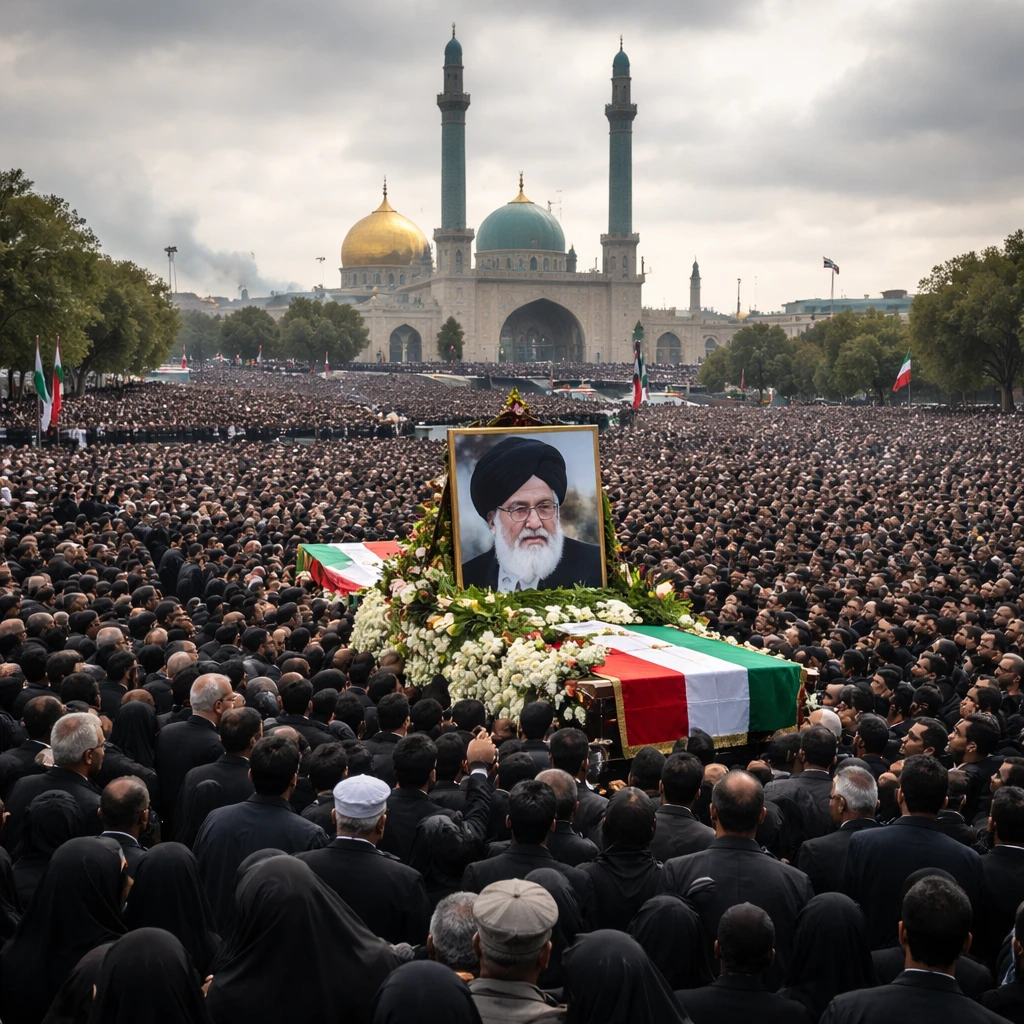
Iran commenced the first day of funeral proceedings for former Supreme Leader Ali Khamenei on Friday, marking a significant moment as the nation grapples with the aftermath of a joint U.S.-Israeli military campaign that resulted in his death earlier this year. The ceremonial period is scheduled to extend through July 9, with officials anticipating the arrival of millions of mourners in the capital. These events unfold while regional tensions remain significantly elevated, despite the existence of a ceasefire agreement between Iran and Israel. Global markets and diplomatic observers are simultaneously focusing intently on the security conditions within the Strait of Hormuz, a waterway of critical importance to global energy supplies.
International representation at the opening ceremonies in Tehran has been notable, with delegations arriving from Russia, Pakistan, Iraq, Türkiye, Saudi Arabia, Qatar, and Egypt. These attendances highlight the complex diplomatic landscape following the recent conflict. Concurrently, Iranian officials have signaled a firm commitment to addressing the military actions taken against them through formal channels. President Masoud Pezeshkian stated that the country intends to utilize international institutions to challenge what Tehran characterizes as unlawful military operations, pledging to pursue both legal and diplomatic remedies.
Security concerns regarding commercial navigation continue to weigh on market dynamics. British Prime Minister Keir Starmer and French President Emmanuel Macron have issued a joint declaration describing the Strait of Hormuz as a vital artery for the global economy. The two leaders pledged their support for initiatives aimed at restoring safe navigation through the waterway. In a practical step to facilitate this, France has deployed mine-clearing assets to the region. These measures coincide with a gradual resumption of commercial shipping activity, although the broader security environment remains uncertain.
Market participants continue to monitor the Strait of Hormuz closely, as the passage handles approximately one-fifth of global oil shipments. While shipping activity has shown signs of improvement since the ceasefire last month, analysts caution that risks to this essential energy corridor remain elevated. The Brent Oil price currently stands at 72.12 USD, reflecting a modest increase of 0.32 or 0.45%, with trading data indicating a closed session.
Hostilities have not been confined to the direct Iran-Israel front. Israel reported conducting strikes on approximately 10 Hezbollah infrastructure sites in southern Lebanon, indicating that military operations continue in other theaters despite the broader ceasefire. Additionally, Yemen’s Iran-backed Houthi movement has issued threats targeting Saudi airports and critical infrastructure. These threats are conditional, stating that Saudi Arabia will face retaliation if it violates Yemeni airspace or launches further military action. The persistence of these multi-front developments underscores the fragile nature of the current security arrangement.