
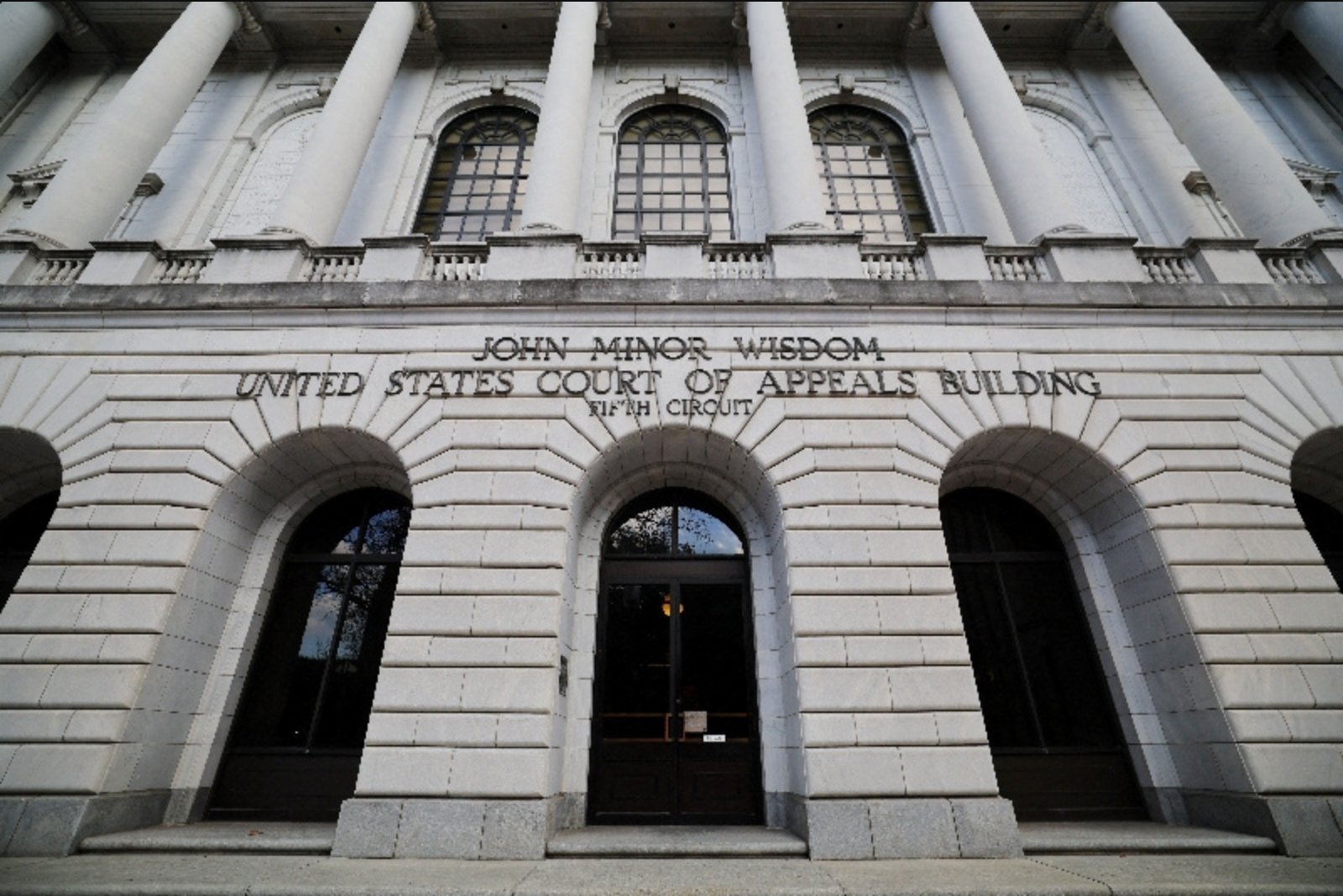
The U.S. Supreme Court temporarily blocked a New Orleans-based appeals court ruling that had briefly prevented the abortion pill mifepristone from being prescribed via telemedicine and delivered by mail, a move that highlights how the 5th U.S. Circuit Court of Appeals has, at times, advanced rulings further to the right than the nation's highest court will allow.
On May 1 the 5th Circuit issued an order that curbed access to mifepristone by restricting telehealth prescriptions and mail dispensing of the drug. The Supreme Court on Thursday issued a concise, unsigned order putting that decision on hold while litigation by Republican-led Louisiana that seeks to limit access to the medication proceeds. The brief order gave no explanation of the Court's reasoning, and only two of the Court's six conservative justices - Clarence Thomas and Samuel Alito - registered public dissent.
The dispute over mifepristone has become a central flashpoint in broader cultural and legal conflicts since the Supreme Court's 2022 decision that allowed states to prohibit abortion. Although the Supreme Court itself has shifted U.S. law substantially rightward in recent years under its 6-3 conservative majority, the 5th Circuit has repeatedly produced rulings that go beyond even that conservative baseline, prompting a stream of appeals.
"The 5th Circuit has been willing in the past decade to push the jurisprudential envelope on social issues pretty heavily towards the political conservative side," said Tulane University Law School professor Sally Brown Richardson, observing that the appeal activity reflects the circuit's ideological posture. That posture has meant that liberal parties or other interests often challenge 5th Circuit decisions at the Supreme Court, generating an outsized share of the high court's docket.
One factor amplifying the 5th Circuit's influence is its composition and jurisdiction. The 5th Circuit hears appeals from Louisiana, Texas and Mississippi. Of its 17 judges, 12 were appointed by Republican presidents, including six by Donald Trump. The court has become a judicial venue where conservatives - from activists to elected officials - frequently seek rulings that align with their policy goals.
As a result, the 5th Circuit has produced consequential decisions across multiple issue areas. It has issued rulings affecting abortion access, gun rights, religious liberty and immigration policy, and has also overturned federal actions pursued during the Biden administration. In several of those instances, the Supreme Court has taken up 5th Circuit cases and reversed the lower court's conclusions.
Data cited in the 5th Circuit's recent history show that appeals of its rulings have filled a disproportionate number of slots on the Supreme Court's calendar. During the current nine-month 2025-2026 term, the Supreme Court heard 10 cases that originated in the 5th Circuit - more than from any other regional appeals court. The 2024-2025 term displayed the same pattern, with 13 cases from the 5th Circuit. According to data collected by SCOTUSblog, the Supreme Court reversed the 5th Circuit in 10 of those matters.
"You have several examples of cases where the Supreme Court uses the 5th Circuit to pass itself off as maybe more balanced or moderate," said University of Oklahoma law professor Michael Smith, characterizing how the high court at times responds to the 5th Circuit's more aggressive rulings. So far this term, the Supreme Court has affirmed only one of four 5th Circuit decisions that reached it.
The current litigation over mifepristone reached the 5th Circuit after the U.S. Food and Drug Administration adopted a 2023 regulatory policy that allowed the drug to be prescribed through telemedicine and dispensed by mail. In its decision, Trump-appointed Judge Kyle Duncan wrote that the FDA's policy likely lacked a scientific basis and that it undercut Louisiana's abortion ban enacted after the Supreme Court's 2022 reversal of Roe v. Wade. "Once lost, that sovereign prerogative of protecting unborn life cannot be regained by legal remedy," Duncan wrote.
Manufacturers of mifepristone sought emergency relief at the Supreme Court, which quickly paused the 5th Circuit ruling. This is not the first time the high court has checked the 5th Circuit on the abortion pill. In 2024 the Supreme Court unanimously vacated a 5th Circuit decision that had restricted access to mifepristone, concluding that the challengers in that case - anti-abortion groups and physicians - lacked the legal standing required to bring the challenge.
Other notable reversals involving the 5th Circuit include a 2023 ruling that declared unconstitutional a federal law prohibiting firearm possession by people subject to domestic violence restraining orders. That ruling was written by Trump-appointed Judge Cory Wilson and was later reversed by the Supreme Court. In another instance, the 5th Circuit had found that the U.S. Consumer Financial Protection Bureau's funding mechanism was unconstitutional in a decision authored by Wilson; the Supreme Court reversed that conclusion in 2024.
Several additional high-profile 5th Circuit decisions are now on a potential path to the Supreme Court. Among them are appeals of the 5th Circuit's rulings that struck down a federal prohibition on firearm purchases by users of illegal drugs, including marijuana, and decisions that placed limits on mail-in ballots. Both are expected to reach the Supreme Court by the end of the coming month, according to the court docket referenced in recent reporting.
The 5th Circuit's April ruling upholding a Texas law that requires public schools to display the biblical Ten Commandments in classrooms has already drawn vows of appeal by the American Civil Liberties Union. That 9-7 panel decision was authored by Judge Duncan and joined by his fellow Trump appointees on the court, including Judges James Ho and Andrew Oldham. All three judges have been mentioned as potential Supreme Court nominees should further openings occur.
In an April address, Judge Ho defended originalism, the interpretive philosophy that seeks to apply the Constitution as it was understood when drafted. Ho said originalist judges are sometimes "disparaged and destroyed" when their rulings run counter to the views of what he called cultural elites. He added that it can be easier for judges "to do what is popular than to do what is right," and urged that judges should not be afraid of public disapproval.
As litigation over mifepristone and other high-stakes issues moves through the courts, the dynamic between the 5th Circuit and the Supreme Court will remain consequential. The 5th Circuit continues to be a focal point for conservative legal challenges that test the bounds of federal authority, individual rights and state sovereignty. The Supreme Court's responses to those tests - whether by reversal, affirmation or limited stays - will further define how far lower courts can push in reshaping policy in areas ranging from health care and reproductive rights to firearms regulation, election law and federal agency power.
For now, the temporary hold on the 5th Circuit's restriction of mifepristone maintains the status quo established by the FDA regulation pending final resolution of the case, while underscoring that the appeals process and the Supreme Court's oversight remain central to the national debate over these contested legal questions.