
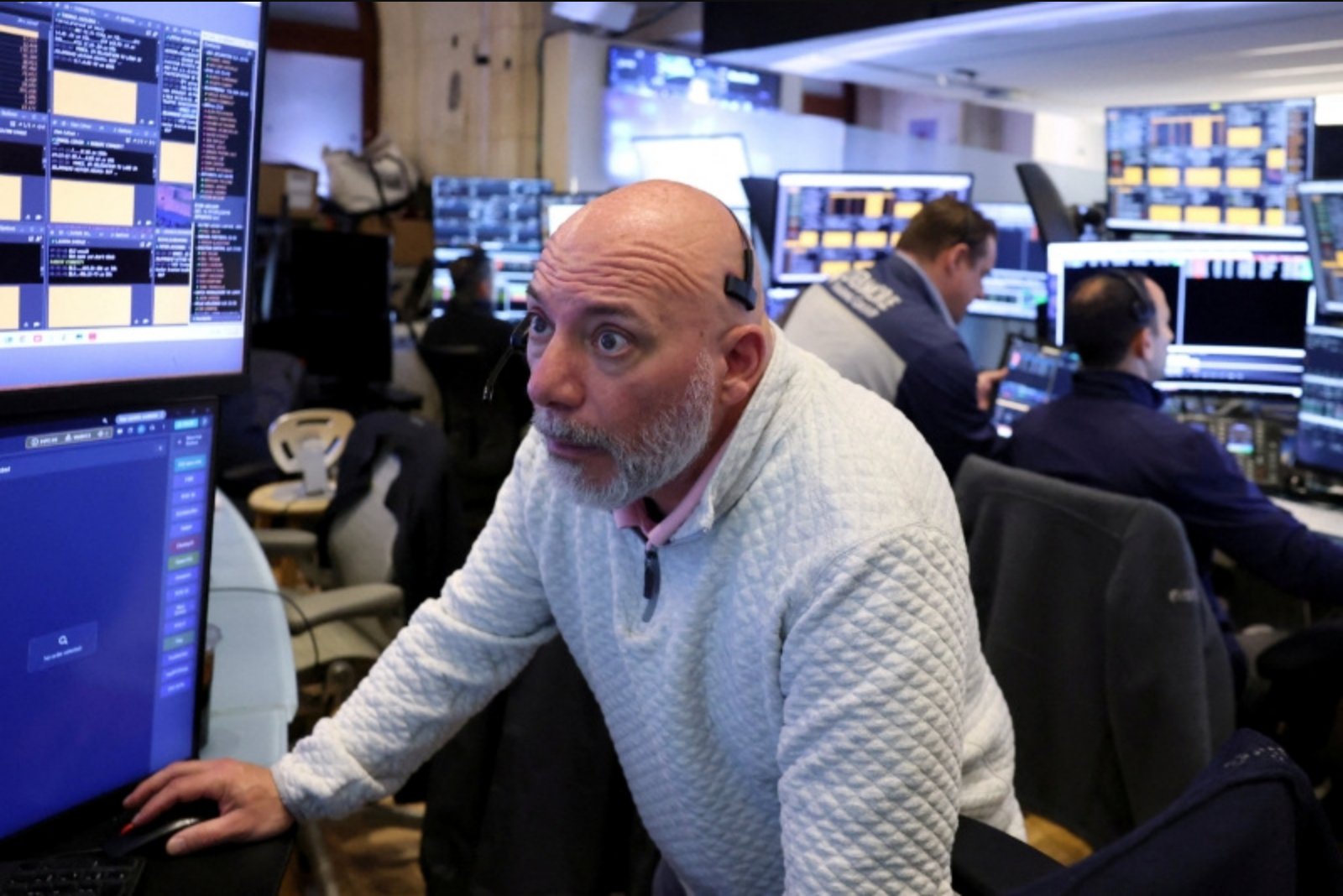
Investors are voicing concern that U.S. stock prices, lifted by unexpectedly strong corporate results and renewed optimism about artificial intelligence, have not yet priced in the possibility of a sustained surge in inflation or a sharp rise in government bond yields. The mismatch between earnings momentum and mounting macroeconomic and geopolitical risks has left some market participants uneasy.
Over the past week, yields in the Treasury market have climbed, sending the 30-year Treasury yield above 5% and pushing the benchmark 10-year yield past 4.5%. That move contributed to a more cautious tone in the equity market on Friday as investors reassessed risk-reward dynamics.
Paul Karger, co-founder and managing partner of TwinFocus, which manages assets for ultra-high net worth families, described the uncertainty he faces from clients. He said they frequently ask him how to reconcile the market’s apparently conflicted signals - robust corporate earnings on one hand, and higher oil prices and inflation on the other. "Breakfast, lunch and dinner: the question is always about how to make sense of the fact that this is such a divided outlook," Karger said.
Karger outlined a "barbell" approach he uses across client portfolios, combining sizable allocations to cash, gold and commodities with continued exposure to leading mega-cap growth names. That strategy reflects the dual forces shaping investor thinking - a desire for protection against inflation and market stress, alongside a need to participate in the areas of the market that are still driving returns.
Equity indexes have rebounded sharply since an early-year selloff tied to the outbreak of the U.S.-Israeli war with Iran in late February. The S&P 500 was last reported as having climbed more than 17% from its low for the year in late March, giving the index a year-to-date gain of over 8% even after a near 1% pullback on Friday.
Rising benchmark yields typically exert downward pressure on equity valuations. Higher yields increase borrowing costs for businesses and consumers, which can weigh on economic growth and corporate profits. They also make fixed-income returns more attractive relative to equities - a dynamic that becomes more pronounced when equity valuations are elevated.
As of Thursday, the S&P 500 was trading at a forward price-to-earnings ratio of 21.3 times expected earnings over the next 12 months, according to LSEG Datastream. That multiple sits well above the index’s long-term average forward P/E of 16, though it remains below the 23.5 level reached in October. The stronger U.S. earnings outlook has helped keep valuations from rising further, even as the market trades at a premium to historical norms.
Concerns about persistent inflation are reflected in the views of several market professionals. "I do think there is a real fear that inflation is kind of embedded in the economy going forward," said Peter Tuz, president of Chase Investment Counsel in Charlottesville, Virginia. "You don’t see any signs of it going down right now, and that is a real fear, and it will drive the market down if it continues."
Jack Ablin, chief market strategist at Cresset Capital, warned that continued disruption to shipping through the Strait of Hormuz - including delays in reopening the passage to oil and liquefied natural gas tankers as well as other commercial traffic - could usher in what he described as "a brand new inflation regime for which investors just aren’t prepared." Ablin framed even a multi-month delay as having the potential to change the inflationary outlook and, by extension, market expectations.
Earnings and AI: The Forces Keeping Stocks Afloat
Portfolio managers point to earnings as the primary reason equities remain relatively resilient. U.S. corporations reported first-quarter profits that were substantially above estimates and are on pace to be roughly 28% higher than a year earlier - the largest year-over-year increase since late 2021. That acceleration in profitability has underpinned investor confidence despite the other headwinds.
Jeremiah Buckley, a portfolio manager at Janus Henderson, cited the impact of heightened AI-related spending and gains in productivity. He said that trend could extend into 2027, providing an earnings tailwind for companies invested in AI infrastructure and capabilities.
The current wave of enthusiasm for AI has particularly supported semiconductor stocks, with heavy capital expenditure on data centers and other AI infrastructure translating into stronger chip demand. Still, the elevated valuations in AI-related sectors have prompted some market participants to warn of the risk of a pullback in those areas.
Another psychological factor propping up equities is a reluctance among traders to exit positions for fear of missing further gains. Tim Murray, capital markets strategist at T. Rowe Price, noted that some market participants prefer to remain invested in case the situation in the Strait of Hormuz is resolved within weeks, rather than allowing a short-term geopolitical shock to drive a broader selloff.
Mounting Risks: Oil, Producer Prices and a Potential Shift in Regime
Despite the upbeat earnings backdrop, several risks are tilting the balance toward caution. Crude oil has risen above $100 a barrel amid uncertainty about the temporary ceasefire between Iran and the United States and questions over the stability of shipments through key regional waterways. That jump in energy prices has heightened inflation concerns and contributed to higher producer prices, which recorded their largest gain in four years in April.
John Higgins, chief economic adviser for financial markets at Capital Economics, cautioned clients that markets do not appear prepared for an "extreme" scenario involving a prolonged shutdown of the Strait of Hormuz. While Treasury markets have started to price in inflation risk, equity markets are lagging in that adjustment, leaving stocks exposed if a protracted disruption hurts the growth that has supported recent profit gains.
Matthew Gertken, chief geopolitical strategist at BCA, said the crisis in the Persian Gulf and the inflation it may trigger could produce long-term consequences. "The Iran crisis has the potential to reshape the trajectory of the markets" for the remainder of the year, he said, signaling that geopolitical developments could extend beyond a short-lived shock.
Outlook and Investor Positioning
For now, markets remain in a state of tension between the supportive forces of strong corporate earnings and AI-driven investment, and the risks posed by rising yields, higher energy prices and the uncertain geopolitical environment. Some managers are positioning defensively with allocations to cash and real assets, while keeping exposure to market-leading growth companies they view as beneficiaries of the current technological investment cycle.
Investors and advisers acknowledge that if inflation proves more resilient than expected or if yields continue to climb, equity valuations and profit growth could be undercut, producing a less favorable environment for stocks. How the situation evolves will depend on whether the recent jump in yields stabilizes and whether the geopolitical situation in the Persian Gulf is resolved quickly or remains a persistent source of disruption.