
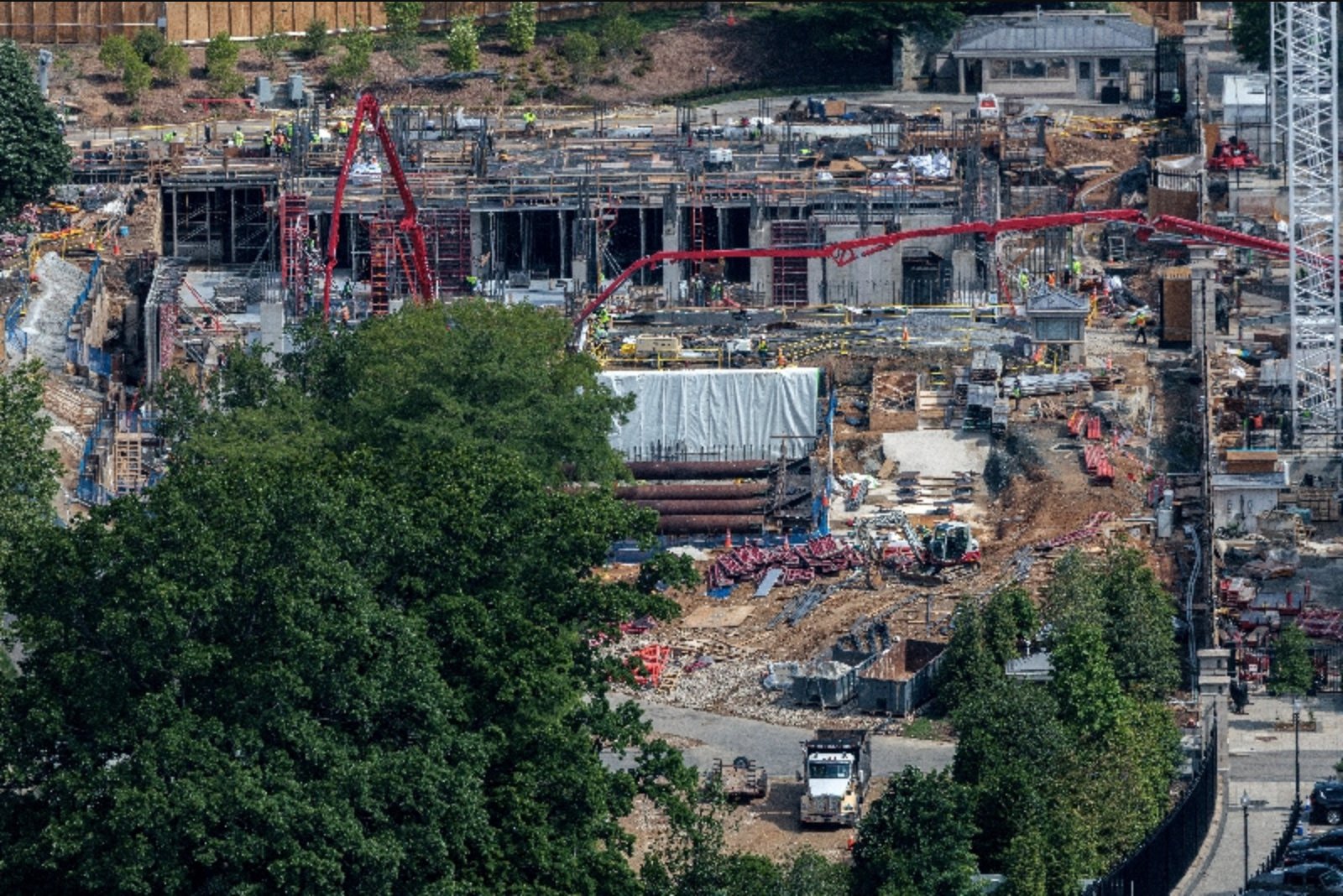
A significant setback has occurred for the administration's efforts to secure federal resources for the planned $400 million White House ballroom. Following a ruling by Senate parliamentarian Elizabeth MacDonough, security-related funding intended for the project was stripped from a massive spending package currently under consideration in Washington.
The decision complicates the objectives of Senate Republicans, who have been seeking to allocate $1 billion in taxpayer funds to the Secret Service. This requested amount is meant to cover various security upgrades, including those specifically related to the construction and operation of the ballroom. Although President Trump has asserted that private donors would fund the construction of the facility, the Republican-led effort seeks to ensure that the security implications of the project are covered by federal spending.
Key Developments and Economic Context
The current legislative struggle centers on several critical points that intersect with broader political and fiscal priorities:
- Legislative Obstacles: The Senate parliamentarian's interpretation of Senate rules has directly impacted the ability to include ballroom-related security costs in a $72 billion spending package. If Republicans cannot revise the legislation to satisfy parliamentary requirements, the funding may be lost entirely during the upcoming floor vote.
- Budgetary Focus: The larger $72 billion package is primarily dedicated to immigration enforcement. Republicans are leveraging complex budget rules to bypass the need for Democratic support, given their 53-47 majority which is insufficient to meet the 60-vote threshold required for most Senate actions.
- Political Narratives: The project has become a symbol of broader economic friction. Democrats have characterized the ballroom as an unnecessary expenditure during a period of rising costs for American citizens, specifically mentioning increased fuel prices and energy costs influenced by the February war in Iran.
Market and Sector Impact: While this is primarily a political and budgetary matter, the allocation of massive federal spending packages (totaling $72 billion) can influence government spending sectors. The focus on immigration enforcement suggests significant resource allocation toward federal law enforcement and security infrastructure agencies.
Risks and Uncertainties
Several factors present ongoing uncertainty for the project's completion and the broader legislative agenda:
- Legal Challenges: The project has faced judicial scrutiny. The National Trust for Historic Preservation filed a lawsuit claiming that neither the President nor the National Park Service has the authority to demolish historic structures or build major new facilities without explicit permission from Congress. While an appeals court allowed construction to proceed in April after a previous halt, legal questions regarding authority remain a factor.
- Political Volatility: With midterm elections approaching in November, Democrats are utilizing the ballroom controversy to frame the Republican party as disconnected from the economic realities of voters facing rising costs of living. This could influence the balance of power in Congress.
- Project Timeline and Scope: The project involves the demolition of the White House East Wing, a structure dating back to the presidency of Teddy Roosevelt and expanded during the Franklin Roosevelt era. President Trump has projected a completion date around September 2028, coinciding with the end of his second term.
Market and Sector Impact: The uncertainty surrounding federal funding and legal challenges to historic preservation creates volatility for sectors involved in large-scale government construction and federal contracting. Furthermore, the tension between high-profile infrastructure projects and consumer cost-of-living concerns highlights a potential disconnect in fiscal priorities that could influence voter sentiment and future economic policy directions.
Project Background
The administration argues that the new ballroom is essential for modernizing White House infrastructure and enhancing security. Currently, the White House frequently utilizes temporary outdoor structures to accommodate large-scale events. Proponents of the project cite an incident in April, where a gunman attempted to storm a media gala attended by Trump, as justification for the need for upgraded security facilities. President Trump has described the planned structure on social media as being "the finest Building of its kind anywhere in the World."