
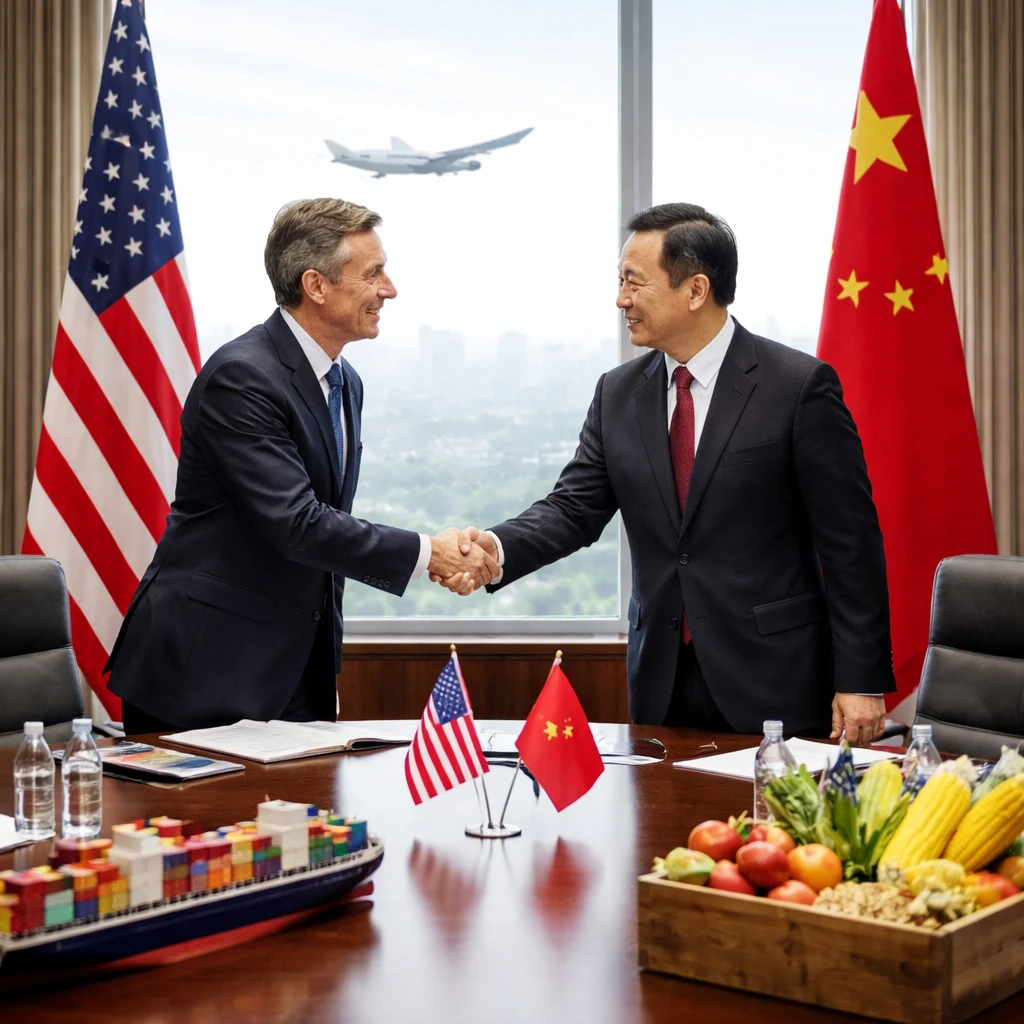
China and the United States have reached an in-principle understanding to reduce tariffs on certain goods after face-to-face talks in Beijing, the Chinese Commerce Ministry said on Saturday.
In a statement, the ministry said the two governments agreed to form trade and investment councils that will address topics including tariff reductions. The statement added that the countries "have agreed in principle to reduce tariffs on products of equal size of concern to each other," without listing specific products or timelines.
One focus identified in the statement is agricultural trade. The two sides will pursue expanded two-way commerce in farm goods through "mutual tariff reductions on a certain range of products." The ministry did not specify which agricultural items this will cover, leaving the precise scope of any tariff cuts unclear at this stage.
Alongside tariff talks, Beijing and Washington agreed to engage on non-tariff barriers and issues related to market access for agricultural products, the commerce ministry said. Those measures are intended to complement any tariff adjustments, although detailed measures and implementation plans remain to be worked out by trade teams.
The statement also noted agreements tied to aerospace: China and the U.S. reached understandings on the purchase of American aircraft and on the U.S. providing a guarantee to supply aircraft engines and parts to Beijing.
The announcements followed a high-profile meeting in Beijing between U.S. President Donald Trump and Chinese President Xi Jinping earlier in the week. Trump publicly highlighted Chinese commitments to buy U.S. agricultural products and aircraft, and he also said China had agreed to purchase American oil after the summit. China’s commerce statement, however, indicated that officials from both sides are still working through the outcomes of the presidents' discussions.
"The trade teams from both sides will, in accordance with the consensus reached by the two heads of state, finalize the outcomes as soon as possible and work together to implement them," the commerce ministry said.
The summit took place against a backdrop of strained relations between the world’s two largest economies, including a notable trade war in 2025 and ongoing disagreements over U.S. export restrictions on artificial intelligence chips to China. The ministry also said that Taiwan was a key concern during the talks, warning that mishandling of the issue could risk escalating tensions between Beijing and Washington.
Hours after meeting with President Xi, President Trump warned Taiwan against declaring independence in a televised interview. China views Taiwan as part of its territory and has criticized U.S. arms transfers to Taipei.
What remains clear from the commerce ministry statement: both sides have signaled willingness to negotiate tariff cuts and to set up institutional channels to iron out the details, but the specific products, timelines and enforcement mechanisms are still being negotiated.