
Economy May 16, 2026 06:59 AM

Iran Says It Has a Plan to Regulate Strait of Hormuz Traffic and Will Impose Fees

Parliament security chief outlines a designated route and selective fee regime as Tehran signals tighter control over shipping lanes

By Ajmal Hussain

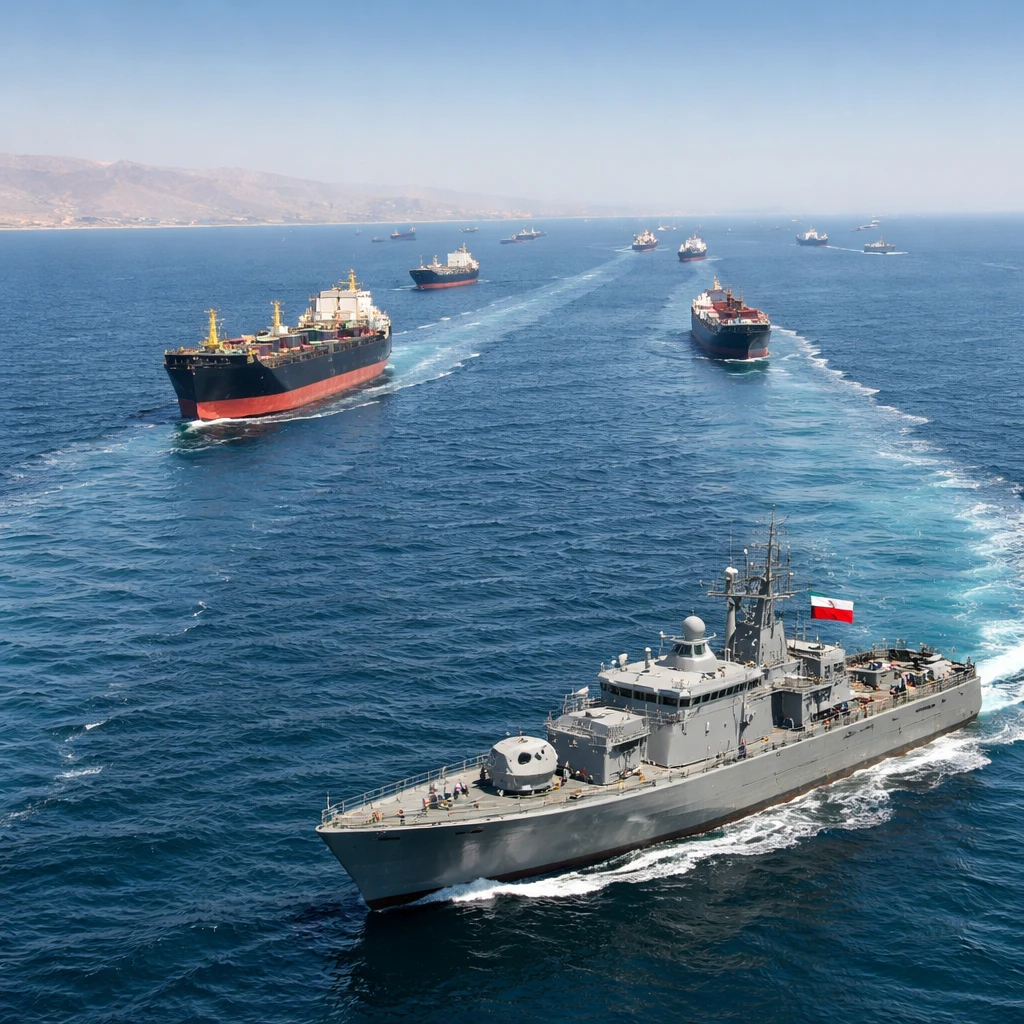
Iran has drawn up a mechanism to direct vessel movements through the Strait of Hormuz along a designated route and intends to charge fees for passage, the head of the Iranian parliament’s national security committee said. The plan will be unveiled soon and will apply to commercial vessels and parties that cooperate with Iran, while excluding operators tied to the so-called 'freedom project.' The announcement comes amid sustained closure of the channel since late-February and escalating rhetoric from the U.S. president.

Iran Says It Has a Plan to Regulate Strait of Hormuz Traffic and Will Impose Fees

Key Points

  • Iran has prepared a designated-route mechanism to manage traffic through the Strait of Hormuz and plans to collect fees; this primarily affects commercial shipping.
  • The mechanism will favor commercial vessels and parties cooperating with Iran, while excluding operators linked to the so-called 'freedom project' connected to U.S. efforts.
  • Tensions are heightened: Iran has effectively closed the channel since late-February and U.S. President Trump has signaled opposition to Iranian control, including consideration of further military measures.

Iran has developed a framework to manage maritime traffic through the Strait of Hormuz and intends to levy fees for passage, Ebrahim Azizi, who leads the Iranian parliament’s national security committee, said on Saturday.

In a social media post, Azizi said that "Iran... has prepared a professional mechanism to manage traffic in the Strait of Hormuz along a designated route," and added that the scheme will be "unveiled soon."

Azizi stated that the mechanism includes the collection of "necessary fees" and that the arrangement will extend benefits only to commercial vessels and to "parties cooperating with Iran."

He further said that "This route will remain closed to the operators of the so‑called 'freedom project,'" a likely reference to U.S. President Donald Trump’s "Project Freedom," which was intended to restore commercial shipping in Hormuz. The article noted that Trump had paused that operation earlier in May.

The announcement follows a period in which Iran effectively sealed the channel since the onset of U.S.-Israeli hostilities in late-February, and Tehran has repeatedly suggested it would assert control over, and charge for, traffic through the vital waterway.

Earlier reports this year indicated Iran might accept toll payments in cryptocurrency, with Bitcoin specifically mentioned as a possibility.

The U.S. president has been opposed to any Iranian control of the Strait, and has repeatedly urged that the waterway be reopened. Reports late on Friday indicated that Trump was considering further military actions against Iran. Earlier in the week, he warned that an Iran ceasefire was on "life support" and rejected a peace offer from Iran.

On multiple occasions, the U.S. president has also called for Iran to halt its nuclear activities, stating that the country could not be permitted to develop a nuclear weapon.


Summary of developments:

  • Iran has prepared a traffic-management mechanism for the Strait of Hormuz to be revealed soon.
  • Under the mechanism, Iran will collect fees and limit benefits to commercial vessels and parties cooperating with Iran.
  • The designated route will be closed to operators associated with the so-called "freedom project."

Risks

  • Restricted access to the designated route for certain operators may disrupt commercial shipping flows - this impacts the shipping and trade sectors.
  • Escalation of military measures under consideration by the U.S. president creates uncertainty for regional security and defense-related markets.
  • Uncertainty over payment methods, including reports that tolls could be taken in cryptocurrency like Bitcoin, introduces payment and regulatory ambiguity for maritime operators and financial services.

More from Economy

Iraq’s Hormuz Shipments Collapse, Pushing Oil Prices Higher May 16, 2026 Head of Harvard's $57 Billion Endowment Signals Intent to Retire May 16, 2026 Putin to Make State Visit to China on May 19-20 Following Xi-Trump Summit May 16, 2026 Powell Named Fed Chair Pro Tempore as Warsh Transition Awaits Formal Swearing-In May 16, 2026 Harvard Endowment CEO N.P. Narvekar to Retire After Nearly a Decade Leading Fund May 16, 2026