
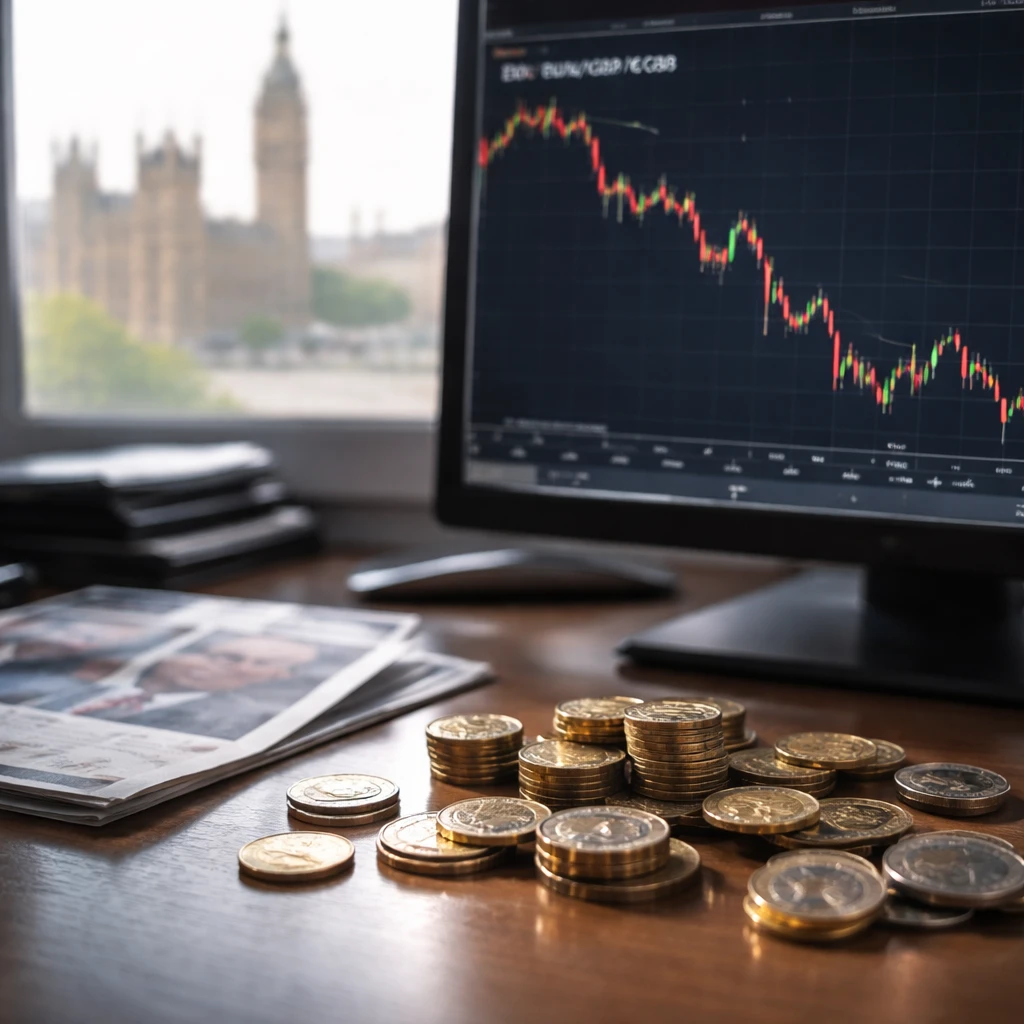
The British pound came under abrupt selling pressure on Thursday evening after political developments increased perceived event risk, Deutsche Bank said in a research note dated May 14, 2026.
Market participants reacted strongly once reporting suggested that Greater Manchester Mayor Andy Burnham now has a clearer pathway to contest a parliamentary seat and could mount a campaign for party leadership and ultimately prime minister. That dynamic, Deutsche Bank noted, broke a period of relative calm in sterling and sparked a spike in foreign exchange risk premia.
Analysts at the bank linked the reaction directly to the timing of the UK local elections, warning that the vote outcome may leave political uncertainty lingering or even intensifying over the summer months. Unlike prior internal party obstacles, recent reporting indicates Burnham will not be blocked by Labour's National Executive Committee and is expected to run in the upcoming by-election for the Makerfield seat.
While betting markets list Labour as favourites to hold the seat, the race "is considered far from a foregone conclusion," the bank's note said, and currency volatility markets are pricing elevated probabilities around by-election windows between mid-June and early July.
Investor concern, Deutsche Bank said, is rooted in Burnham's policy track record. Media coverage cited by strategists portrays him as the least market-friendly option among potential successors to Sir Keir Starmer. Although Burnham has partially retreated from prior rhetoric - notably conceding that bond markets should not be ignored after earlier remarks that the United Kingdom was "in hock to the bond markets" - market sentiment shifted sharply on the fresh political developments.
Using an internal measure, Deutsche Bank found that the risk premium embedded in the EUR/GBP cross moved back above 2% immediately after the spot adjustment. The bank's strategists argued that a further ascent in EUR/GBP to 0.8775, coupled with a 15-basis-point underperformance of short-term UK rates versus euro area rates, would restore the pound's risk premium to levels last seen before the Budget was announced.
The note highlights how political events can transmit quickly into currency and near-term rate pricing, with implications for hedging costs and short-dated gilt performance. Foreign exchange volatility markets have already started to re-weight probabilities for event-driven moves, reflecting a concentrated window of potential political catalysts in the coming weeks.
Implications for markets
- Currency markets: Elevated event risk has pushed EUR/GBP volatility higher and lifted the pair's risk premium above 2%.
- Government bond markets: Front-end UK rates may underperform versus euro area short-term rates if political risk continues to weigh on sterling.
- Equities and hedging strategies: Short-term market uncertainty could increase hedging costs for exposures linked to sterling.
The note reflects Deutsche Bank's analysis as of May 14, 2026 and focuses on observable market reactions and modelled risk premia tied to the reported political developments.