
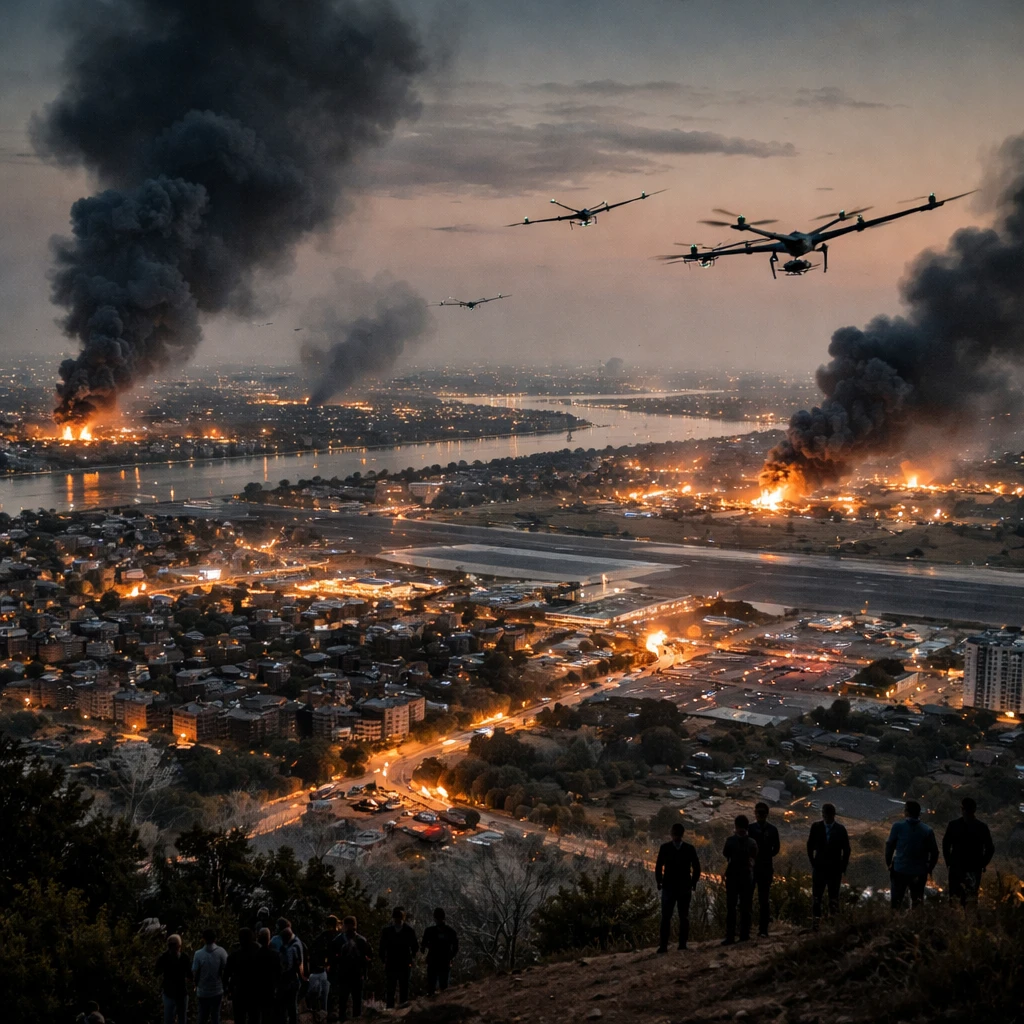
May 4 - Drone strikes hit Khartoum International Airport on Monday as part of a sudden series of attacks that witnesses say have broken a period of relative calm in Sudan's capital three years into the wider civil war.
Residents said the strikes, which began on Friday and continued through the weekend, struck both military objectives and civilian areas. The wave of violence comes as people, government ministries and international agencies had begun to return to Khartoum after the army reestablished control in March 2025.
Khartoum International Airport, a site of some of the earliest intense fighting between the national army and the paramilitary Rapid Support Forces (RSF) in April 2023, had received its first international flight in three years just last week, according to residents. Witness accounts indicate the airport was among several locations hit during the recent barrage.
Local sources speaking on condition of anonymity said they believed the RSF was responsible for the renewed attacks. Neither the RSF nor the national army issued any public comment on the strikes. The Information Ministry stated that the airport attack caused no injuries and no damage, and that the facility would return to operations after completing routine safety procedures.
Drone warfare has become a dominant feature of the conflict, which the U.N. characterises as the world's worst humanitarian disaster. The U.N.'s assessment, cited by residents, attributes hundreds of thousands of deaths to a combination of violence, hunger and disease, and notes that millions have been forced to flee their homes.
Witnesses reported drones also struck Khartoum's twin city of Omdurman, and the western city of al-Obeid as well as Kenana to the south. Emergency Lawyers, an activist group, said one strike on Saturday hit a civilian bus in southern Omdurman, killing five people. Another attack on Sunday reportedly killed relatives of Abu Agla Keikal, a tribal militia leader who is allied with the army and who defected from the RSF earlier in the conflict.
The attacks follow recent shifts in battlefield alignments. Late last month, the army welcomed into Khartoum al-Nour al-Guba, a senior RSF commander who defected with his forces. That defection had prompted concerns about internal tensions within the army's coalition. Separately, the earlier defection of Abu Agla Keikal from the RSF is noted by witnesses as part of the evolving alignments within the broader conflict.
The conflict began when the RSF and the Sudanese army disagreed over plans to integrate their forces and move toward a transition to democracy. The RSF initially seized control of Khartoum but was pushed out the following year. Since then, the RSF has consolidated control over the Darfur region in the west and opened a new front in the Blue Nile state near the Ethiopian border - a front that has also experienced repeated drone attacks, according to the accounts included in these reports.
Context limitations: This report reflects witness statements and official comments provided concerning the recent strikes. Where parties to the conflict did not issue statements, attribution is based on local sources and has not been independently verified in this piece.