
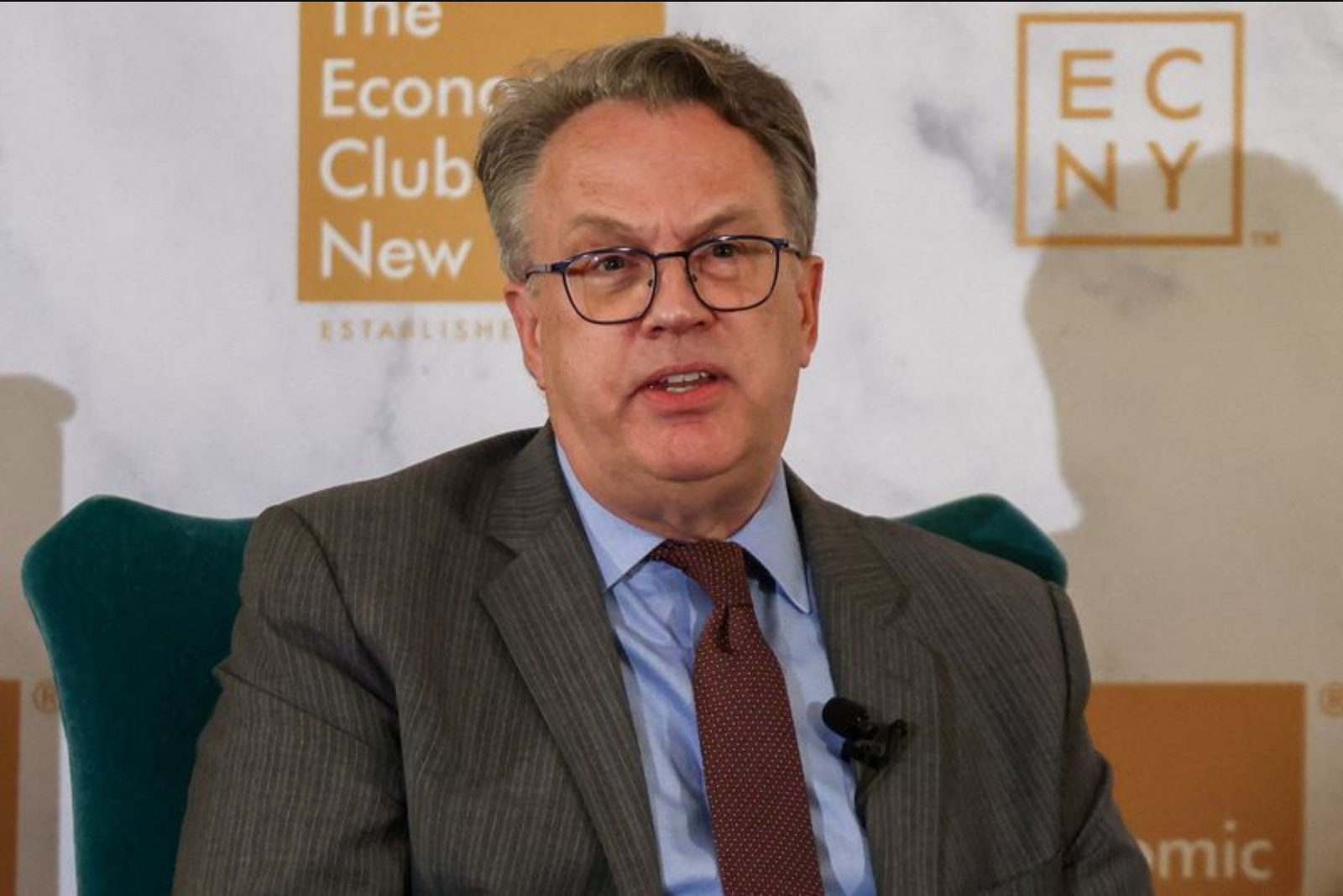
New York Federal Reserve President John Williams told a New York audience that the Federal Reserve's current monetary policy stance is "well positioned" to handle the heightened uncertainty weighing on the economy because of the war in the Middle East.
Delivering remarks at a Cynosure Group gathering, Williams stressed that the outlook is clouded by sizeable risks on both sides of the Fed's dual mandate. "The future is difficult to see, and the risks to both sides of our mandate have increased," he said in prepared remarks.
Williams pointed to the scale and duration of supply disruptions and climbing energy costs coming out of the conflict in the Middle East as central variables that will help determine the global economic trajectory. "The extent and duration of the effects of supply disruptions and higher energy prices that are emanating from the Middle East conflict are key factors that will shape the global economic outlook," he said.
He described the combination of elevated inflation, mixed signals from the labor market, and the unpredictability of the war as presenting "an unusual set of circumstances" for Fed officials. The New York Fed president did not translate that into guidance on the federal funds rate, which currently sits in a 3.50% to 3.75% range.
On the economic outlook, Williams said he expects resilient growth in the United States this year, forecasting real gross domestic product expansion of between 2.0% and 2.25%. He also projected relatively stable labor-market conditions, with the unemployment rate holding in a band between 4.25% and 4.50%.
Turning to price pressures, Williams said inflation, pressured by tariffs and higher energy costs, is likely to remain around 3% this year before easing back toward the Fed's 2% objective. He noted that inflation expectations are "mostly steady," while cautioning that energy-price moves could prove worse than markets currently anticipate.
"Market expectations of the future path of oil prices are fairly benign, but several plausible scenarios entail more severe dislocations in both prices and quantities," Williams said. He added that the Iran war "could result in a larger and broader-based supply shock that has more severe adverse consequences for inflation and economic activity."
These remarks marked Williams' first public comments since Federal Reserve officials last week opted to leave interest rates unchanged. Policymakers have adopted a wait-and-see posture on monetary policy as they contend with heightened uncertainty tied to the conflict.
The conflict has had immediate effects on energy markets, with the closure of the Strait of Hormuz cited as a driver of sharply higher energy prices. Fed officials are therefore grappling with the prospect of rising inflation pressures at the same time that the energy-price surge could subtract from demand and introduce downside risks to employment.
In the wake of last week's rate decision, three regional Federal Reserve bank presidents expressed support for holding rates steady but objected to language in the policy statement that suggests the next move would be a cut in borrowing costs. The presidents of the Cleveland, Dallas and Minneapolis Fed banks argued after the meeting that both easing and tightening of policy remain possible, underscoring the breadth of uncertainty within the policymaking body.
Overall, Williams framed the Fed's current stance as capable of addressing the unusual mix of inflation, labor-market signals and geopolitical shock risks, while stopping short of signaling any immediate change to the target range for the federal funds rate.