
Economy May 4, 2026 02:06 PM

Williams Says Fed Policy Backing Stronger Than Vote Shows

New York Fed chief points to steady inflation expectations, shifting labor dynamics and a higher neutral rate

By Ajmal Hussain
Williams Says Fed Policy Backing Stronger Than Vote Shows

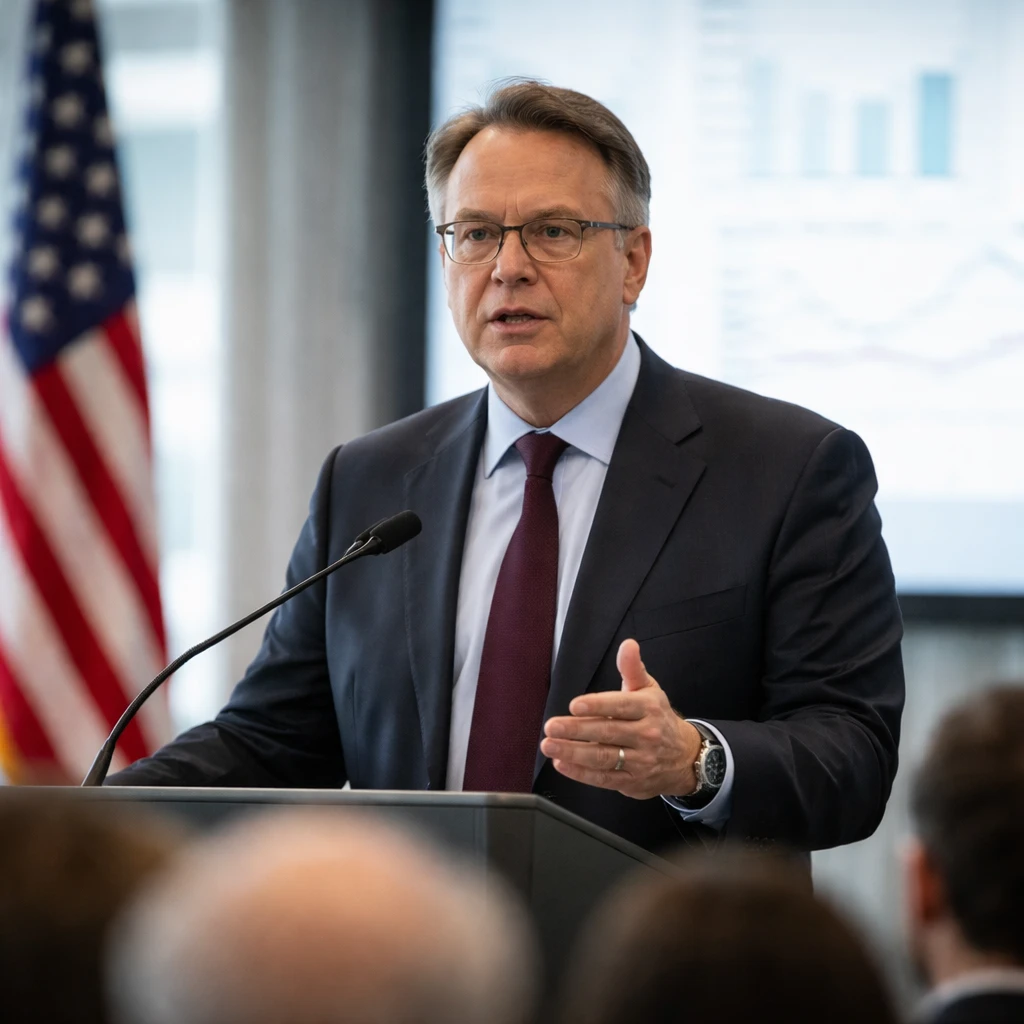
New York Federal Reserve President John Williams told an audience in New York that policymakers are more aligned on the current monetary stance than recent FOMC voting patterns imply. He highlighted shifting labor force dynamics, a revised break-even for job growth, stable longer-term inflation expectations, and a likely higher long-run federal funds rate around 3%. Williams also flagged expected productivity gains from AI and said no single debt threshold signals a government-debt crisis.

Key Points

  • Policymakers are more aligned on the Fed's current stance than FOMC votes indicated - impacts central bank guidance and financial markets.
  • Labor market dynamics have shifted; Williams places the job-market break-even between 0 and 50,000 monthly jobs and says the job market remains strong - relevant for employment-sensitive sectors and consumer spending.
  • Longer-term inflation expectations are stable and the neutral federal funds rate is likely higher, with Williams estimating a 3% long-run rate - significant for fixed income, banking and borrowing costs.

Federal Reserve Bank of New York President John Williams said Monday that there is more agreement among policymakers about the central bank's present stance than last week's Federal Open Market Committee vote might suggest.

Speaking in New York, Williams acknowledged that disagreement among officials tends to rise during periods of uncertainty and economic transition. He noted that a number of policy members opposed the decision to maintain an easing bias at last week's meeting, but emphasized that a broader consensus on the Fed's current approach remains intact.

Williams addressed developments in the U.S. labor market, pointing to notable changes in labor force growth. He offered a revised estimate of the monthly job growth needed to be considered a break-even point for the labor market, placing it within a range of zero to 50,000 jobs per month. He also described the labor market as continuing to perform well.

On inflation, the New York Fed president said longer-term expectations have held steady, a development he called encouraging. He argued that a balanced job market is contributing to containing inflation and reiterated the central bank's responsibility to make sure inflation expectations remain anchored. Williams added that inflation driven by tariffs should ease.

Turning to interest rates, Williams suggested that the neutral federal funds rate is likely higher than some recent low readings have indicated. He estimated that a 3% federal funds rate is a probable long-run level.

Williams also spoke about productivity, saying he expects higher productivity growth in coming years as a result of artificial intelligence. Separately, he addressed concerns about government debt and said there is no specific threshold that would automatically signal a debt-related crisis.

His remarks framed a mix of caution and reassurance: greater policy alignment than votes show, recalibrated labor benchmarks, steady inflation expectations, a higher neutral-rate estimate, and optimistic expectations for AI-driven productivity gains. At the same time, Williams underscored ongoing uncertainties that can affect how policymakers view risk and policy direction.

Risks

  • Higher policymaker disagreement during periods of uncertainty could complicate decision-making - affects market volatility and interest-rate sensitive sectors.
  • Uncertainty in the monthly job-growth break-even range (0 to 50,000) leaves the labor outlook imprecise, creating potential unpredictability for hiring-dependent industries.
  • If longer-term inflation expectations were to shift, it could force a change in policy stance despite current stability - risk for inflation-sensitive markets and financial assets.

More from Economy

Benjamin Moore CEO Says Inflation and Rates Are Driving Paint Buyers to Cheaper Options May 4, 2026 South Africa’s Reserve Bank to Watch Data Closely as Middle East Conflict Clouds Outlook May 4, 2026 Blackstone Executive Says AI-Driven Data- Center Buildout Is Boosting Blue-Collar Hiring May 4, 2026 U.S. to Move Ahead with 25% Tariff on EU Auto Imports, Trade Representative Says May 4, 2026 Bundesbank's Nagel Signals Possible June Rate Rise if Inflation Outlook Stalls May 4, 2026