
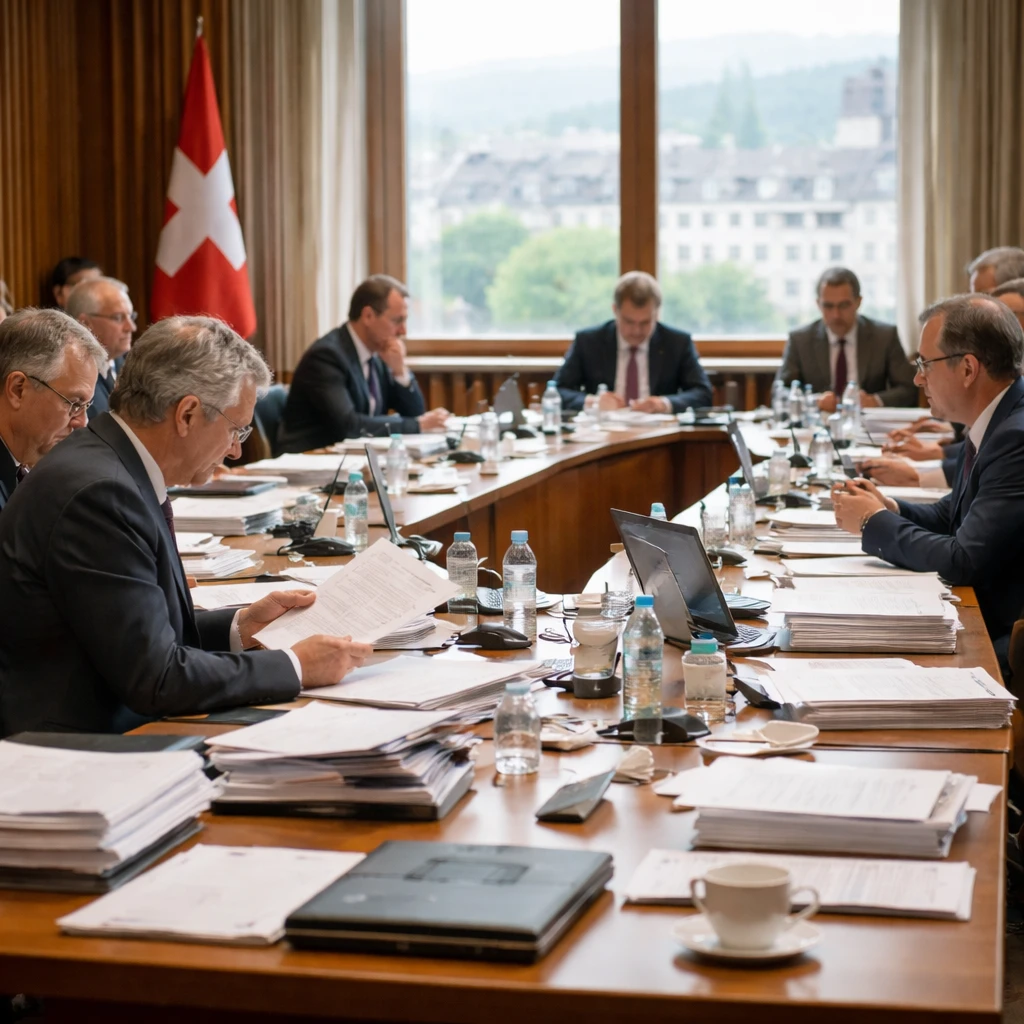
Swiss lawmakers extended deliberations on a draft capital bill for UBS, leaving the bank facing continued regulatory uncertainty. The Economic Affairs and Taxation Committee of the upper house announced on Monday that it will resume consideration of the measure in August, making a vote by the full chamber unlikely before September.
The government’s draft rule would obligate UBS to completely fund its foreign subsidiaries with Common Equity Tier 1 (CET1) capital. Committee members are also examining an alternative compromise that would permit the use of Additional Tier 1 (AT1) capital to a partial degree, which would typically be a less costly form of capital for the bank.
Committee members held hearings with UBS executives and government officials but did not reach a conclusion. They instead requested additional clarification from those parties before advancing the measure. The committee provided a statement explaining its decision:
"Given the significance of the upcoming decision, the committee wants to discuss various versions and alternatives to the Federal Council’s proposal in depth and with sufficient time,"reflecting a desire for more fulsome debate across possible options.
Despite the delay, lawmakers said parliament still intends to move quickly on the regulations. The timing carries consequences for UBS as it faces choices about its capital structure and the relative cost of different instruments, and leaves market observers watching the political timetable.
The push to tighten banking rules follows the collapse of Credit Suisse in 2023, an event that left UBS as Switzerland’s only global bank. Finance Minister Karin Keller-Sutter is heading the regulatory overhaul aimed at strengthening oversight of large Swiss banks.
Context and process:
- The upper-house Economic Affairs and Taxation Committee will continue debate in August.
- A full vote in the upper chamber is unlikely before September.
- The government’s proposal favors full CET1 backing for foreign units; an alternative would allow partial AT1 usage.
The committee’s request for further clarification and its decision to delay reflect the complexity of choosing among capital design options and the political sensitivity of measures affecting the nation’s biggest internationally active bank.