
Chicago Board of Trade soybean futures moved to a seven-week high on Monday as a rise in crude oil prices paired with steady demand from crushing facilities underpinned the market.
Market moves: July soybean futures advanced 19.5 cents to close at $12.22 per bushel. May soyoil gained 1.37 cents, ending at 76.53 cents per pound.
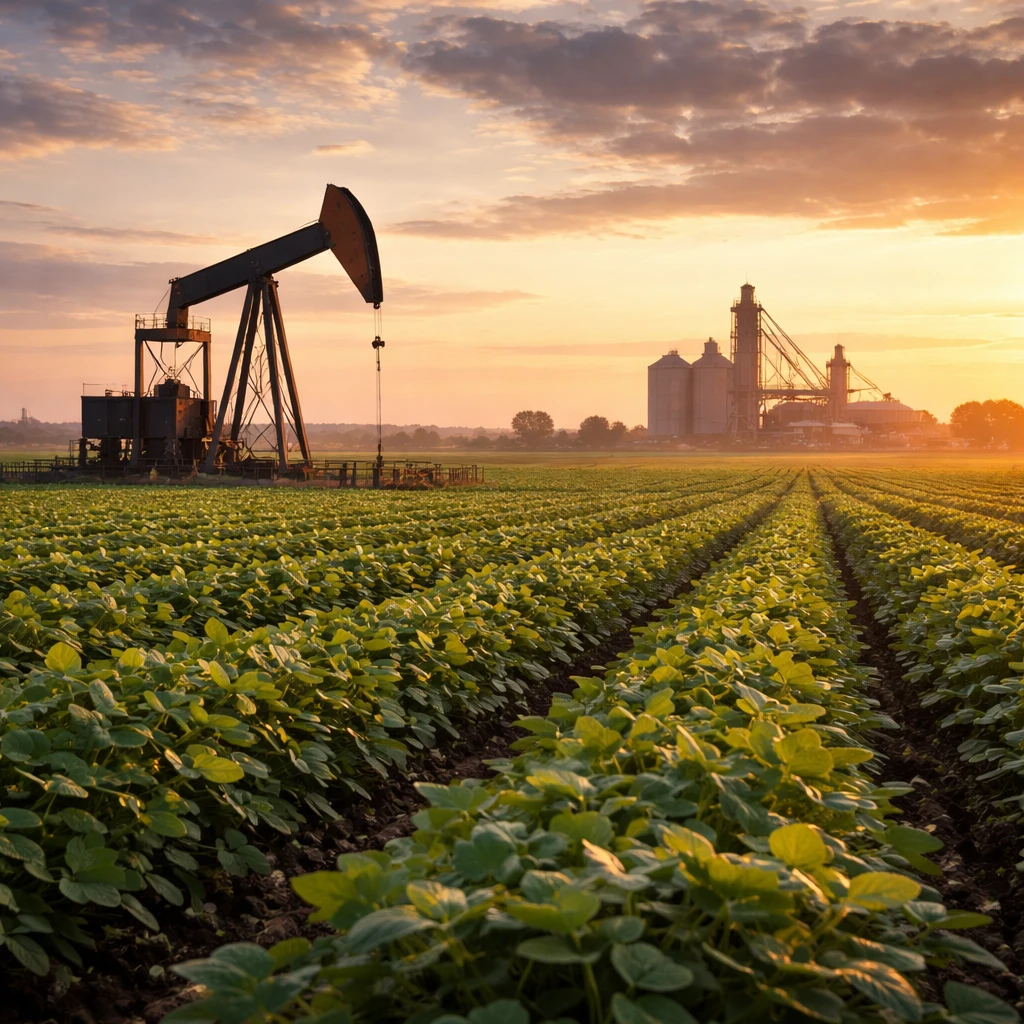
Energy influence: Oil prices jumped about 4% on Monday amid renewed concerns over potential supply disruptions tied to Gulf tensions. The United Arab Emirates reported its air-defense systems responding to a missile threat, and a separate incident saw a fire aboard a South Korean vessel. The strength in crude amid the U.S.-Israeli conflict with Iran has provided support to grain markets because corn and soybeans are commonly used as feedstocks in biofuel production, linking energy and agricultural commodity prices.
U.S. crop conditions and near-term data: Planting activity in the United States has experienced delays. Some growers in the central and eastern portions of the grain belt have not yet started planting corn and soybeans due to wet and cold weather. Analysts polled by Reuters estimated that soybean planting was 35% complete. Market participants were awaiting the U.S. Department of Agriculture’s weekly crop report, scheduled for release after Monday’s market close, which could provide additional near-term guidance on acreage and crop progress.
Global supply perspective: In South America, consultancy StoneX revised its 2025/26 Brazilian soybean production forecast upward to 181.6 million metric tons on Monday, an increase of 1% from its April projection. The adjustment reflects StoneX’s updated view of Brazilian output and will factor into global supply considerations as the season develops.
Overall, the confluence of firmer crude oil, persistent demand at crushing plants, delayed U.S. planting and an upgraded Brazilian production outlook combined to lift soybean futures to a multi-week peak. Market participants remain attentive to the forthcoming USDA report and to geopolitical developments that could further affect energy and agricultural commodity linkages.