
Summary
Bundesbank President Joachim Nagel told an audience in Frankfurt that the European Central Bank could be compelled to raise interest rates in June if the inflation outlook shown in the ECB's projections does not improve substantially. His comments came after a meeting in which the ECB left policy unchanged but debated the need for a future hike to prevent a temporary shock from evolving into a sustained inflation problem.
Last week the ECB opted to keep interest rates on hold, but internal discussion covered the possibility of raising rates at a subsequent meeting. Officials signalled that further tightening may be necessary in June to limit the chance that the current inflation shock produces second-round effects - such as persistent wage and price-setting responses - that would lock inflation above the central bank's 2% target.
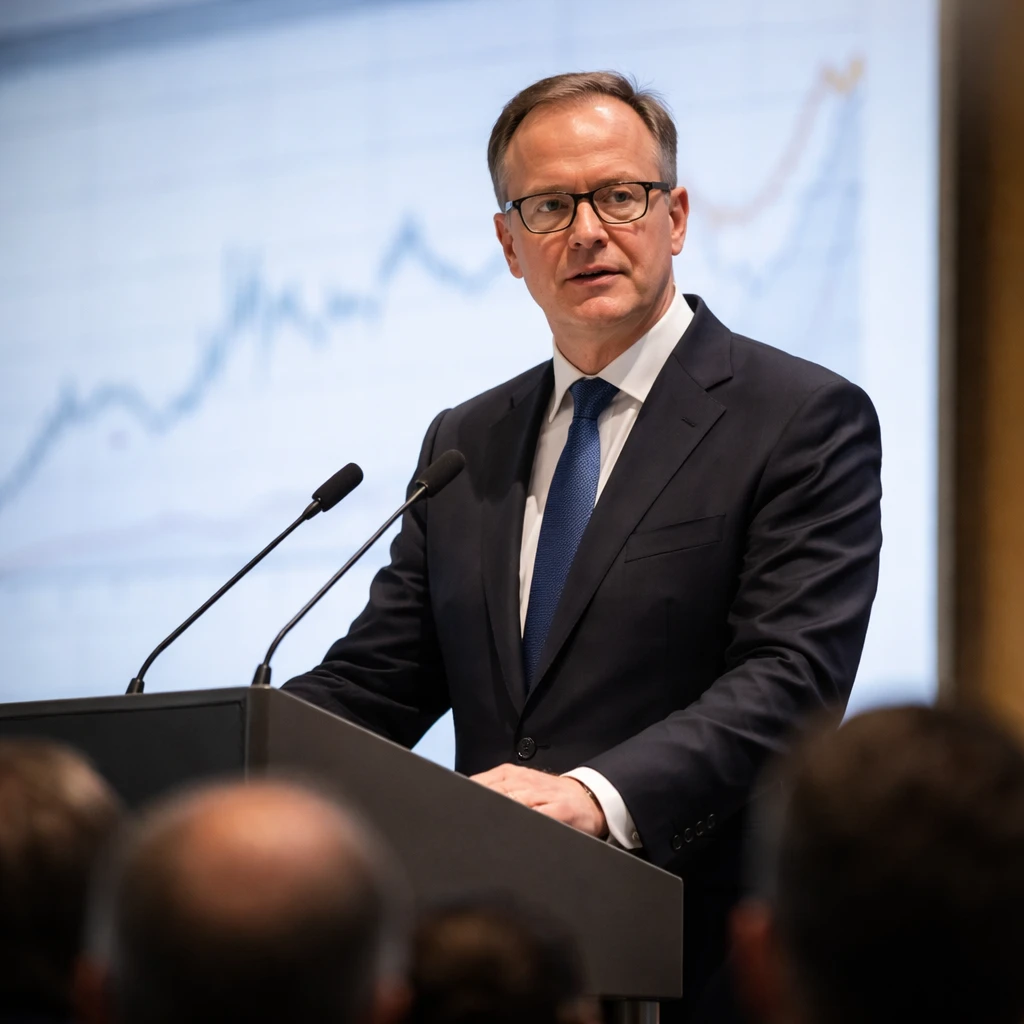
"If the inflation outlook does not improve significantly in the (June ECB) projections, that would support an interest rate hike," Nagel said in a speech in Frankfurt. He emphasised the role of the ECB's projections in guiding policy decisions and the conditional nature of any move in June.
Inflation rose to 3% last month and could rise further in the coming months as oil prices stay above $110 per barrel on the war in Iran. Those price levels are not far below the thresholds assumed in the ECB's adverse economic scenario, a point Nagel used to underline how persistent energy costs can transmit into broader price dynamics.
Nagel noted the central bank's limited ability to directly influence energy prices, but stressed that monetary policy would need to step in if the initial shock risks triggering a self-sustaining inflation spiral. "It’s clear: the longer the conflict lasts, the greater the risk that inflation will remain elevated if monetary policy doesn’t intervene," he said.
The Bundesbank president said policymakers will have to monitor how the shock affects wage demands, consumer behaviour and firms' price expectations. These channels are central to determining whether a temporary energy-driven increase in prices becomes entrenched.
Some fellow policymakers have expressed similar caution. Slovakia's Peter Kazimir and Estonia's Madis Müller have warned that a June rate hike may be needed, and markets have largely priced in the possibility of a move.
Implications
Nagel's remarks underline that the timing of any ECB tightening will depend on incoming data and the June projections; if those projections show limited improvement in the inflation outlook, a rate increase would be supported.