
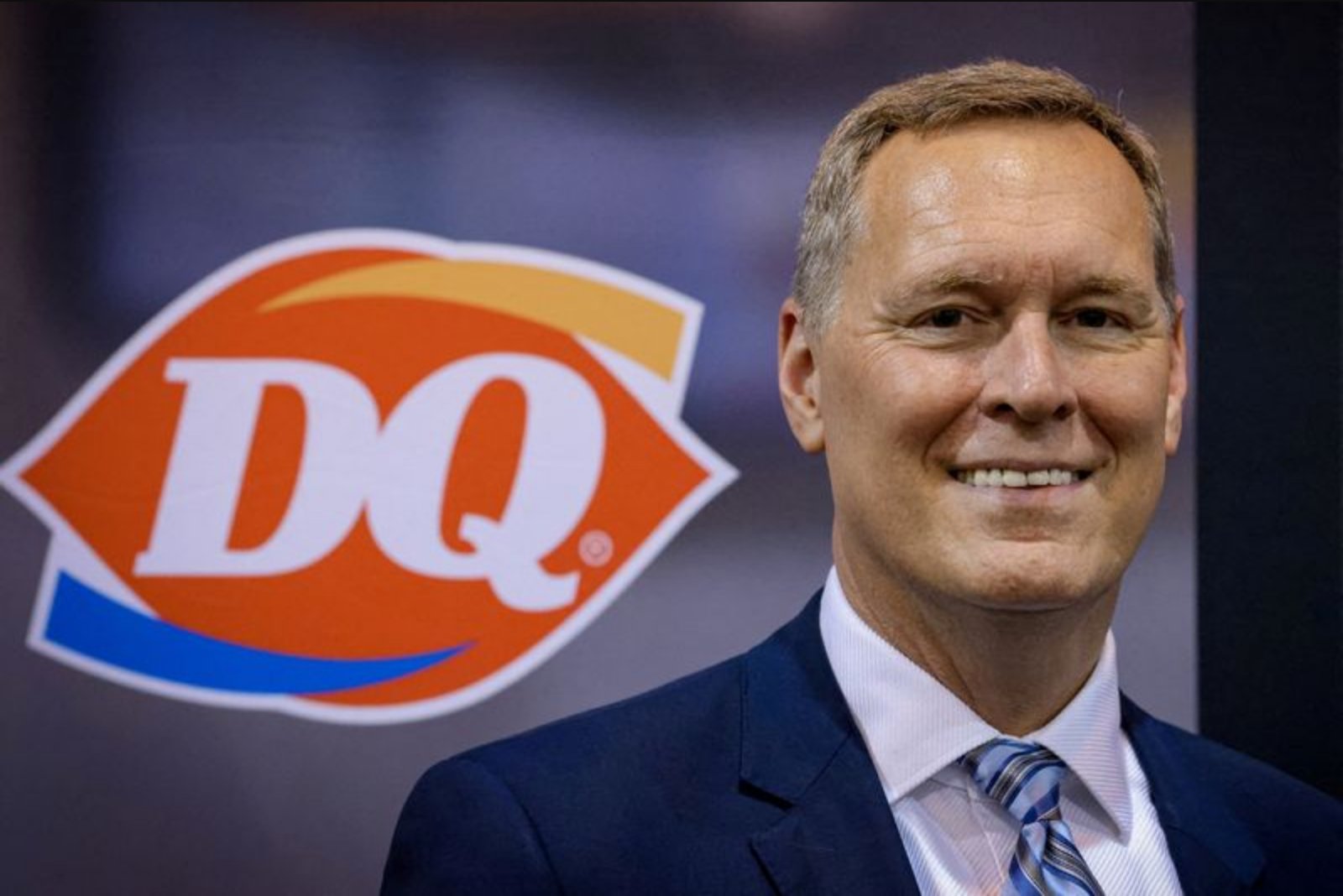
OMAHA, Nebraska - Dairy Queen has moved its push into additional Middle Eastern markets into a holding pattern as regional tensions and related shipping constraints complicate supply lines, the company’s chief executive said during Berkshire Hathaway’s shareholder weekend in early May.
Chief Executive Troy Bader said shipping restrictions through the Strait of Hormuz have forced the company and its franchisees to look for alternative routes to bring in products that cannot be sourced locally. The brand already operates in Bahrain, Kuwait, Oman, Qatar and the United Arab Emirates and had signaled interest in entering Saudi Arabia, but new openings are being delayed while local operators assess risk.
"Where is Middle East expansion now? We are still highly interested, but right now we are more in a hold position," Bader said. He added that franchisees in the region are choosing to wait and "see what happens," underscoring that launching a new brand in any country requires rapid scale to succeed.
Scale and portfolio performance
International Dairy Queen, the Bloomington, Minnesota-based company’s formal name, operates more than 7,900 restaurants across 20 countries. Its fastest growth has been in China, where the chain runs in excess of 1,800 stores and recorded a 10% increase in same-store sales last year. Overall, Dairy Queen reported total sales rose about 3% in 2025 to nearly $6.6 billion.
Customer segmentation and price sensitivity
Bader said the company has observed a split in its U.S. customer base. Higher-income customers continue to purchase Blizzard ice cream treats, burgers and chicken strips, while lower-income diners are feeling pressure from elevated borrowing costs and inflation, which has risen to its highest level in nearly three years.
"Many are becoming a little weary," Bader said, pointing to persistent inflation and sustained high interest rates. He also noted a recent, rapid rise in fuel prices as a factor affecting consumers. To address varying budgets, Dairy Queen continues to offer lower-priced options such as $5 mix-and-match items and $7 meal deals.
AI pilots in drive-thrus
Separately, Dairy Queen is beginning to incorporate artificial intelligence into store operations. The chain plans to test a chatbot developed by technology company Presto at about 50 drive-thru lanes. An initial trial returned 90% order accuracy. While that level falls short of the company’s objective, Bader said staff members monitor AI-driven orders and that his goal is to push accuracy above 99%.
Bader framed AI as a tool to reallocate staff time rather than replace employees. He explained that without AI, a crew member at the drive-thru window would spend the entirety of their shift taking orders. With the chatbot handling much of that task, staff can monitor order quality, attend to product preparation or provide hospitality in other ways.
Other major restaurant chains have also trialed AI in ordering processes, but Dairy Queen’s approach emphasizes employee oversight of AI output and a target of near-perfect accuracy before broader rollout. "While I’m listening, I can be monitoring the quality of the product, or providing hospitality to a guest in a different way. It’s about elevating the customer experience," Bader said.
Contextual takeaway
Dairy Queen is balancing two strategic priorities: pausing international expansion in a geopolitically sensitive region until supply-chain stability improves, and piloting technology to boost operational efficiency and shift frontline employee responsibilities. Both moves reflect the company’s sensitivity to external risks and internal productivity gains without changing long-term stated interest in Middle East markets.