
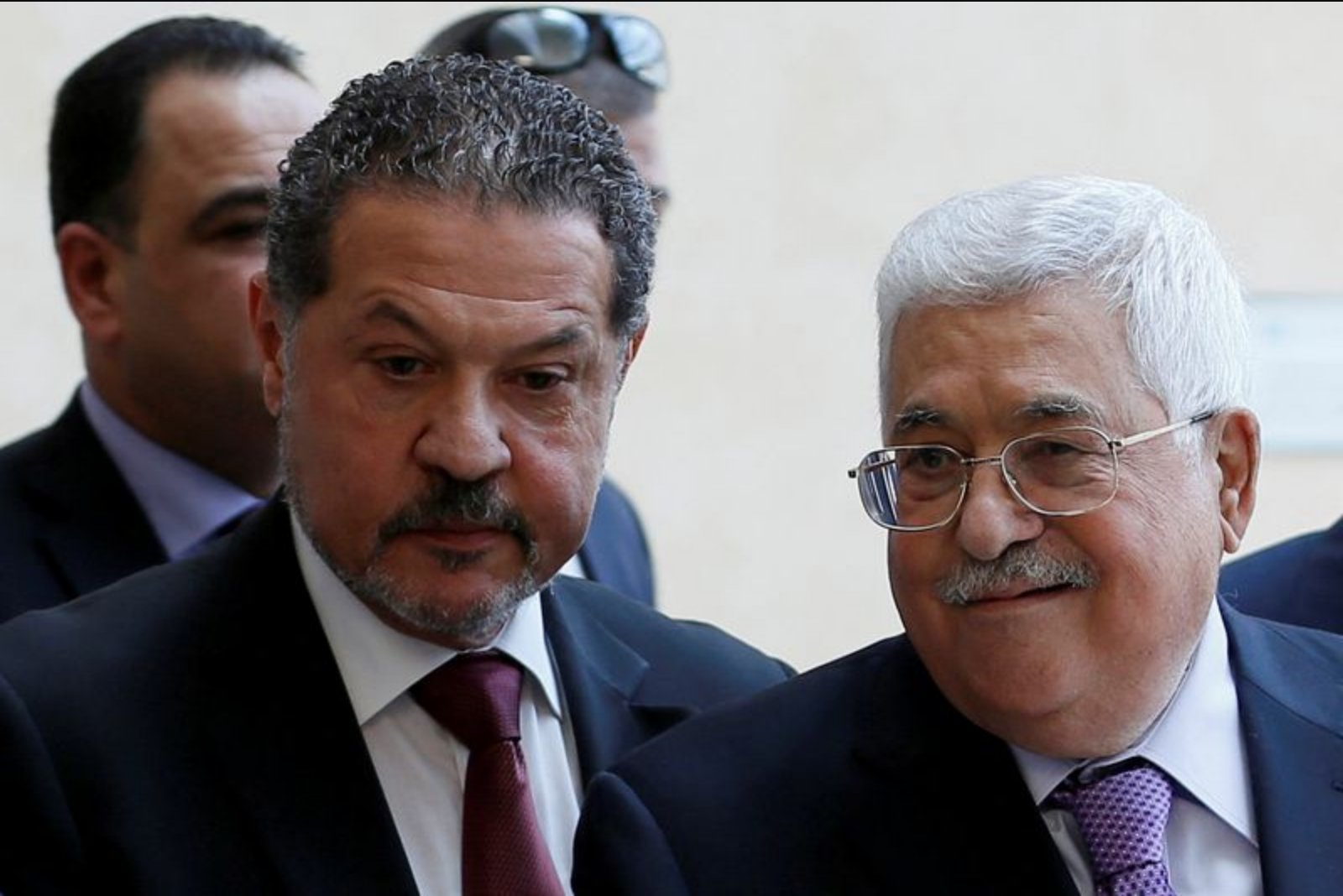
RAMALLAH, May 5 - Yasser Abbas, a millionaire entrepreneur and the son of Palestinian President Mahmoud Abbas, is preparing to enter party politics in a move that observers say could shape the looming succession contest for leadership of the Palestinian Authority (PA). Sources familiar with his plans say he intends to seek one of 18 contested seats on Fatah’s Central Committee during a party conference scheduled for May 14-16 in Ramallah - the movement’s first such gathering in almost 10 years.
Yasser Abbas, 64, is known in the West Bank for running businesses in tobacco distribution and contracting in areas where the PA exercises limited self-rule. He and his brother Tarek have long faced accusations from critics that they have leveraged public resources to advance their commercial interests, charges the brothers deny.
Within the Palestinian Territories, the prospect of Yasser Abbas assuming a formal role in Fatah has prompted wide speculation that President Mahmoud Abbas might be positioning his son as a successor at the head of the party that has long controlled the PA. That possibility has been met with resistance from some party officials, who question whether Yasser Abbas could unify Palestinians or offer a credible path forward after years without national elections and limited movement toward statehood.
Sources say Yasser Abbas has in recent weeks met with factions inside Fatah tied to the PA security establishment and with groups representing Palestinian prisoners held by Israel. Those prisoners are an influential constituency whose backing could be decisive when Fatah’s roughly 2,500 voting members cast ballots for the Central Committee seats.
Although he has never held an official role within Fatah or the PA, Yasser Abbas has accompanied his father to political meetings in the past, including a visit to Moscow last year when they met with President Vladimir Putin and Egypt’s Abdel Fattah al-Sisi. Last year President Abbas appointed his son to handle Lebanon affairs for the Palestine Liberation Organization, a post that included overseeing weapon handovers by Palestinian militants to the Lebanese army, according to accounts of the assignment.
Requests for comment from Yasser Abbas were declined. The office of Mahmoud Abbas and the president’s spokespeople also declined to comment on whether the elder Abbas is positioning his son to succeed him as the leader of Fatah or the Palestinian Authority.
Party figures elected during the last Fatah conference in 2016 point to the organization’s bylaws, which they say permit any qualifying member to run for Central Committee positions. Sabri Saidam, who won a committee seat in 2016, framed the coming vote as an opportunity for renewal. "I hope to see a renewal in leadership and a renewal in the movement’s capabilities, safeguarding for a future stage that is clearly more complex and difficult," Saidam said.
The possible entry of Yasser Abbas into Fatah’s leadership contest comes amid a broader succession battle over control of both the Palestinian Authority and the Palestine Liberation Organization. The PA was established as an interim administration under the Oslo accords of the 1990s between Israel and the PLO, the umbrella group that remains internationally recognised as the representative of the Palestinian people.
More than two decades have passed since Mahmoud Abbas was elected as the successor to Yasser Arafat. Over that period, the PA’s standing among Palestinians has diminished, with many viewing it as ineffective and corrupt. In 2007, the PA was expelled from the Gaza Strip after Hamas militants, who had won an election there on an anti-corruption platform, took control. No Palestinian leadership elections have been held since, and President Abbas has governed by decree since his formal mandate expired in 2009.
A peace process that was intended to culminate in a Palestinian state encompassing the West Bank, Gaza and East Jerusalem faltered in 2014. Since then, the expansion of Israeli settlements has reduced the territories once envisioned under a final-status agreement. At the same time, the PA has been hit by a severe financial crisis, worsened by sharp cuts in aid from the United States and Gulf donors and by a dispute in which Israel has withheld Palestinian tax transfers. That dispute centers on PA payments to prisoners jailed by Israel for deadly attacks, and the withholding of tax money has intensified fiscal pressure on the PA.
Within Fatah, the move to promote Yasser Abbas has exposed internal divisions. A senior Fatah leader, speaking on condition of anonymity, described election to the Central Committee as potentially a first stage in a broader push that could lead to a seat on the PLO’s Executive Committee - the umbrella group’s top decision-making body. "This seems to be what Yasser Abbas is being prepared for," the Fatah leader said.
Other Fatah figures are openly critical. One senior official, also speaking anonymously, accused President Abbas of trying to pre-empt succession by elevating his son. "Abbas is trying to make holes in the Fatah ship before (his death) by installing his son as heir to the crown. This should be confronted and rejected by all Fatah men," the official said.
Political analysts caution that party posts do not automatically translate into electoral success. Reham Owda, a Palestinian political analyst, said that while a sitting president might be able to help secure a party position for a relative, holding an internal party post would not guarantee success in eventual public elections. "This does not resolve the frustration of the Palestinian people, as no democratic elections have taken place since 2006; rather, it increases frustration, since the public is looking forward to democratic elections, legislative and presidential elections," she said.
Beyond the immediate contest over Fatah’s Central Committee seats, a wider field of figures is viewed as potential successors to Mahmoud Abbas. Those names include Hussein Al Sheikh, described as a longtime confidant who holds a vice-presidential role in the PLO, and Marwan Barghouti, who remains popular among many Palestinians for his leading role in two intifadas despite being jailed by Israel since 2002 on charges including murder. The article’s source material lists these individuals as commonly mentioned in discussions about future leadership, though it does not indicate any formal candidacies at this time.
The coming Fatah conference and its vote for Central Committee membership will therefore be closely watched inside the Palestinian Territories and by constituencies invested in the PA’s future. The question of whether Yasser Abbas can translate party support into broader legitimacy remains unresolved, and the internal response within Fatah suggests his candidacy will be a focal point of debate during the Ramallah gathering.
Contextual note: The details in this report reflect accounts provided by sources familiar with internal party planning and public statements from named Fatah members and analysts. Several Fatah officials cited here spoke on condition of anonymity.