
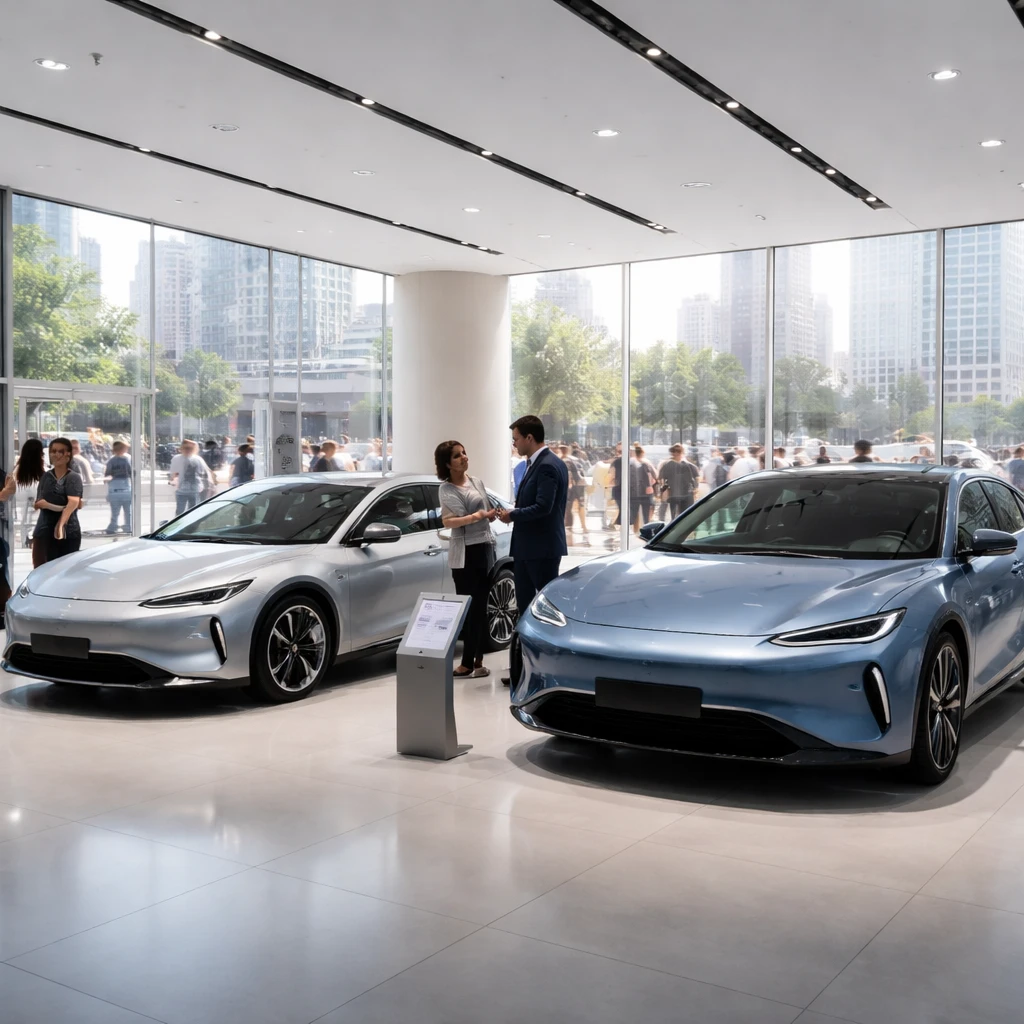
Xiaomi reported that electric vehicle deliveries for April surpassed 30,000 units, a month-over-month increase of about 50% compared with March. The announcement coincided with a 6.75% rise in the company's shares on the Hong Kong market, where trading closed higher today.
Order-to-delivery timelines showed mixed movement across models. The YU7 base variant continues to show a lead time of 7 to 10 weeks, unchanged from the prior month, while the YU7 Max has seen its wait shortened to 4 to 7 weeks. For the recently introduced SU7, the base model's lead time lengthened to 8 to 11 weeks, and the SU7 Max now carries a 9 to 12 week wait.
The SU7 has drawn strong pre-launch and post-launch interest: Xiaomi says more than 70,000 locked orders have been recorded for the model since it was introduced. Across the first four months of the year, from January through April, the company shipped 110,000 electric vehicles in total. That volume represents 20% of Xiaomi's stated 2026 delivery target of 550,000 units.
On the retail front, Xiaomi reported operating 495 stores at the end of April, spread across 165 cities. The company plans to expand its physical footprint by adding two stores in May. Separately, Xiaomi is expected to bring the YU7 GT model to market in late May.
Summary
Xiaomi's April EV deliveries topped 30,000 units, up roughly 50% from March, while the company's Hong Kong-listed shares closed 6.75% higher. Lead times for the YU7 and SU7 models shifted in different directions; the SU7 has accumulated more than 70,000 locked orders. Through April, Xiaomi has shipped 110,000 EVs, equal to 20% of its 2026 target of 550,000. The company operates 495 stores across 165 cities and plans two new openings in May. The YU7 GT is expected to launch in late May.
Key points
- April EV deliveries exceeded 30,000 units, a month-on-month rise of about 50%.
- Lead times: YU7 base remains 7-10 weeks (unchanged); YU7 Max shortened to 4-7 weeks; SU7 base extended to 8-11 weeks and SU7 Max to 9-12 weeks.
- From January through April, Xiaomi shipped 110,000 EVs, representing 20% of the company's 2026 delivery target of 550,000 units; SU7 has over 70,000 locked orders.
- Retail footprint stands at 495 stores across 165 cities at the end of April, with two additional stores planned for May; the YU7 GT model is expected in late May.
Risks and uncertainties
- Variation in lead times across models introduces uncertainty in the timing of deliveries to customers for specific variants, affecting fulfillment windows for the YU7 and SU7 lines - this impacts retail and manufacturing channels.
- Shipments through April account for 20% of the 2026 delivery target of 550,000 units; the remaining target is dependent on future deliveries and order conversion over the rest of the period, creating uncertainty in meeting the full-year goal - this affects production planning and supply-chain throughput.
- Share-price moves and investor reactions to delivery figures and order backlogs can contribute to market volatility for the company’s stock listed in Hong Kong - this bears on equity market participants and investor sentiment in the automotive sector.
The data Xiaomi provided paints a snapshot of current production and demand dynamics without specifying detailed timing beyond the lead-time ranges or projecting future shipment totals. The company’s store count, order backlog for the SU7 and upcoming model launch milestones will be key items to monitor in subsequent updates.