
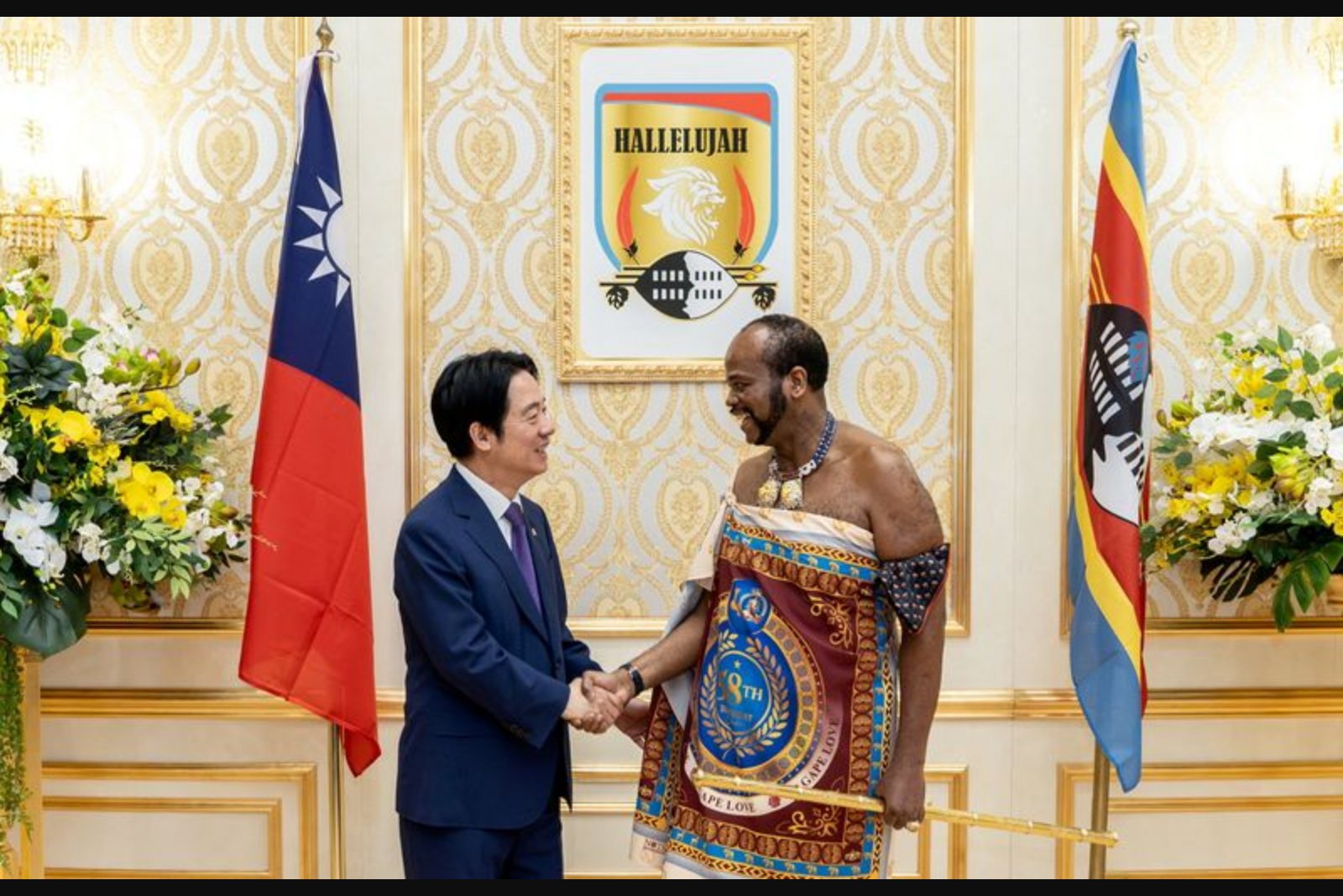
The United States says Taiwan is a "trusted and capable" partner and that Taipei's international relationships deliver tangible benefits, a State Department spokesperson said following President Lai Ching-te's unannounced arrival in Eswatini.
Lai travelled to the southern African kingdom on Saturday, boarding an Eswatini government aircraft for the visit. The trip came after Lai's government accused China of pressuring three Indian Ocean states to refuse overflight permission for an earlier journey that had been planned for last month.
China regards Taiwan as part of its territory and has consistently opposed formal state-to-state ties for the island, a stance Taipei rejects. Beijing has repeatedly demanded that countries cease official engagements with Taiwan.
Reacting to the visit, a State Department spokesperson said: "Taiwan is a trusted and capable partner of the United States and many others, and its relationships around the world provide significant benefits to the citizens of those countries, including Eswatini." The spokesperson added that "this travel is routine and should not be politicised."
The State Department noted that every democratically elected president of Taiwan has made overseas trips to meet diplomatic partners, citing Lai's predecessor Tsai Ing-wen's visits to Eswatini in 2023 and 2018.
Eswatini, with a population of about 1.3 million, is one of only 12 countries that maintain formal diplomatic relations with Taiwan and is the sole such country in Africa, a continent where China holds extensive economic ties.
At a banquet on Sunday night, King Mswati III told Lai that, "When we go with the spirit of the U.N, which says the U.N. is not going to leave no one behind, there are those who are still left behind - 23 million people of Taiwan still feel that they are left behind," according to video footage released by Lai's office on Monday. Taiwan is not a United Nations member because of objections from China.
Beijing strongly condemned Lai's trip. Chinese officials described the visit in disparaging terms and one Chinese comment said Lai was "like a rat scurrying across the street."
In diplomatic exchanges ahead of an upcoming summit between Chinese and U.S. leaders in Beijing later this month, Chinese Foreign Minister Wang Yi told U.S. Secretary of State Marco Rubio that Taiwan is "the biggest point of risk" in Sino-U.S. relations.
Lai has asserted that only the people of the island can determine Taiwan's future and that Taiwan has the right to interact with the international community. He had intended the trip to coincide with the 40th anniversary of King Mswati III's accession in April.
Context and implications
The U.S. statement underscores Washington's role as Taiwan's principal international supporter and supplier of defensive weaponry, a relationship that has long provoked Chinese displeasure. The visit highlights the ongoing diplomatic tug-of-war between Taipei and Beijing over formal recognition and international engagement.