
Foreign energy equipment providers and lenders who met Venezuelan officials in Caracas in April returned from the meetings cautious about committing to repairs and upgrades because the country has not shown how it will secure reliable payments, according to participants in the talks.
Companies that met with government representatives included Siemens Energy, GE Vernova and Mitsubishi Power, and executives said questions about payment mechanisms dominated discussions. Two sources who took part in the consultations described a general reluctance among executives and financiers to move forward without clearer guarantees of compensation.
Payment uncertainty and investor hesitation
An executive from an equipment supplier who has previously worked with Venezuela and state oil company PDVSA said the Caracas meetings left him skeptical. "I returned very skeptical from Venezuela," the executive said. He described power plants that have not been properly repaired in a decade and said the scale of need is enormous. "But they still have no clue on how we would get paid," he added.
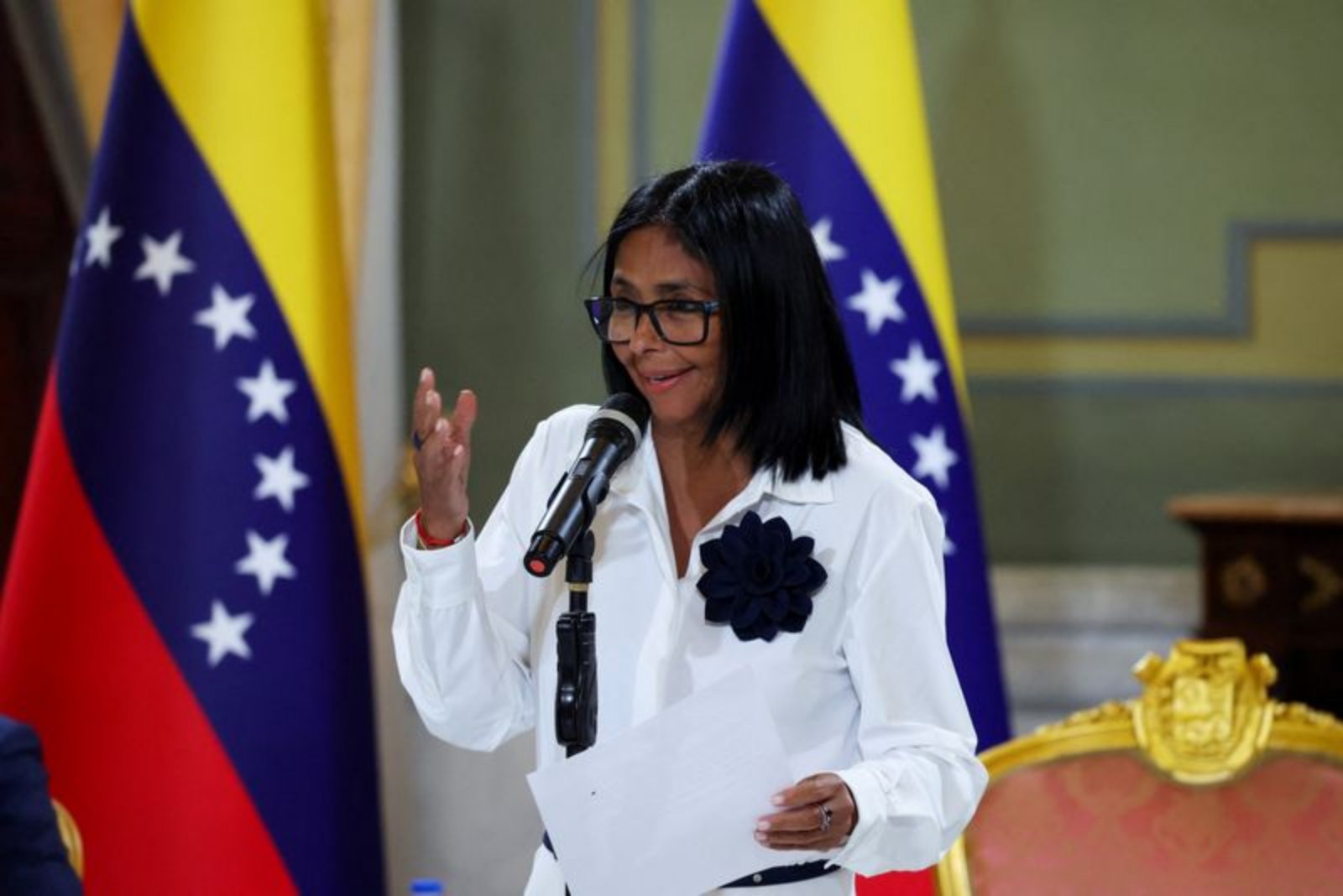
Those concerns come as interim President Delcy Rodriguez has made stabilizing electricity a top priority since replacing the deposed president in January. The government is seeking to spur a much larger reconstruction push valued at up to $100 billion, an initiative encouraged by Washington. Yet the cash-strapped state has not provided timely payment assurances to suppliers that would enable work to proceed at scale.
Scope of the electricity shortfall
Venezuela has 36,000 megawatts (MW) of installed generation capacity, but independent data cited by participants in the talks shows under 13,000 MW is currently available - a figure that translates to less than 40% of nameplate capacity. Thermal plants are in especially poor condition and are contributing roughly 2,500 MW, about 13% of their potential output.
The limited generation is driving frequent outages and curbing manufacturing capacity. Demand last year was reported at 14,700 MW, which creates a gap of at least 1,500 MW versus available supply, according to an industry expert quoted by attendees.
Expansion of thermal capacity during the Chavez era through 2013 left contractors with unpaid bills amounting to billions of dollars. Some of those firms are now being approached again to return for further work, but the legacy of unpaid claims remains a key barrier to renewed engagement.
Unclear priorities and authorization roadblocks
Meeting participants said Caracas has not provided a clear roadmap indicating which projects will be prioritized nor detailed lists of supplies required to strengthen transmission lines and repair failing thermal and hydroelectric plants. The lack of clarity on project scope, combined with questions about payment streams and necessary authorizations from both Washington and Caracas, is expected by sources to delay investment decisions.
Venezuela’s communication ministry, state utility Corpoelec and state oil company PDVSA did not respond to requests for comment from meeting participants.
No payment model agreed
After the April meetings, Rodriguez’s government formally approached firms including Siemens Energy, GE Vernova and Mitsubishi Power about repairing the grid. Siemens Energy and GE Vernova confirmed they held meetings with government officials. GE Vernova said it was "motivated to meet the moment in supporting the people of Venezuela." Mitsubishi Power did not reply to a request for comment, according to participants in the outreach.
Despite the discussions, no practical payment solution emerged. Sources said Rodriguez’s government recently turned down a proposal from a group of foreign firms that sought prepayment for initial repairs and spare parts, citing legal obstacles.
Some financiers and contractors have floated the idea of direct payments from accounts supervised by the U.S. Treasury that currently collect proceeds from Venezuela’s oil sales, according to an executive involved in the talks. But the prospect of routing funds through such accounts, along with remaining legal and regulatory questions, has not produced a binding path forward.
Participants also pointed to Venezuela’s outstanding debts with multilateral institutions and banks as an additional financing obstacle.
Industry impact and operational disruptions
The electricity shortfall has had a tangible effect on Venezuela’s most important industry, oil and gas. At the Paraguana Refining Center - which has an installed capacity of 955,000 barrels per day - several blackouts this year have prevented PDVSA from bringing gasoline-making units back online, delaying distribution and contributing to long lines at fuel stations.
One source involved in assessing repair needs for PDVSA said the company is reviewing its requirements for equipment and maintenance. But he added that the firm his company represents "won’t repeat past mistakes," referring to an unwillingness to extend credit to Venezuela without firmer assurances.
Cost estimates and technical challenges
Power expert Miguel Lara estimated at least $15 billion is required to implement a three-year stabilization plan to repair the grid. He warned that without a program at that scale, only limited, incremental fixes are likely. "It’s a very complex problem, a puzzle," Lara said. "I don’t know which power supply will support the economic reactivation they are talking about."
The grid experienced 35 major outages in the first quarter, compared with a long-run average of three to five such events annually, the sources said. Theft and misuse of spare parts have also exacerbated infrastructure deterioration.
Bernerd Da Santos, executive vice president at U.S. utility AES, reiterated the urgent need to reinforce transmission lines during an online conference in March. He said investment could be feasible if the government adjusts tariffs to reduce subsidies and can provide legal certainty for contracts.
Some energy producers are already exploring alternatives. A document reviewed by participants showed that Spain’s Repsol has issued open requests to source its own power plants and related supplies. Repsol did not reply to a request for comment included in the meetings.
Daily hardship for residents
For many Venezuelans, intermittent power has become part of daily life. In some areas, outages can last up to 10 hours a day. In the western city of Maracaibo, young people who once played basketball regularly find themselves scheduling sessions around rationing schedules and improvising with a motorcycle headlight to illuminate an old court.
"We used to play here every day, but rationing is growing," said 20-year-old student Fernando Urdaneta. "At least this way we don’t stop exercising, don’t get bored and escape the house, which turns into an oven."
Outlook
Executives and financiers who took part in the Caracas talks said the combination of enormous technical needs, the legacy of unpaid contractor claims, unclear project prioritization, and unresolved payment mechanisms will slow the flow of external capital and equipment even if political momentum exists at the highest levels to address the crisis.
Until credible, legally sound payment arrangements and project authorization frameworks are established, major international suppliers and financiers are likely to remain hesitant to undertake the large-scale work needed to restore and modernize Venezuela’s power system.