
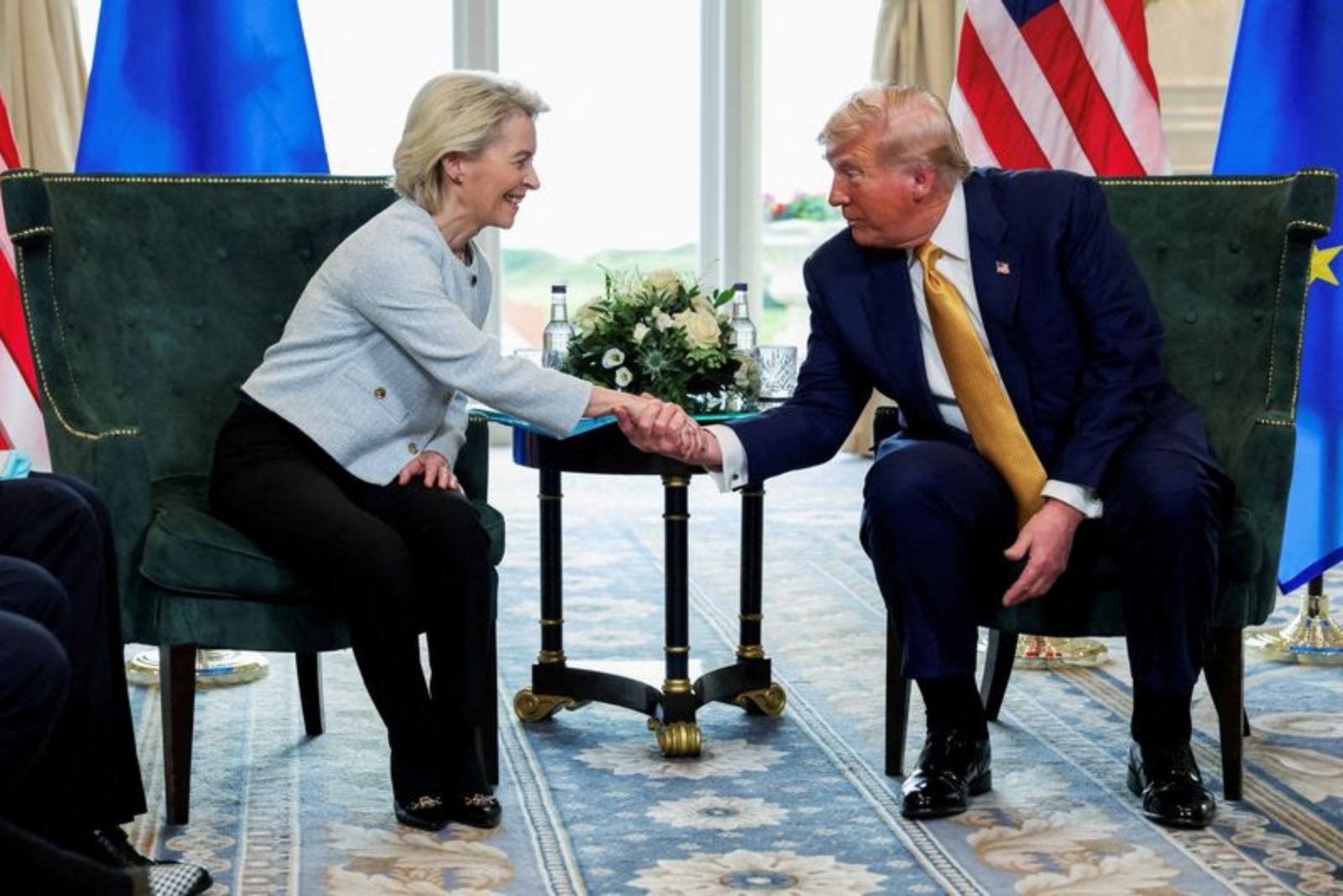
BRUSSELS, May 4 - EU governments are urging a swift completion of the bloc's legislative work to enact the European side of a trade accord with the United States, diplomats said on Monday, aiming to head off the prospect of significantly higher duties on auto imports.
Representatives from the European Parliament and the Council - the institution representing member states - are due to restart talks on Wednesday over a bill to lift EU tariffs on many imported U.S. industrial goods. Parliamentarians, however, are seeking a set of safeguards as they prepare to negotiate implementation language.
U.S. President Donald Trump said on Friday he would raise tariffs on EU cars and trucks to 25% in the coming week, accusing the EU of failing to live up to its side of a deal reached at his Turnberry golf resort in Scotland last July. Despite the agreement being nine months old, the EU has not yet removed duties on U.S. industrial imports as the two sides had agreed.
Efforts to pass enabling legislation in the European Parliament were interrupted twice. Lawmakers halted action after Mr. Trump threatened new tariffs on European allies who did not back his proposed acquisition of Greenland, and again in response to his introduction of the new import levy.
German Chancellor Friedrich Merz, whose country is expected to bear a large share of any increased car tariffs, called for a rapid resolution. Speaking to broadcaster ARD, he said: "The Americans have it finalised, and the Europeans haven’t - and that’s why I hope we can reach an agreement as quickly as possible." Diplomatic sources said most EU members favour a quick agreement between Parliament and Council so the bloc can meet its commitments.
Manfred Weber, leader of the centre-right European People’s Party in the European Parliament, backed a fast conclusion to negotiations so the parliament could give final approval within the month - an objective diplomats described as ambitious.
Bernd Lange, chair of the parliament’s trade committee who will lead the assembly’s negotiating team, described President Trump’s conduct as unacceptable and said it reinforced the need for the safeguards parliament seeks. Lange said he would convene a meeting with fellow lawmakers on Wednesday to determine next steps in the talks.
Ignacio García Bercero, a senior fellow at Bruegel and a former head of EU trade negotiations, interpreted the U.S. tariff threat in part as pressure intended to hasten agreement among EU institutions. He warned that the EU should "take the time it needs to reach an agreement, not give in to pressure nor move to escalation," adding that applying pressure could prove counter-productive.
Context and process
The negotiations now hinge on reconciling the EU assembly’s demand for safeguards with member states’ desire for speed. Lawmakers’ insistence on protections reflects concern about unanticipated market effects from the suspension of duties and the political sensitivities around reciprocal trade measures.
With Wednesday’s meeting set to restart talks, the timeline for final approval remains uncertain. Parliament leaders and national governments must bridge differences quickly if they are to implement the deal and avoid the tariff increase threatened by the United States.