
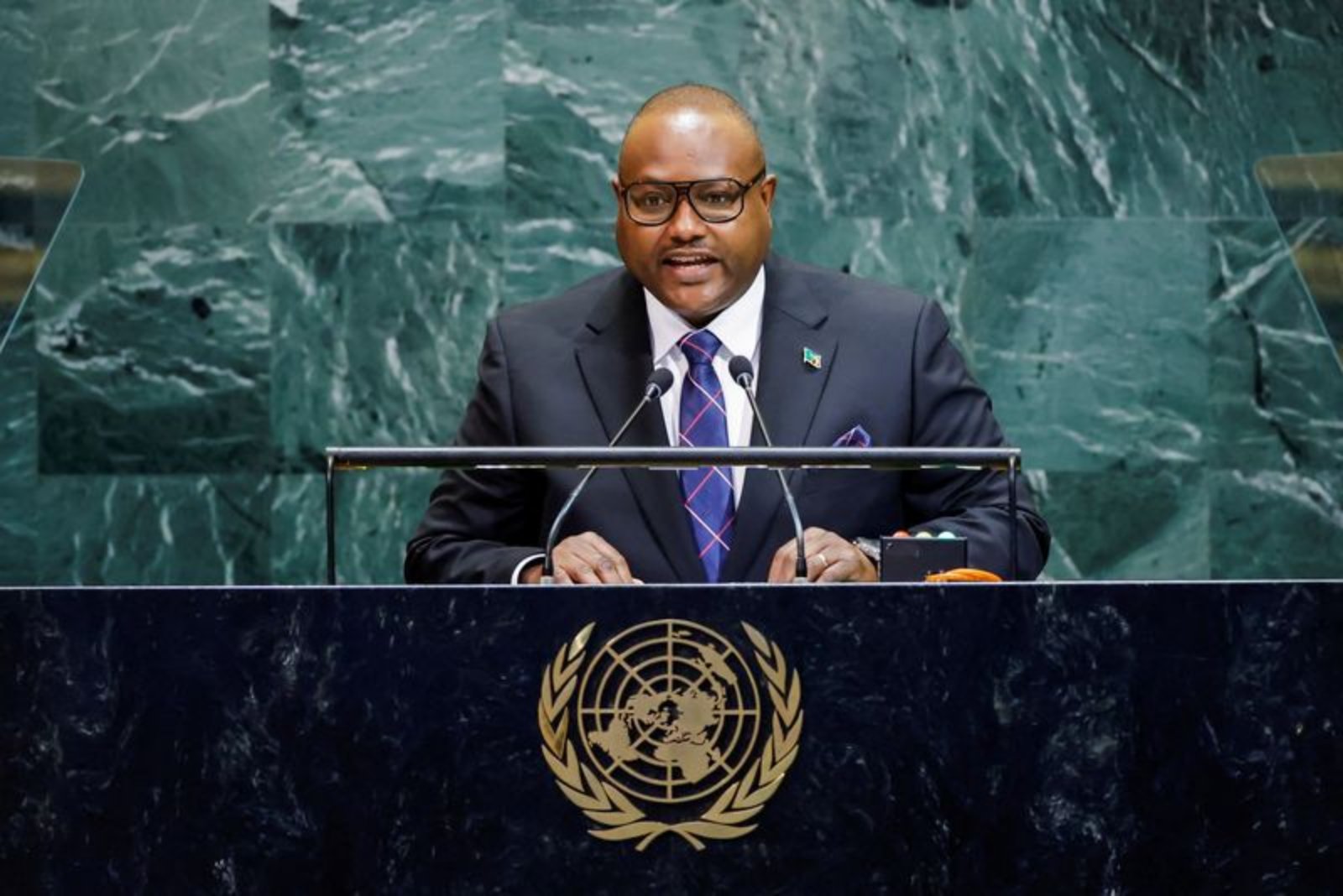
LUSAKA, May 4 - Zambia's government said on Monday it opposes linking a proposed U.S. health assistance arrangement to access to the country's critical minerals, and provided additional detail on why talks with Washington over two draft agreements have stalled.
Foreign Minister Mulambo Haimbe described the United States' health proposal as offering support of up to $2 billion over the next five years, but said some provisions on data sharing in that proposed health memorandum of understanding would infringe on Zambians' right to privacy.
Separately, Haimbe said Zambia had reservations about the substance of a separate critical minerals agreement. In a statement, he raised a specific procedural concern about the way the two initiatives had been linked by U.S. negotiators.
"A further concern... is the coupling of the proposed agreements and frameworks to one another such that the conclusion of the critical minerals agreement is made conditional to the conclusion of the Health MOU," Haimbe said.
Haimbe reiterated that the Zambian Government has been consistent in its position that each agreement should be judged on its own merits and negotiated independently. He did not provide details on what categories of health data the United States had sought under the health proposal.
On the minerals side, Haimbe said Zambia was reluctant to accept terms that insisted on preferential treatment for U.S. companies, a point the government flagged as objectionable in the negotiations.
The U.S. State Department has said it does not disclose particulars of bilateral negotiations. Advocacy groups working on health issues had earlier warned that the proposed health arrangement linked funding to mining access and raised risks around data sharing, while Zambia's government had previously limited its comments to saying parts of the draft were not aligned with national interests.
Haimbe's statement was issued after criticism from outgoing U.S. ambassador Michael Gonzales, who had accused Zambia of not engaging with the U.S. on the health funding offer - an assertion Haimbe denied in his response.
Several African countries have signed memorandums of understanding that reflect the Trump administration's revised approach to foreign aid, and some governments have pushed back on aspects of those pacts. Ghana and Zimbabwe are among nations that have rejected similar agreements, citing data sharing demands.
For now, Zambia's government says the two proposed agreements must be decoupled and reviewed independently, maintaining that national privacy protections and concerns about treatment of domestic resources should not be subordinated to a single, combined negotiation process.