
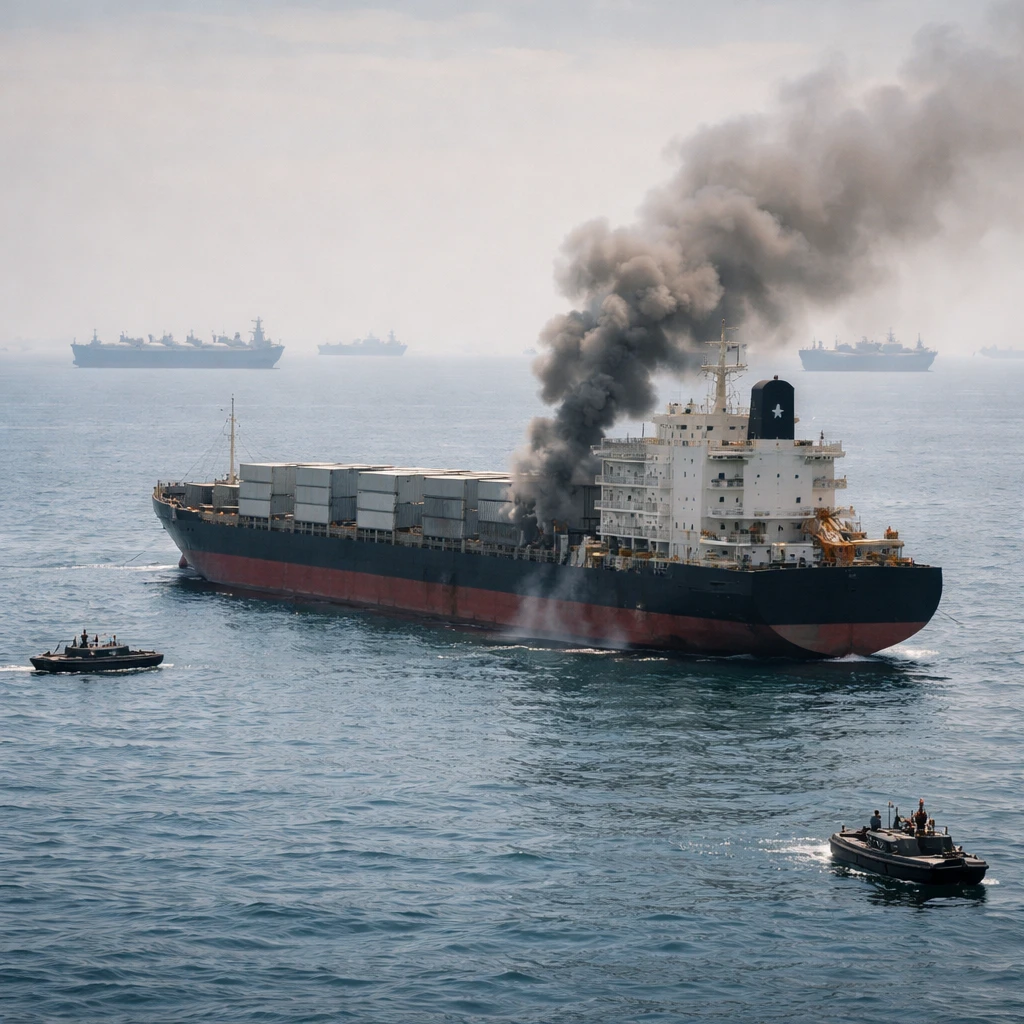
South Korean investigators have begun verifying reports of a possible attack on a domestic merchant vessel in the Strait of Hormuz after preliminary information indicated an incident in the strategic waterway. The probe was initiated on Monday, officials said, as authorities sought to determine the circumstances surrounding the episode.
According to official statements, an explosion took place in the engine room of the Korean-flagged ship. The blast was observed on the port side of the vessel while it was at anchor outside the port limits.
The South Korean Foreign Ministry has reported that, based on initial checks, there are no confirmed casualties among South Korean nationals connected to the vessel. Authorities described the casualty assessment as preliminary as the investigation continues.
Regional context and military operations
The reported event comes as international and regional actors have carried out initiatives intended to protect commercial shipping in the strait. A U.S.-led program called "Project Freedom" has been launched to assist commercial vessels rendered immobile by an Iranian-imposed blockade. Tehran has effectively limited passage through the narrow waterway since U.S.-Israeli strikes struck Iranian targets in late February, asserting that all transits require military approval.
Heightened friction in the region has produced competing accounts of naval activity. Iran's navy said it repelled enemy warships following what it described as a "swift and decisive warning." That claim was disputed by U.S. Central Command, which stated that no American navy ships were struck and noted that two U.S.-flagged merchant vessels successfully completed transits of the strait.
Separate maritime authorities have established an "enhanced security area" to the south of traditional shipping lanes and warned that customary routes are "extremely hazardous" because naval mines in the area have not been fully surveyed. The presence and status of such mines have been cited as a principal danger to commercial navigation.
U.S. Central Command has committed substantial support to efforts aimed at reopening the passage, indicating deployment of 15,000 military personnel and more than 100 aircraft in support of those operations.
Market implications and significance
The Strait of Hormuz remains a critical artery for global energy flows, serving as the primary conduit for one-fifth of the world's oil. Market participants monitor the waterway closely because any confirmed disruption to South Korean or other international shipping could complicate diplomatic and security efforts to secure the route and could influence surging energy prices.
Investigators continue to verify the available information about the vessel strike as regional naval activity and international security initiatives proceed. Authorities have characterized casualty checks as preliminary while they pursue a fuller account of the incident.