
Economy May 4, 2026 10:22 AM

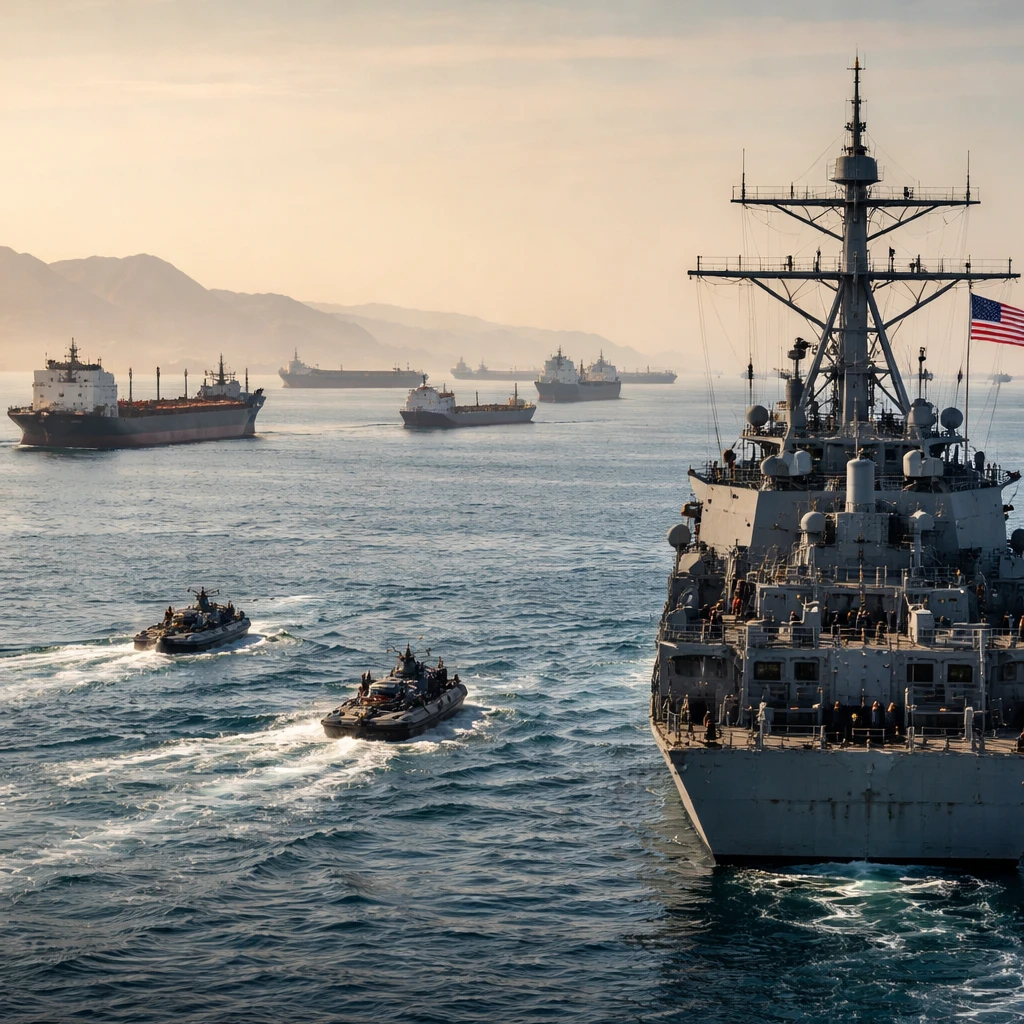
U.S. Says It Controls Hormuz Strait, Calls on China to Join Effort to Reopen Waterway

Treasury secretary urges international pressure on Iran as Washington moves to free hundreds of vessels held near Strait of Hormuz

By Caleb Monroe
U.S. Says It Controls Hormuz Strait, Calls on China to Join Effort to Reopen Waterway

Treasury Secretary Scott Bessent told Fox News that the United States has established control over the Strait of Hormuz and is working to reopen the route. He urged Iran to permit the exit of more than 300 vessels with U.S. assistance and called on international partners - specifically China - to support the operation. Bessent warned of a global oil shortfall and described Iran's economy as collapsing while reiterating that U.S. forces will fire only if fired upon.

Key Points

  • The U.S. reports control of the Strait of Hormuz and is assisting in freeing over 300 vessels - impacts global shipping and maritime logistics.
  • Treasury Secretary Bessent called on China to join the operation and noted China purchases 90% of Iranian energy - relevant to energy trade and diplomatic relations.
  • Officials warn of an 8 million to 10 million barrel per day oil deficit with each carrier through Hormuz carrying roughly 2 million barrels - a key factor for oil markets and global supply chains.

Treasury Secretary Scott Bessent said Monday that the United States has absolute control of the Strait of Hormuz and appealed to China to join international efforts to reopen the strategic waterway.

Speaking on Fox News, Bessent said U.S. forces are in the process of opening the Hormuz Strait and urged Iran to allow more than 300 vessels to leave with American help. He asserted that Iranians do not hold control of the strait.

The secretary urged partners around the world to apply pressure on Tehran, singling out China as a nation he wants to see participate in the operation. Bessent noted that China has been purchasing 90% of Iranian energy and suggested that the upcoming summit next week provides an opportunity for President Trump and President Xi to exchange views. He emphasized that U.S. officials aim to keep the bilateral relationship stable.

Bessent framed the current global energy situation as acute, saying the world faces an 8 million to 10 million barrel per day oil deficit. He added that each carrier transiting the Strait of Hormuz typically carries about 2 million barrels. At the same time, he described the Iranian economy as being in freefall.

On the operation known as Project Freedom, Bessent said it was not undertaken in coordination with Iran. He stressed that the United States does not see itself as the provocateur but also signaled a readiness to escalate should Iran choose that path. He added that U.S. military personnel will fire only if they are fired upon.

The Treasury Secretary reiterated his expectation that oil prices will decline once the present hostilities subside, calling the current disruption a temporary aberration that he anticipates will end in weeks or months.


Summary of events:

  • The U.S. says it controls the Strait of Hormuz and is facilitating the exit of more than 300 vessels.
  • Washington has called on China to participate in reopening the waterway; China reportedly buys 90% of Iranian energy.
  • U.S. officials indicate a willingness to escalate if Iran acts aggressively, while stating U.S. forces will fire only if fired upon.

Risks

  • Potential military escalation if Iran chooses to respond - risk to regional security and to shipping and energy sectors.
  • Near-term volatility in oil prices due to an ongoing supply disruption described as a temporary aberration - risk to energy markets and inflation dynamics.
  • Uncertainty over international cooperation, including whether China will join the operation - risk to the effectiveness of efforts to reopen the strait and to diplomatic relations between major trading partners.

More from Economy

Think tank trims Russia growth outlook, says higher oil prices won't offset production losses May 4, 2026 Bolivia courts investors for first dollar bond offering in four years May 4, 2026 Economists Lift Mexico 2026 Inflation Outlook, Trim Near-Term Growth Forecast May 4, 2026 UAE Issues Missile Alert as Ceasefire Strains and Shipping Moves Resume May 4, 2026 Short-Term Calm, Hidden Pressure: Wolfe Research Says Iran Conflict Is Sowing Economic Risk May 4, 2026