
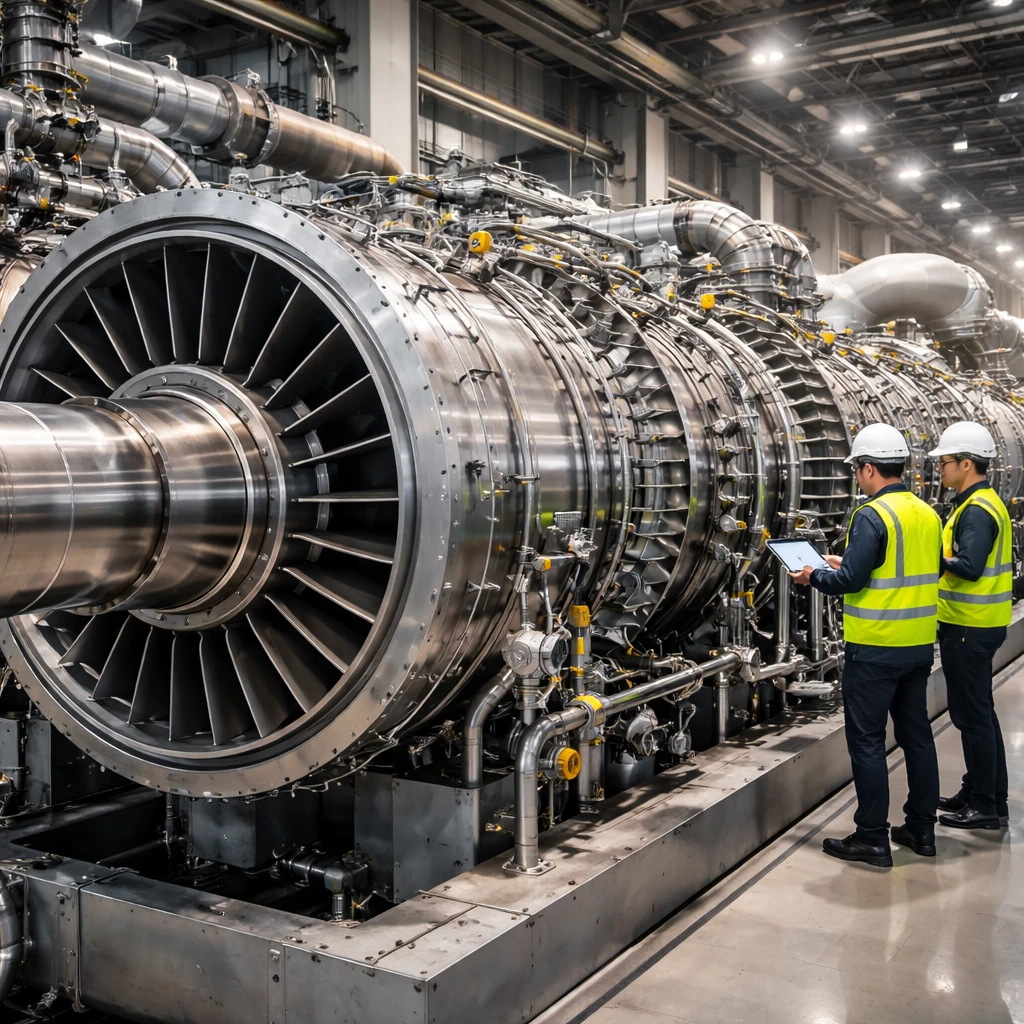
Barclays has set a bullish outlook for companies that supply equipment and components for gas-fired power generation, saying they stand to gain from a large wave of capital spending tied to artificial intelligence infrastructure. The bank projects that annual AI infrastructure expenditures by Western hyperscalers and AI labs could exceed $1 trillion - a figure the bank says is more than $300 billion above current consensus forecasts - and that this spending will peak in 2028.
That anticipated spending surge, Barclays argues, should support elevated demand for turbines, engines, precision components and control systems used to generate electricity at the scale and reliability demanded by large compute installations. The bank identified a group of manufacturers and suppliers it views as particularly well positioned to capture that demand.
Companies highlighted by Barclays
-
Caterpillar (CAT) - Barclays notes that the industrial equipment maker has signaled plans to expand its Solar turbine capacity by 2.5 times and to double its large engine capacity by 2030 versus 2024 levels. Those capacity expansions are presented as positioning Caterpillar to meet rising power generation needs. Separately, the firm reported first-quarter results that exceeded analyst expectations by 20%, an outcome that prompted at least one upgrade from Morgan Stanley and multiple increases to price targets from other research teams.
-
GE Vernova (GEV) - The energy equipment unit is targeting turbine capacity growth from 16 gigawatts to 20 gigawatts by the third quarter of 2026, and to 24 gigawatts by 2028. Barclays highlights this planned expansion as material for serving the growing market. The company’s recent solid EBITDA performance and a raised full-year outlook spurred several analyst firms to lift price targets; however, BNP Paribas Exane moved to downgrade the company’s rating to neutral.
-
Howmet Aerospace (HWM) - Howmet, which makes complex turbine blades and castings for major gas turbine original equipment manufacturers, is cited for producing components critical to power generation systems. The company received multiple price target increases and confirmations of analyst ratings, with those analysts citing rising demand for its turbine components used across aircraft and data-center applications.
-
Baker Hughes (BKR) - The energy technology company is noted for selling aeroderivative turbines to oil and gas customers while offering its proprietary NovaLT industrial turbines across end markets. Barclays highlights the company’s first-quarter revenue and earnings beats, attributing the outperformance in part to robust order intake for LNG equipment within its Industrial & Energy Technology segment.
-
Cummins (CMI) - As a designer and manufacturer of natural gas-powered generator sets and engines for both standby and prime power use cases, Cummins is included for its exposure to power solutions. The company reported adjusted fourth-quarter 2025 earnings per share that beat consensus by 14%, and announced a quarterly cash dividend of $2.00 per share.
-
Bloom Energy (BE) - Barclays flags Bloom after American Electric Power executed an unconditional purchase agreement to procure a substantial portion of its option to acquire 900 megawatts of fuel cells. Bloom Energy posted record first-quarter results that significantly exceeded revenue and profit expectations and disclosed a master services agreement with Oracle.
-
FTAI Aviation (FTAI) - FTAI converts CFM56 aircraft engines into 25 megawatt aeroderivative turbines and is targeting production of more than 100 units annually. The company delivered first-quarter 2026 results in which revenue significantly beat expectations, although earnings per share fell short of forecasts.
-
Woodward (WWD) - The precision-components maker supplies control solutions such as valves and actuators for gas and steam turbines. Woodward reported record net sales of $1.1 billion for the second quarter of fiscal year 2026, a 23% year-over-year increase, and its earnings per share also topped analyst estimates.
-
ATI (ATI) - ATI manufactures advanced nickel alloys and zirconium used in the hot sections of land-based gas turbines. For the first quarter of 2026 the company reported earnings per share that beat analyst expectations, while its revenue for the period came in below forecasts.
-
Generac (GNRC) - The backup power-systems manufacturer has amassed a backlog of $400 million for its new diesel backup generators aimed at data centers. Generac’s first-quarter 2026 results showed both earnings and revenue above analyst estimates.
Barclays additionally called out several other names within the broader category of gas power equipment and services: BorgWarner, Babcock & Wilcox, and Net Power. These firms were mentioned as part of the wider set of companies that could participate in demand linked to AI infrastructure buildouts.
Analysis and market context
The bank’s estimate that Western hyperscaler and AI-lab capex could surpass $1 trillion annually - exceeding consensus by more than $300 billion - frames the potential scale of demand for on-site power generation. The companies identified span the value chain: OEMs building turbines and engines, specialty-materials suppliers for hot-section components, providers of control and actuation systems, and firms producing backup and distributed-generation units. Barclays’ list mixes large-cap industrials and energy-technology firms with smaller, niche suppliers that provide specialized equipment or conversion services.
Several of the named companies posted recent quarterly results or corporate developments that Barclays referenced: earnings beats and raised guidance in some cases, price-target increases from analysts for others, and contract or backlog announcements that speak to near-term demand realization.
Key points
- Barclays projects annual Western hyperscaler and AI lab infrastructure spending could top $1 trillion and peak in 2028, more than $300 billion above current consensus estimates.
- Manufacturers of turbines, large engines, turbine hot-section materials, control systems and backup generators are cited as direct beneficiaries of the anticipated spending.
- The companies highlighted by Barclays reported a mix of recent financial results, capacity plans and commercial agreements that the bank views as supportive of demand capture.
Risks and uncertainties
- Forecast uncertainty - Barclays’ projection exceeds current consensus by over $300 billion; whether that scale and timing of AI-related capex materializes remains uncertain.
- Mixed company results and analyst views - several firms on the list have shown uneven results or divergent analyst reactions, including a downgrade to neutral for GE Vernova from BNP Paribas Exane despite other firms raising price targets.
- Company-level variability - some names reported revenue beats with EPS misses or vice versa, illustrating that operational performance across providers may vary even amid elevated market demand.
Bottom line
Barclays highlights a group of gas power equipment and component suppliers as potential beneficiaries of an anticipated surge in AI infrastructure spending. The bank’s view is built on a sizable capex projection and is supported by company-level developments such as capacity expansion plans, beat-or-raise quarterly results, backlog growth and contract wins. At the same time, differing quarterly outcomes and at least one analyst downgrade underscore that execution and timing will influence which companies capture the most upside.