
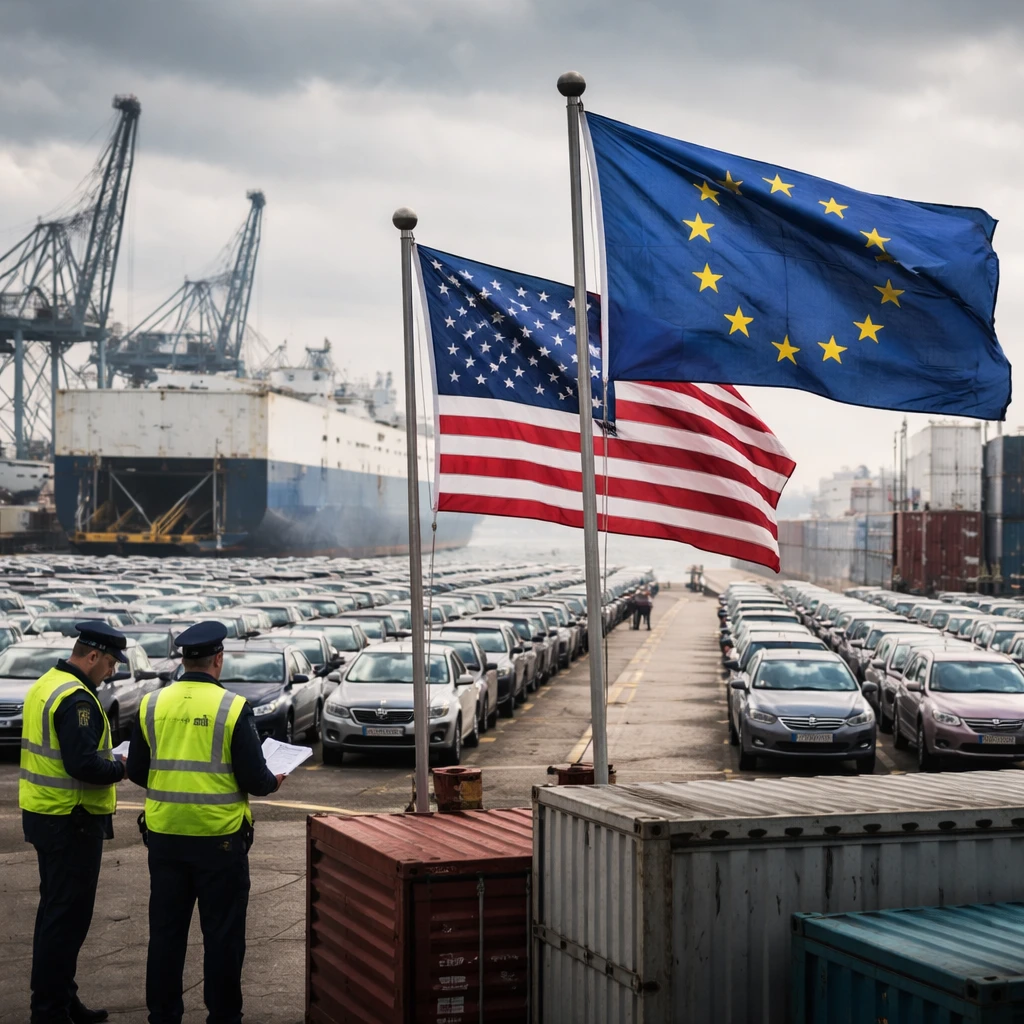
EU governments are urging rapid completion of the bloc's legal steps to implement the EU side of a trade agreement with the United States, seeking to avoid a jump in U.S. tariffs on motor vehicles.
Lawmakers in the European Parliament and representatives of member states in the Council are due to continue talks on Wednesday over legislation to roll back EU duties on imported American industrial goods. Parliament is pushing for a package of safeguards to be included in the implementation measures.
President Donald Trump said on Friday that he intended to raise duties on EU cars and trucks to 25% this week, blaming the EU for not meeting the terms of a deal reached in July at his Turnberry golf resort in Scotland. The tariff increase is presented by the U.S. administration as a response to the EU's failure to eliminate certain tariffs on American industrial imports as the two sides had agreed.
Nearly nine months after the July accord, the EU has still not taken the legislative steps needed to remove those duties, leaving part of the agreement unimplemented. The European Parliament has twice paused the required legislation amid wider tensions, including previous threats from President Trump to impose tariffs on European allies over their stance on a proposed acquisition of Greenland and his later announcement of new import levies.
EU member states largely favor reaching a quick deal between Parliament and the Council to discharge the bloc's obligations under the agreement, Reuters reported on Monday citing EU diplomats. The diplomats indicated that governments want the legislative process to move swiftly to reduce the risk of retaliatory measures from the United States.
Manfred Weber, who leads the centre-right European People's Party - the largest group in the European Parliament - said negotiations should be wrapped up quickly so that the full parliament can give final approval this month. His remarks underscore a desire among influential parliamentary blocs to resolve outstanding issues without delay.
As institutions work through the text and safeguards, the immediate deadline set by Washington has heightened urgency in Brussels. Lawmakers and member states are balancing the technical details of implementation with the political imperative to prevent an escalation in transatlantic trade barriers.