
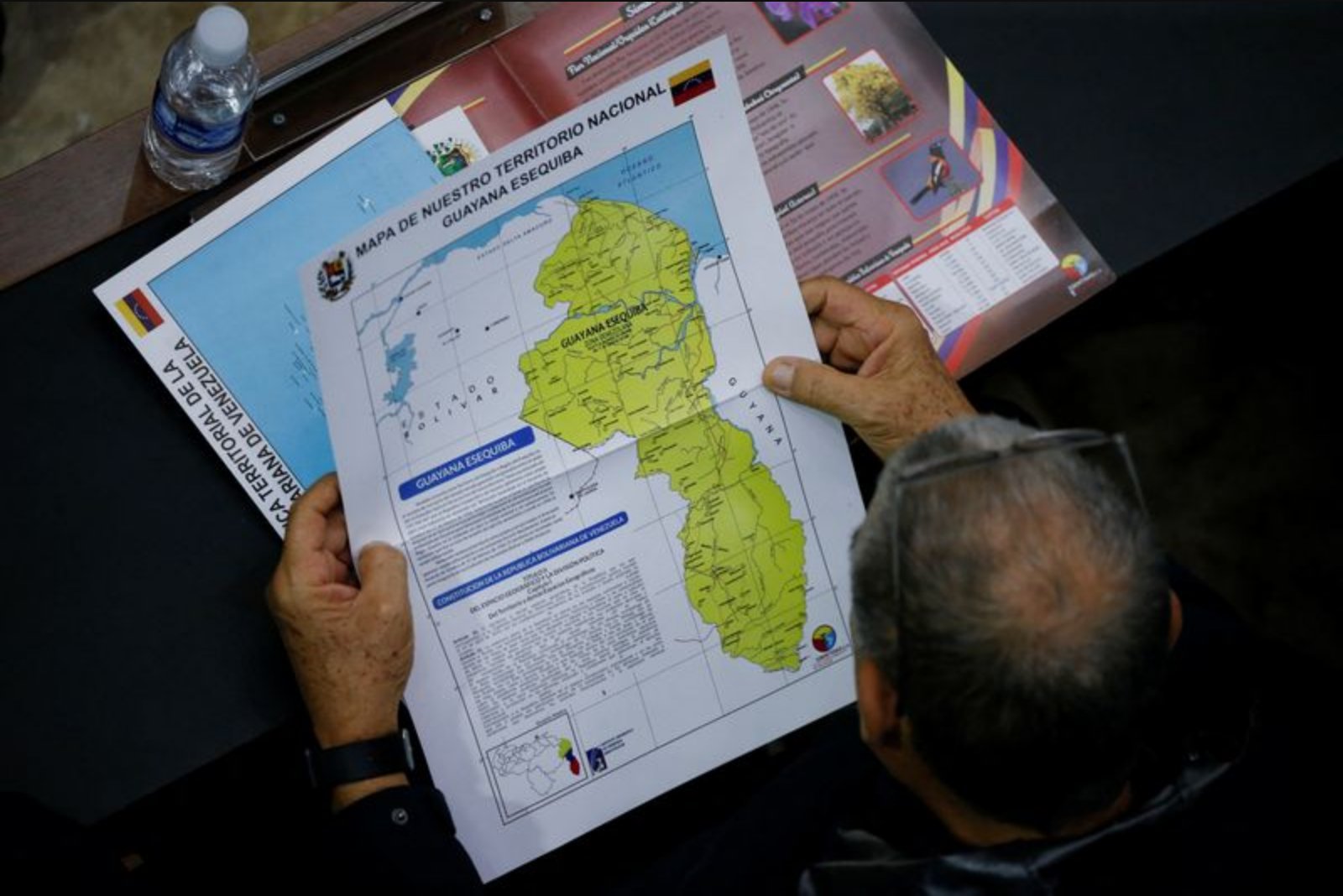
THE HAGUE - Guyana has asked the International Court of Justice (ICJ) to rule that Venezuela does not have a legitimate claim to the Esequibo area, a contested border region that spans about 160,000 square kilometres (62,000 square miles). The case, which centers on both land around the Esequibo river and adjoining offshore waters where substantial oil and gas deposits have been discovered, returned to the World Court this week for a set of hearings.
At the opening of week-long proceedings, Guyana’s Foreign Minister Hugh Hilton Todd told judges that the dispute with its larger neighbour has gone beyond mere rivalry. "Facing a larger and more powerful neighbour’s designs on our territory has not only threatened our peace and security, it has held back our development," he said, urging the court to confirm Guyana’s sovereignty defined by an 1899 arbitration decision.
The area in question is largely jungle inland but includes an offshore zone that has seen "massive discoveries of oil and gas," according to the arguments presented to the ICJ. Todd also told the court that Venezuela’s claim, which Guyana calls "unlawful," would cover more than 70% of Guyana’s territory if accepted.
Guyana initiated proceedings at the ICJ in 2018, asking the United Nations’ top court to reaffirm the border demarcation established in the 1899 arbitration between Venezuela and the then-colony of British Guiana. In statements noted during the hearings, Guyana sought a judicial confirmation that the 1899 award assigns the contested territory to Guyana.
Venezuela has rejected the ICJ’s jurisdiction over the dispute. In 2023, Venezuelan voters took part in a referendum that rejected the court’s jurisdiction and supported the creation of a new state in the Esequibo region - a state that Venezuela established the following year. The Venezuelan side is scheduled to present its arguments to the court on Wednesday.
Complicating the diplomatic picture, after the capture of President Nicolas Maduro and his wife by U.S. forces in January, Venezuela is being run by an interim government, a factor noted in the context of the case. A final ICJ judgment is expected in months rather than weeks.
ICJ rulings are binding and not subject to appeal, yet the court itself lacks direct enforcement powers and must rely on the United Nations Security Council to implement its decisions. That enforcement gap was referenced in court filings as a practical limitation on the immediate effect of any ruling.
Context and next steps
The hearings this week are part of the ICJ process set in motion by Guyana’s 2018 application. Venezuela will have the opportunity to make its case midweek, and observers will await the court’s final ruling, which could arrive months from now.