
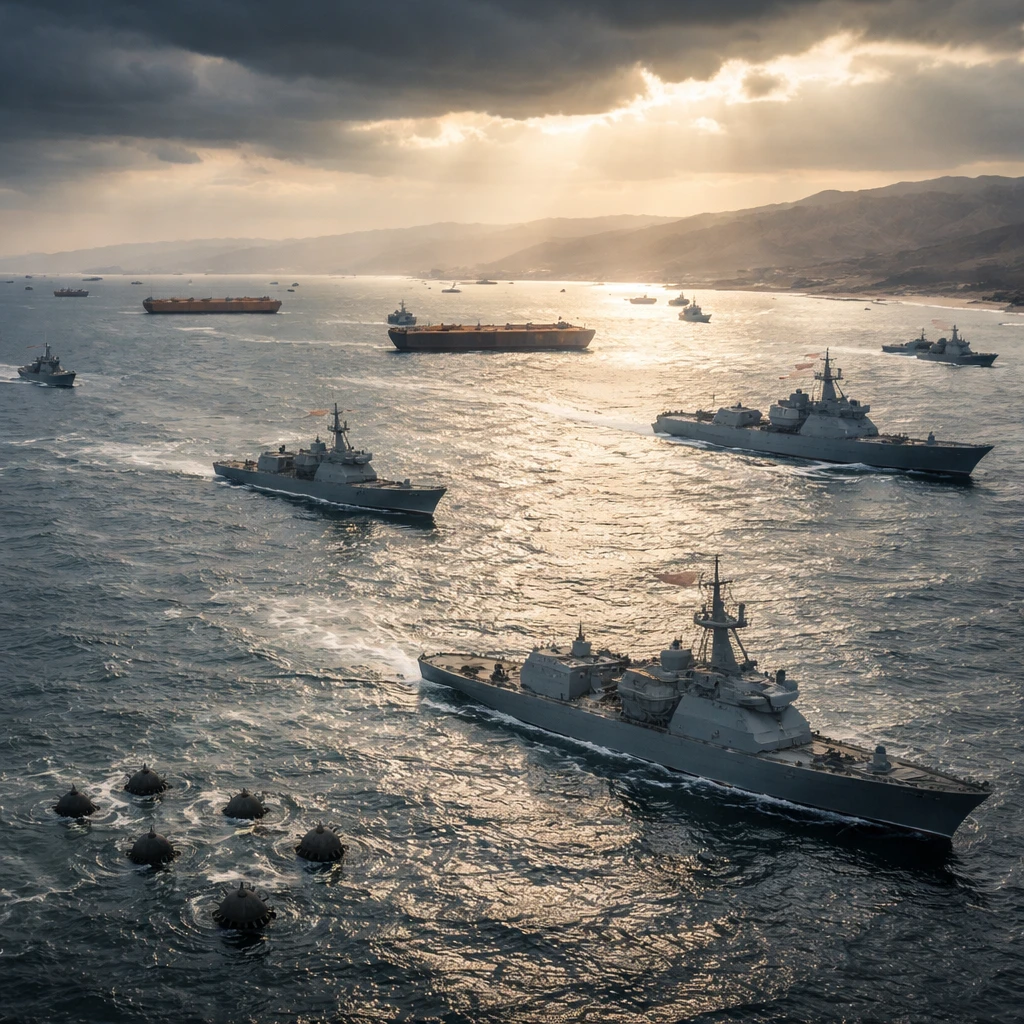
Iranian state television reported that Iran’s navy turned back enemy warships seeking to pass through the Strait of Hormuz after delivering what it called a "swift and decisive warning." Independent confirmation of the claim was not immediately available.
A senior U.S. official, speaking about related incidents, denied that a U.S. ship had been struck by Iranian missiles.
Tehran's military has explicitly warned U.S. forces not to enter the strait, following a public statement by the U.S. President that U.S. forces would begin to "guide" vessels stranded by the effective closure of the narrow waterway. Iran's military also said commercial vessels should not move in the area without approval from Tehran's armed forces.
Over the weekend, the U.S. administration announced an initiative referred to by its proponents as "Project Freedom," aimed at helping to reopen stalled shipping traffic through the Strait of Hormuz. Few operational details were released about the plan.
Separately, the U.S.-led Joint Maritime Information Center has established an enhanced security area located south of the traditional shipping routes through the strait. The center cautioned that the typical routes remain "extremely hazardous" because of naval mines that "have not been fully surveyed and mitigated."
U.S. Central Command, which is conducting an ongoing blockade of Iranian ports, said it would provide support in the form of 15,000 military personnel and more than 100 land- and sea-based aircraft.
The Strait of Hormuz is a key conduit for global energy flows, carrying about a fifth of the world’s oil. Tehran has effectively locked down the waterway since a joint U.S.-Israeli assault on Iran in late February, a development that has heightened concern across markets.
Market reactions have been immediate: Brent crude futures, the global oil benchmark, rose above $110 a barrel on Monday as traders reacted to the heightened risks around passage through the strait.
Key points
- Iranian naval authorities reported repelling hostile warships attempting to transit the Strait of Hormuz, according to state television reports.
- Tehran has warned both military and commercial vessels not to move through the strait without its permission; U.S. officials have announced measures to assist stranded ships.
- The effective closure of the strait has pressured global oil markets, with Brent crude rising above $110 a barrel.
- Navigation hazards persist because naval mines in the strait "have not been fully surveyed and mitigated," increasing the danger for commercial shipping and complicating efforts to reopen routes - directly affecting the shipping and energy sectors.
- Escalation between Iranian forces and foreign navies could further tighten supply routes and amplify oil price volatility, creating additional pressure on energy markets and downstream economic actors.
- Limited details on initiatives to reopen the strait, such as "Project Freedom," leave uncertainty over the timing and effectiveness of efforts to restore normal traffic - a concern for commodity-sensitive sectors and global supply chains.
This situation presents a direct shock to the oil and shipping sectors, with broader implications for economies exposed to higher fuel costs and for companies whose cash flow and capital plans are sensitive to commodity price swings. The presence of unswept mines and ongoing military deployments complicates both the operational and financial outlook for firms reliant on uninterrupted crude exports and seaborne trade.
At present, the factual record is limited to statements from Iranian state media and official denials from U.S. officials, along with public announcements about security measures and military support levels. Where details are lacking - including the operational specifics of security initiatives and the scale of any on-water engagements - they remain unresolved in the public accounts.