
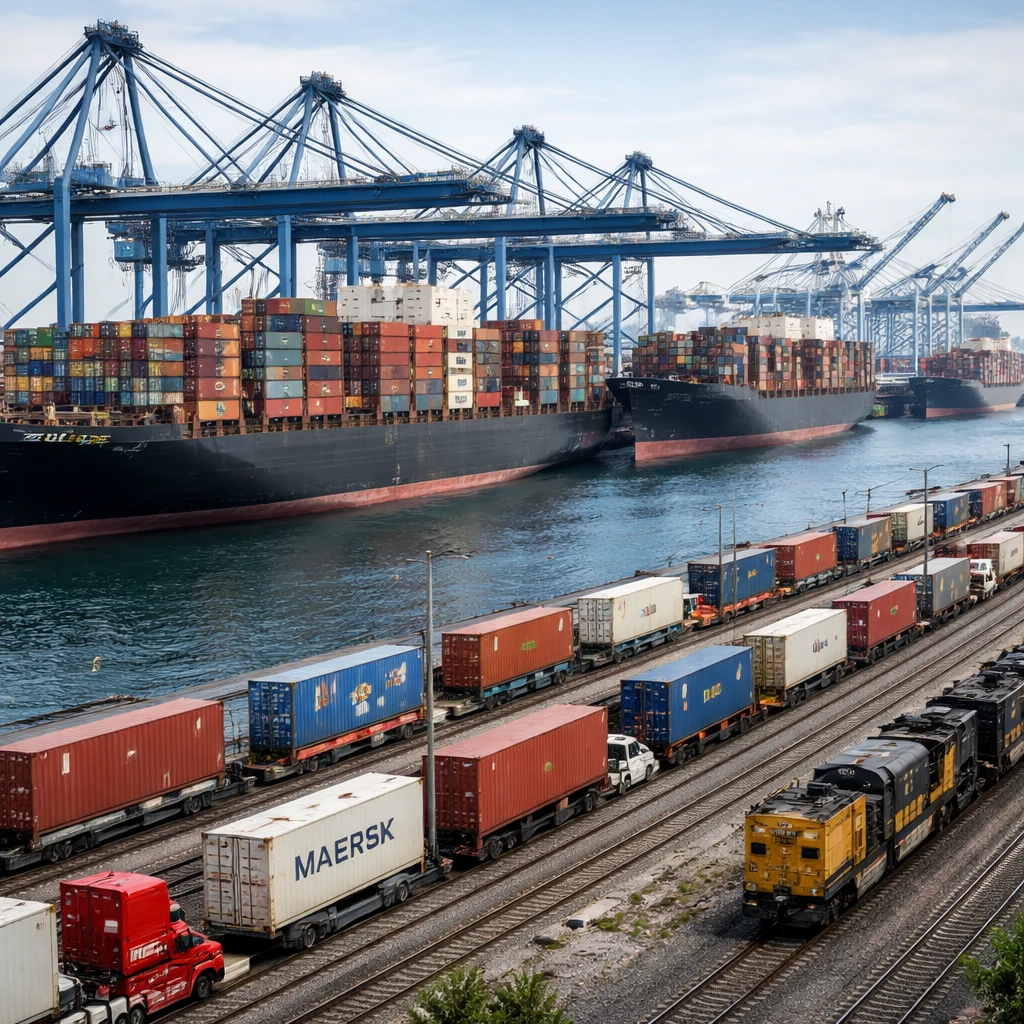
Goldman Sachs' US Tariff Impact Tracker reported that laden vessels sailing from China to the United States rose 4% week-over-week and were up 25% compared with the same week last year for the week ending Thursday, April 30.
Looking at containerized cargo entering the Port of Los Angeles, Goldman Sachs' data projects a moderation in incoming TEUs over the near term. The bank anticipates a 5% week-over-week slowdown in TEUs next week, following a 1% sequential increase in the most recent week. Two weeks out, the forecast flips to an 18% week-over-week increase. Year-over-year growth for TEUs at the port is projected at 22% for the one-week-ahead view and 65% for the two-week-ahead view.
Goldman Sachs noted that observing these levels through May could offer insight into how shippers plan to restock inventory in the context of lower effective tariff rates and an uncertain geopolitical backdrop. The firm flagged the near-term monitoring window as potentially informative about importer behavior and timing.
Turning to inland logistics, rail intermodal volumes on the West Coast showed a 2% year-over-year increase, improving on last week’s 1.5% year-over-year gain. Ocean container freight rates rose 1% sequentially and were 16% higher year-over-year in the latest week measured.
Truckload metrics on the West Coast displayed mixed signals. Load availability for trucks declined 4% sequentially, while remaining positive on a year-over-year basis at 20%. Truck spot rates on the West Coast, excluding fuel, were up 19% year-over-year.
These observations together outline a freight picture with short-term variability week to week but generally stronger activity compared with the prior year across ocean, rail, and truck measures. The combination of evolving tariff dynamics and geopolitical uncertainty is the specific context Goldman Sachs identified for continued monitoring.