
Asia Pacific banks have moved to increase loan loss provisions in response to economic headwinds tied to the Iran conflict, with some lenders warning that further hits to earnings are possible if energy and trade disruptions continue.
Executives at banks in Australia, Singapore and India cited the indirect cost of the conflict while reporting March quarter results, flagging provisions that amount to hundreds of millions of dollars at individual institutions. The increase in credit loss provisioning comes as lenders confront a combination of higher-for-longer oil prices, supply chain and trade interruptions, rising interest rates and erosion in corporate balance sheets.
Provisions so far and context
For the four largest Australian banks, the combined provision set aside for war-related risks totals A$957 million ($694.40 million), a level that is 80% smaller than the buffer those banks created in 2020. For eight large Asian banks outside China and Japan, Reuters calculations show provisions amounting to $2.8 billion, which is 70% lower than the wartime provisioning in 2020.
Analysts note that the current build-up of provisions remains modest by the standards of the COVID-induced shock five years ago. Still, the persistence of elevated energy prices and other spillovers could push more of these forward-looking overlays into realised credit losses, they say.
Analysts' assessment
Gary Ng, senior economist for Asia Pacific at Natixis CIB, said: "More Asian banks have increased provisions and forward-looking overlays to reflect the risks from the Iran war," while observing that there has not yet been a wave of credit defaults. He added: "The bottom line is that even if the war ends soon, energy prices may remain elevated due to supply destruction. Interest rates may not fall, which can hurt corporate repayment capacity and pressure credit demand."
Interactive Brokers senior economist José Torres warned the regional banking sector's earnings are likely to weaken next quarter because of elevated oil prices, weaker currencies and soaring bond yields.
Australia: material market moves and added cushions
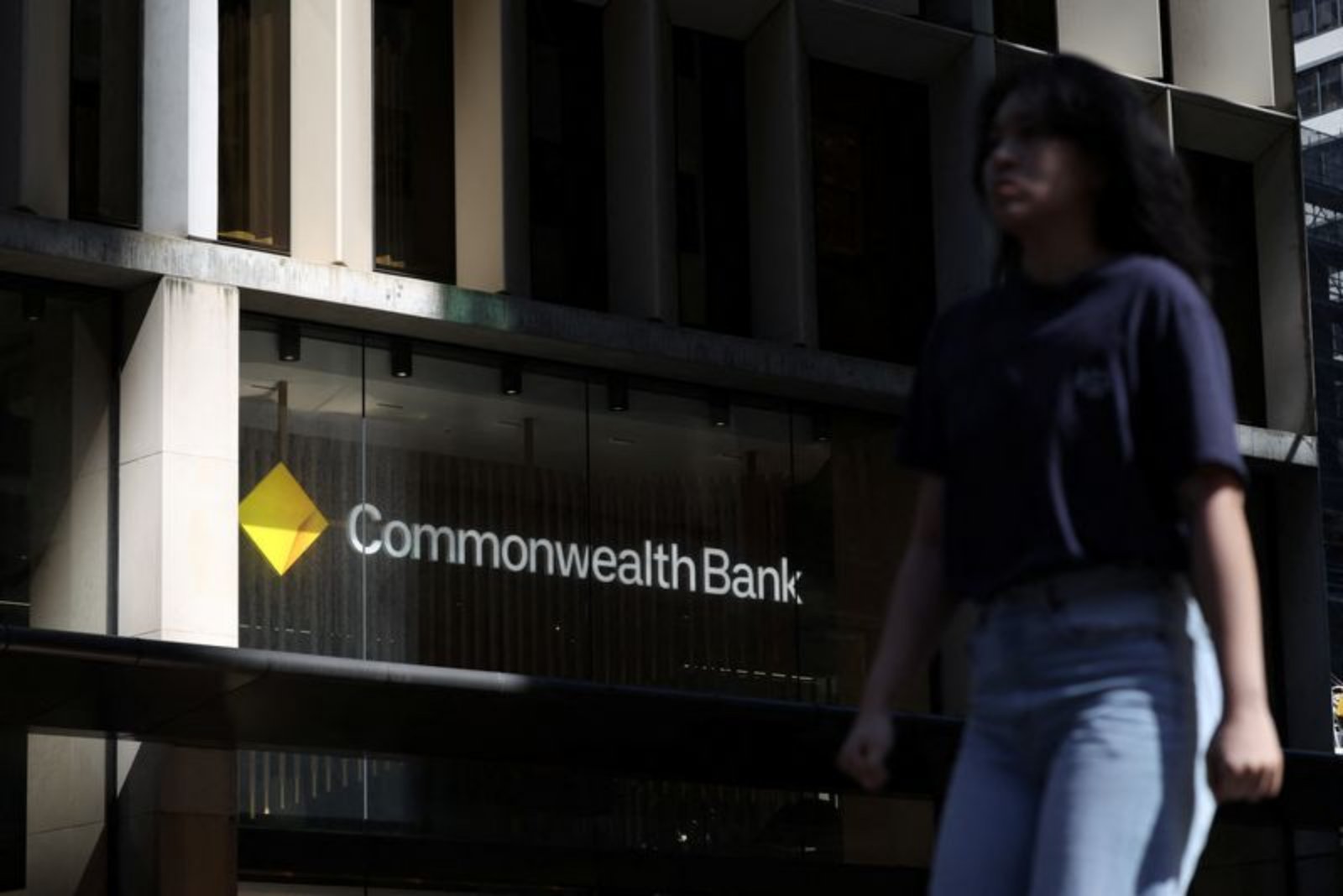
Australia's biggest lender, Commonwealth Bank of Australia, saw nearly $22 billion wiped from its market value on a single Wednesday after the bank disclosed additional cash set-asides to cover Middle East-linked risks. Over the past two weeks, the country's other three leading banks have added A$757 million ($549.13 million) in provisioning to cover potential future bad debts arising from the conflict.
Despite these moves, some market and industry analysts caution that current provisioning could still prove inadequate if turmoil intensifies and spills into credit markets. "It's all ahead of us. Banks are late cycle and we'll see the real impact on the domestic economy via industrials and cyclicals in the next 6 months," said Matthew Wilson, head of financial research at Jarden, while noting it is still too early to determine whether a formal credit market disruption will occur.
Singapore and other Asian markets
In Singapore, the three largest lenders report limited direct exposure to the Middle East - the region accounts for less than 3% of their lending. Nevertheless, OCBC set aside S$216 million ($170 million) in provisions related to the conflict. United Overseas Bank's chief executive, Wee Ee Cheong, described the bank's direct exposure as "insignificant", but cautioned that second-order effects could lift costs for small and medium-sized enterprise customers.
London-headquartered HSBC and Standard Chartered, whose revenue generation is concentrated in Asia, reported $300 million and $190 million charges respectively in the March quarter and cited a cautious stance. Kathy Chan, an equity analyst at Morningstar, said: "We think further provisions (at HSBC and StanChart) are not impossible, given the fluid nature of the ongoing conflicts," and noted the two banks have been cautious in assessing risks.
India: buffers without asset deterioration
About half a dozen Indian lenders, including HDFC Bank, Axis Bank and Blackstone-backed Federal Bank, have built provision buffers even though they have not yet observed deterioration in asset quality. These moves fit the broader pattern of forward-looking provisioning across the region.
Market reactions and investor views
Shares of Australian banks have been the hardest hit in the Asian banking cohort since the conflict began on Feb. 28. National Australia Bank has fallen 21.2% while Westpac has dropped 12.4% over the same period.
Angus Gluskie, managing director at Whitefield, which manages A$1.5 billion in assets and owns stakes in Australia's big four banks, described current provisioning as cautious. "The provisioning that has currently been made represents a conservative estimate of the effects to date," he said. "If the issue can be quickly solved the provisions may be partly wound back. If the issue persists, the banks may need to provide more."
Outlook
Analysts stress that the magnitude of future credit losses in the Asia Pacific banking sector will hinge on how long the Iran conflict continues and the degree to which it drives sustained energy market disruption. While capital buffers currently limit the immediate impact of higher provisions, prolonged elevated oil prices and higher interest rates could strain corporate repayment capacity and, over time, lead to realised credit losses that would require banks to rebuild balance sheets.
($1 = 1.3785 Australian dollars) ($1 = 1.2723 Singapore dollars)