
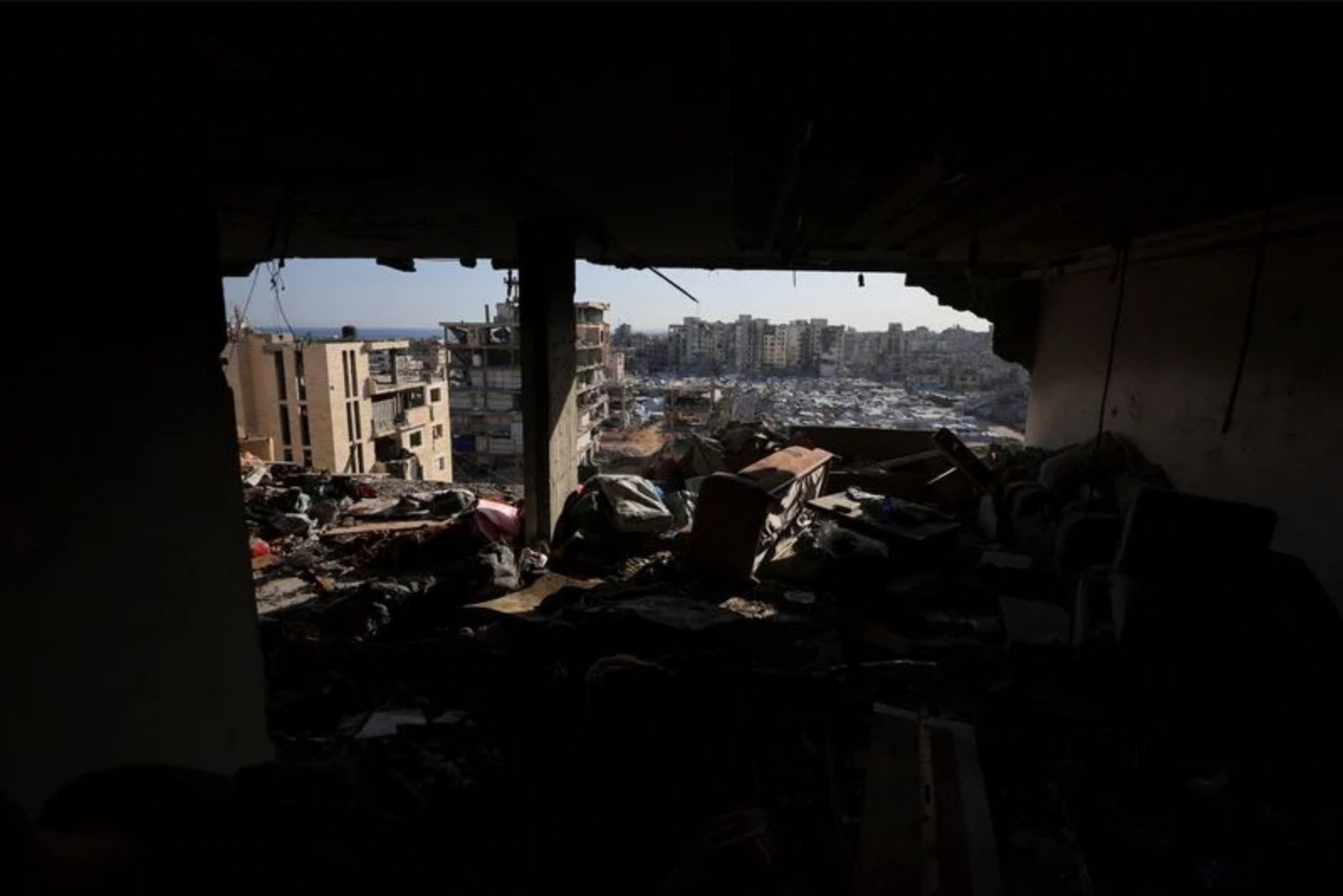
Residents in multiple countries across the Middle East remained under fire this week even as the United States has pushed ceasefires it helped negotiate. Israeli airstrikes struck targets in Gaza and Lebanon; Hezbollah launched rockets into northern Israel; and Iranian attacks hit Kuwait’s international airport. U.S. President Donald Trump on Wednesday described the ceasefires as involving "shooting in a more moderate manner" rather than a complete halt to violence.
His administration has negotiated three truces meant to stop the fighting. Those agreements succeeded in sharply reducing major combat, but they have not eliminated hostilities. Munitions continue to fall and people continue to die, as local and regional actors test the limits of the interim arrangements or pursue unresolved goals by force.
Gaza - A ceasefire that froze major warfare but left core issues unresolved
The United States brokered a ceasefire between Israel and Hamas on October 10, 2025, bringing major warfare to an end. The agreement set out a number of commitments: a halt to all fighting, the release of all remaining hostages held in Gaza by Hamas, the freeing of Palestinian prisoners by Israel, a phased Israeli withdrawal, an increase in aid deliveries and the opening of a crossing into Egypt.
President Trump proposed a further plan to expand that ceasefire into a broader settlement. The plan envisaged disarming Hamas, establishing a new Gaza government without Hamas involvement, rebuilding infrastructure in Gaza and completing an Israeli withdrawal. In practice, the truce has been only partially implemented.
All hostages were released under the pact, but the two sides dispute how much aid Israel has permitted into Gaza. Hamas has not accepted disarmament. Reconstruction work of any scale has not begun, and Israel says it seeks to expand the territory it controls within the enclave. Despite the truce, Israeli air strikes on Gaza have continued, with more than 900 Palestinians killed since the October 10 ceasefire including nine killed on Thursday. Sporadic attacks by Palestinian militants have also killed four Israeli soldiers operating in Gaza.
Lebanon - Partial ceasefire and renewed fighting along the border
After fighting in 2024, a ceasefire between Israel and Lebanon’s Iran-backed Hezbollah was only partially implemented, with each side accusing the other of violations. Open warfare resumed in March after the broader war with Iran erupted: Hezbollah fired into Israel while Israeli forces seized swathes of southern Lebanon and carried out airstrikes across other areas.
On April 16, following rare contacts between representatives of the Israeli and Lebanese governments, President Trump announced a 10-day ceasefire in Lebanon. Even with that announcement, intense fighting persisted in southern Lebanon, though Israel largely avoided strikes on Beirut.
Since April 16, Israeli strikes have killed hundreds of people in Lebanon, bringing the Lebanese authorities' toll to more than 3,500 since March 2. That figure does not distinguish between civilians and fighters. Israel reports that 26 of its soldiers and four civilians have been killed in Hezbollah attacks since March. Iran has insisted any deal to end its wider war with the United States and Israel include a ceasefire in Lebanon and the reopening of the Strait of Hormuz.
On Wednesday, President Trump said Lebanon and Israel had agreed to implement a new ceasefire conditional on Hezbollah withdrawing from southern areas. Hezbollah has rejected that condition and fighting has continued.
U.S.-Iran front - ceasefire talks stalled amid ongoing exchanges of fire
The United States and Israel attacked Iran on February 28 with the stated objective of destroying aspects of Iran’s nuclear and ballistic missile programmes. Those strikes followed a 12-day war last year during which Israel, later joined by the United States, struck many of Iran’s nuclear facilities and military leaders.
Despite the deaths of many senior Iranian figures, Iran has managed to close off the Strait of Hormuz at times, constricting Gulf energy exports and affecting the global economy. In early April the United States announced a ceasefire with Iran and said talks would follow on a more lasting end to hostilities, reopening the Strait of Hormuz, lifting a U.S. blockade on Iranian ports and creating a pathway for negotiations on Iran’s nuclear programme.
Indirect talks mediated by Pakistan and Qatar have taken place, but no fuller agreement has been reached. That prospective deal would likely defer detailed negotiation on the nuclear issue until later stages. Meanwhile, exchanges of fire have continued, and Iran has struck targets in several Gulf states this week, including an attack that reached Kuwait’s international airport.
Why the ceasefires are fragile
All three of the interim deals struck so far have faltered during their initial phases. The temporary arrangements have failed to progress toward more durable ceasefires because the parties involved have been reluctant to accept the painful concessions required to move beyond a transitional pause. When there is no clear political horizon or tangible movement on the key issues under negotiation, the incentive for complying with ceasefire terms weakens.
"When there’s no movement and there’s no political horizon, it’s very difficult for a ceasefire to hold, because there’s no real incentive for the parties to that ceasefire to continue abiding by it if it doesn’t actually lead to any changes," said Urban Coningham, research fellow at the Royal United Services Institute in London.
At times combatants have reverted to military action to try to advance objectives they shelved when the truces were negotiated or to test the boundaries of the agreements. Observers also point to the reduced clout of international institutions such as the United Nations and the growing influence of assertive regional actors as factors that complicate the making and enforcement of long-term peace deals.
Outlook
While the U.S.-arranged truces have succeeded in curtailing large-scale operations, the lack of progress on the central political and security demands in each case has left the region vulnerable to renewed violence. Until the core conditions laid out in the ceasefires - including disarmament, prisoner releases, reconstruction, clear territorial arrangements and the reopening of key waterways and ports - are met or credibly advanced, interim pauses are likely to remain fragile and punctuated by lethal incidents.