
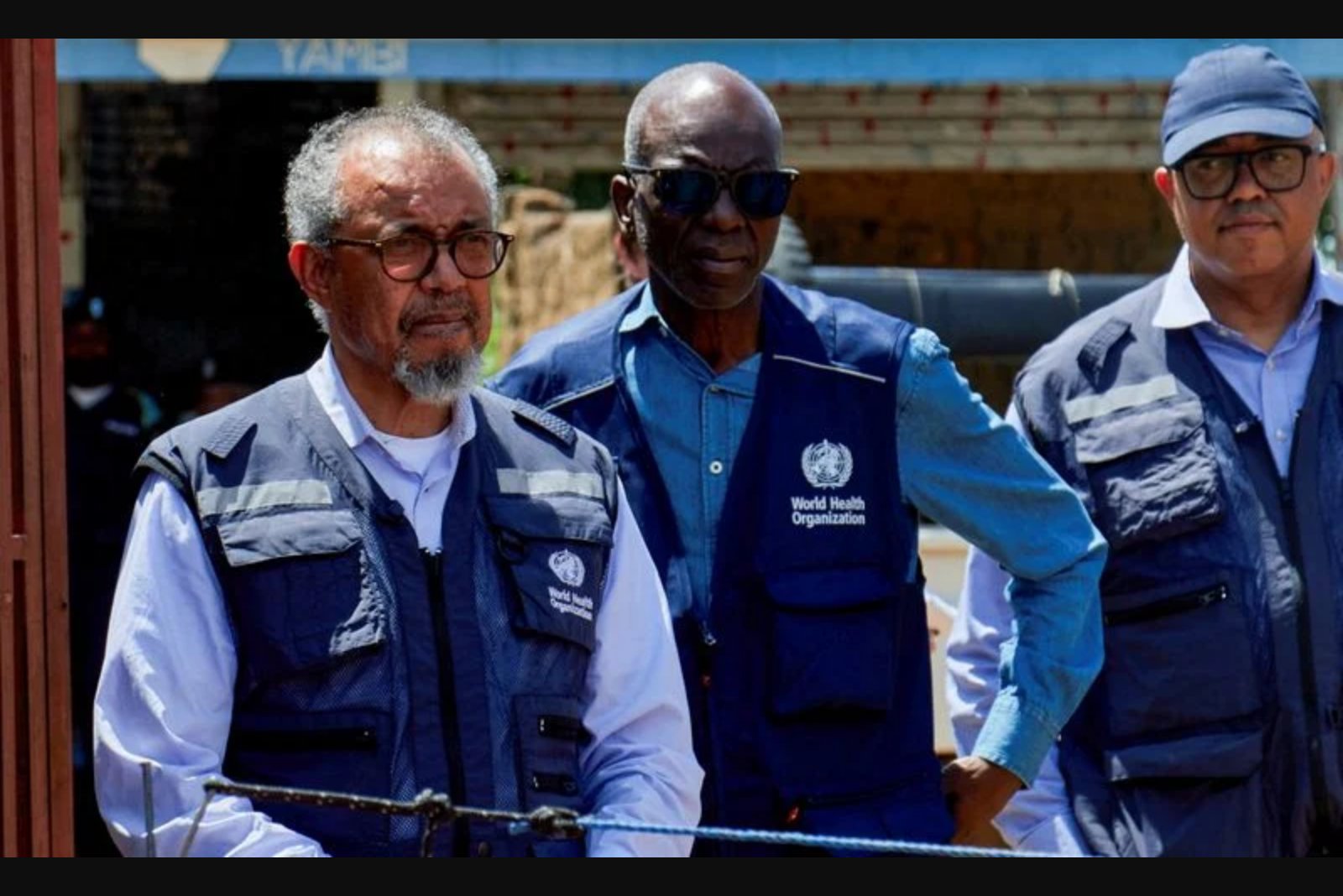
NAIROBI, June 5 - The World Health Organization has launched a six-month, $518 million strategy aimed at halting a growing Ebola outbreak in the Democratic Republic of Congo, WHO Director-General Tedros Adhanom Ghebreyesus said on Friday. The package, which covers the period from June to November, was presented jointly with the Africa Centres for Disease Control and Prevention (Africa CDC).
Describing the response as constrained by pace, Tedros said the epidemic "is moving fast and we are still playing catch-up." He emphasized that "containing Ebola requires political commitment, sustained finances and trust in engaging the communities." The appeal links operational capacity to both funding and political will, framing those elements as prerequisites for an effective response.
At the same briefing, officials from Africa CDC said the outbreak had persisted undetected for weeks. That delay, they said, has left health authorities struggling to regain control and respond to the spread.
"This outbreak is very serious. If you compare with previous Bundibugyo outbreaks this is the most serious Bundibugyo outbreak we have," Africa CDC Director-General Jean Kaseya said.
According to Africa CDC figures cited during the announcement, there have been 381 confirmed cases in Congo and 62 confirmed deaths. The outbreak is caused by the rare Bundibugyo strain of Ebola, for which there is currently no approved treatment or vaccine.
Kaseya also addressed funding reported by donors. He said donors have pledged $315.8 million toward containing the disease, down from an earlier reported $498 million after some donors "corrected" their figures. He did not specify whether those pledged amounts will be directed to the WHO six-month plan or provide further allocation details.
The Africa CDC first announced the Bundibugyo outbreak on May 15, identifying it as Congo's 17th Ebola outbreak. The World Health Organization subsequently declared the situation a public health emergency of international concern.
The joint appeal frames an urgent funding and political challenge: the WHO plan sets a clear budget and timeframe, but officials acknowledge both the speed of the epidemic and questions about existing donor commitments complicate implementation. With no approved medical countermeasures for this strain, the emphasis from both agencies is on rapid mobilization, community engagement and sustained financing to bring the outbreak under control.