
Overview
The World Health Organization on Friday raised its assessment of the Ebola outbreak in the Democratic Republic of Congo to "very high" at the national level, citing the accelerating spread of a rare virus strain for which there is currently no approved treatment or vaccine. The agency reported that there are now almost 750 suspected cases and 177 suspected deaths in the DRC, alongside 82 confirmed cases and seven confirmed deaths.
Cross-border and international cases
Two cases have been confirmed in neighboring Uganda, including one death, after individuals traveled from the DRC. An American national who had been working in the DRC tested positive for the disease and has been transferred to Germany for care.
Virus strain and R&D review
WHO identified the cause of the outbreak as the Bundibugyo virus, a pathogen with only two previous documented occurrences - in Uganda in 2007 and in the Democratic Republic of Congo in 2012. In response to the evolving situation, WHO Director-General Tedros Adhanom Ghebreyesus said partner organizations were convened this week to assess available vaccines, therapeutics and diagnostic tools.
The WHO R&D Blueprint’s technical advisory group recommended prioritizing two monoclonal antibodies for clinical trials and urged evaluation of the antiviral obeldesivir as post-exposure prophylaxis for high-risk contacts.
Humanitarian and security context
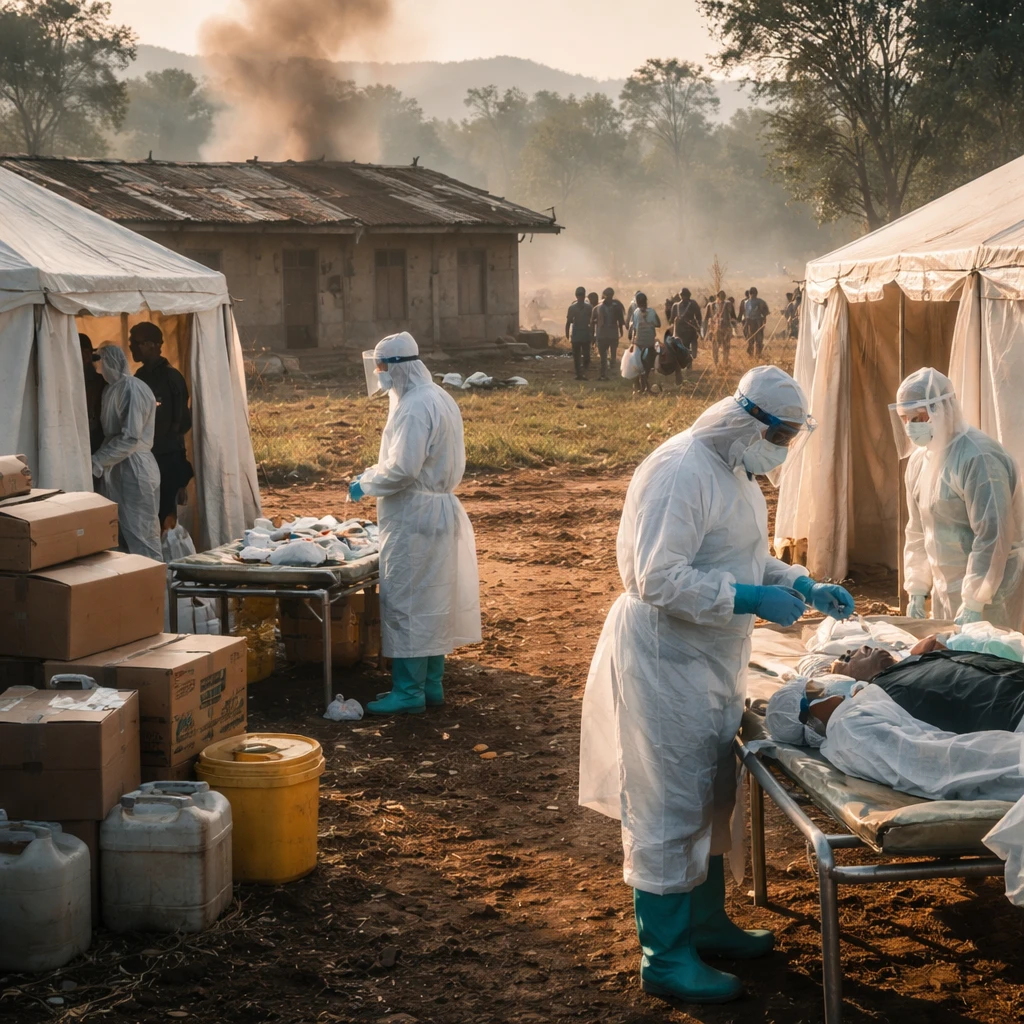
The outbreak is taking place in the provinces of Ituri and North Kivu, where intensified fighting over recent months has displaced more than 100,000 people. Across the two provinces, around 4 million people are reported to need urgent humanitarian assistance, about 2 million are displaced, and some 10 million face acute hunger. The security situation is complicating the emergency response - a security incident at a hospital in Ituri on Thursday saw tents and medical supplies set on fire.
International response and funding
WHO has mobilized 22 international staff to support field operations and has released $3.9 million from its Contingency Fund for Emergencies to back the response. UN humanitarian chief Tom Fletcher has allocated $60 million toward the effort. WHO said it will publish a multi-agency Strategic Preparedness and Response Plan in the coming days, designed to align with the national plans of both the DRC and Uganda.
Summary of current facts
- Almost 750 suspected cases and 177 suspected deaths reported in the DRC.
- 82 confirmed cases and seven confirmed deaths within the DRC.
- Two confirmed cases, including one death, identified in Uganda following travel from the DRC.
- Outbreak attributed to the Bundibugyo virus; WHO recommending prioritization of two monoclonal antibodies for trials and consideration of obeldesivir for post-exposure prophylaxis.
- Humanitarian needs are acute: roughly 4 million people require urgent aid across Ituri and North Kivu, with 2 million displaced and 10 million facing acute hunger.
- WHO has deployed 22 international staff and released $3.9 million; the UN has allocated $60 million to the response.