
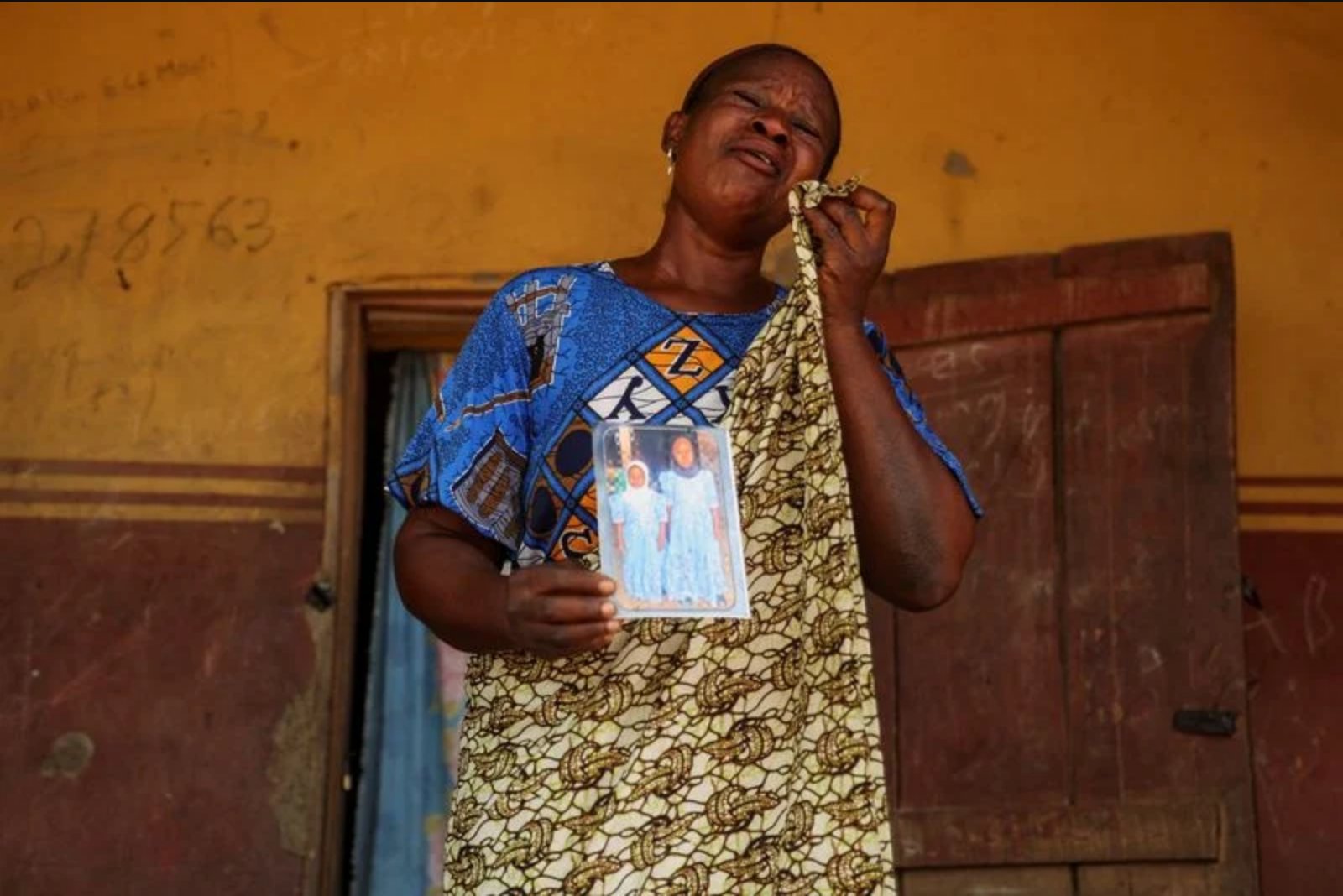
It was mid-morning when Aduke Balogun saw a man in military fatigues and a mask walking toward her children’s school. Within minutes, gunshots rang out, more attackers arrived and people scattered. In the scramble, her six-year-old daughter Feranmi escaped, but her eight-year-old daughter Kausarat was taken - one of more than 30 students and a teacher seized and driven into the bush near Yawota, a town in Oyo state.
Video clips of kidnapped children have been shared online, but Balogun said she cannot bring herself to watch and it is not clear whether the circulating footage features pupils from the Baptist Nursery and Primary School where her children attended. "Every day, I pray and hope for their safe return," she told Reuters while working at a stall selling soft drinks, bread and biscuits across the road from the school.
The May 15 assault, together with simultaneous attacks on two other nearby schools, has shaken a region long considered safer than Nigeria’s volatile northern and central areas. The incidents have prompted fears that kidnapping-for-ransom groups are extending their reach beyond traditional hotspots.
Security consultancy SBM Intelligence summed up the significance of the Oyo incidents, saying they represent "a dangerous escalation from a crisis once largely confined to Nigeria’s north and Middle Belt into the southwest." Cheta Nwanze, a partner at the consultancy, warned that as the 2027 elections approach, Nigerians will judge political leaders largely on whether they can keep schools and communities safe.
Violence and its immediate toll
Nigeria has struggled with multiple forms of insecurity for years - from intercommunal herder-farmer clashes in the centre to banditry, Islamist militancy and community militias in the north - and kidnapping has become one of the most visible symptoms of that malaise. Armed groups routinely seize motorists, clerics and schoolchildren, detaining them until ransom demands are met.
SBM Intelligence reported that kidnappers collected at least 2.57 billion naira ($1.89 million) in ransom payments across Nigeria in the year to June 2025.
Two weeks after the Yawota abductions, the interior of the Baptist Nursery and Primary School still showed the chaos of the raid: schoolbags, books, food flasks, water bottles and small shoes left strewn on classroom floors. A police patrol van remained parked outside, with armed officers keeping watch beneath a fig tree.
At LA Primary School, roughly 5 km from where Balogun’s child was taken, a teacher was shot dead while attempting to flee through a classroom window during a separate attack, according to Lamidi Waheed, a teacher at the school. In a third raid, six teachers and seven students were abducted from the nearby Community High School in Ahoro-Esinele, Waheed added.
Days after that attack, a video circulated online that appeared to show gunmen beheading a teacher taken in the Ahoro-Esinele raid. Reuters was unable to verify the clip.
Community impact and displacement
Fearing for their safety and often unable to reach authorities due to poor mobile phone networks, many residents of farming communities in Oriire district, about 300 km northeast of Lagos, have fled, local chief Tajudeen Abioye told Reuters.
Grace Ojo, whose seven-year-old grandchild was among those taken from the Baptist school, said the family wants only one thing. "We don’t need money, foodstuffs or anything. We just want our children back," she said.
Security response and political ramifications
When President Bola Tinubu took office three years ago, he pledged to tackle insecurity by recruiting more soldiers and police and improving their equipment and pay. Nonetheless, the Oyo attack and the abduction last month of 42 schoolchildren in Borno state in the northeast have intensified scrutiny of Tinubu’s record on security ahead of the 2027 national elections.
Tinubu is expected to seek re-election and may enter the race as the favourite, while opposition figures led by Atiku Abubakar and Peter Obi remain divided. Analysts say worsening insecurity could weigh on his electoral prospects.
No organisation has publicly claimed responsibility for the Oyo raids. The military has blamed Boko Haram, which typically operates in the northeast, for the incidents. During an initial attempt to rescue those taken from the Community High School, security operatives sustained injuries, Abioye said.
Authorities reported they have established contact with the kidnappers. Police spokesperson Olayinka Ayanlade said eight suspects had been detained and were assisting investigators, but gave no further details. Officials also urged families to remain calm and avoid spreading rumours or unverified videos.
What remains uncertain
Many questions remain unanswered for families and communities directly affected by the raids. It is unclear whether the widely shared videos relate to the attacked schools, and some alleged footage - including the clip reportedly showing a teacher’s killing - could not be independently verified.
As negotiations and investigations proceed, parents like Balogun and grandparents like Ojo wait for word. For them, the immediate priority is the safe return of their children.
($1 = 1,359.5900 naira)