
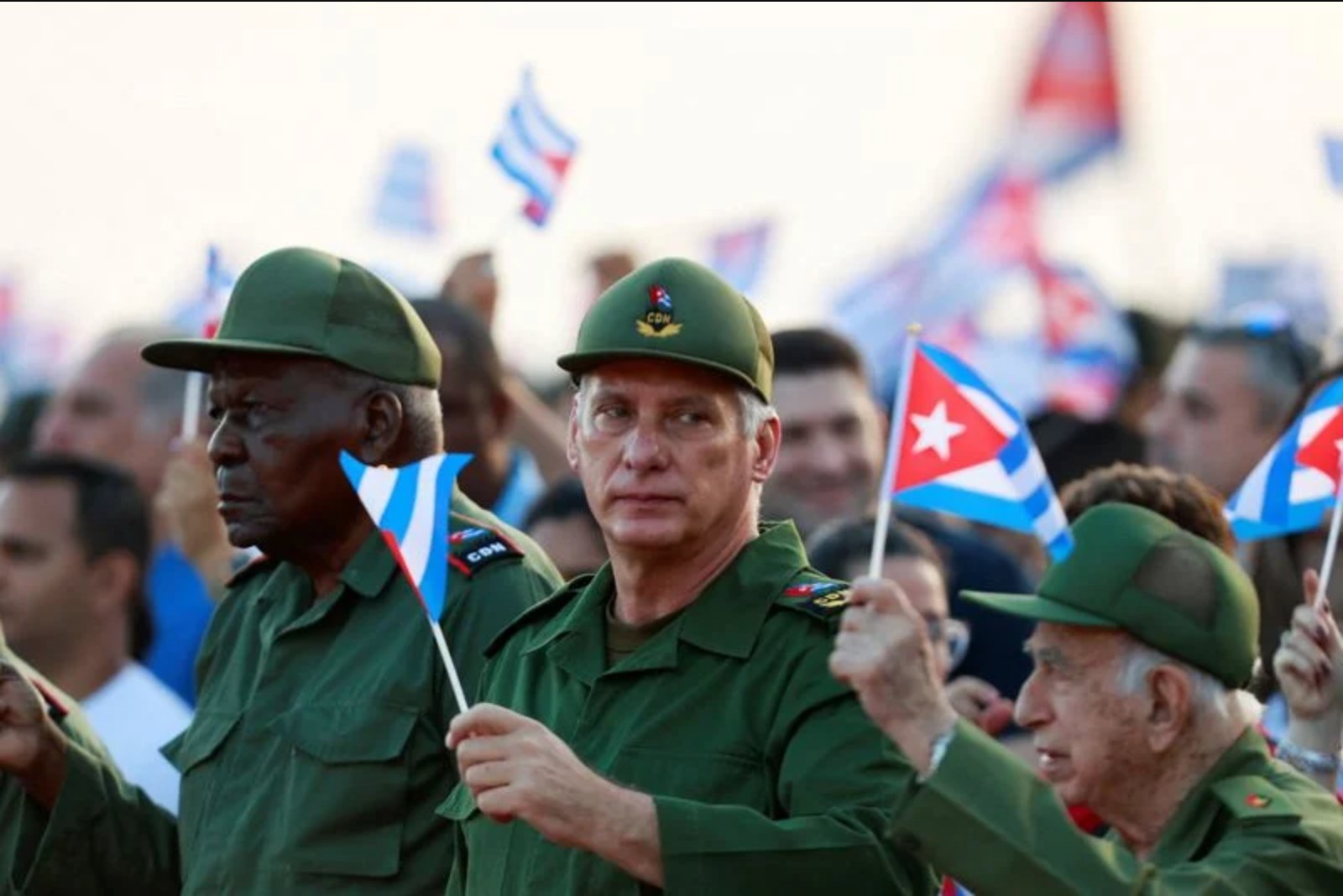
WASHINGTON, June 4 - The U.S. government on Thursday placed sanctions on Cuban President Miguel Diaz-Canel and several associated individuals and organizations, the U.S. Treasury Department's website indicated.
The Treasury's posting named Diaz-Canel among those restricted and listed four other people plus five entities as targets of the action. One of the entities identified was the Ministry of the Revolutionary Armed Forces of Cuba. Requests for an immediate response from the Cuban government had not been answered as of the announcement.
Diaz-Canel, 60 years old, has held the presidency of Cuba since assuming the role from Raul Castro in 2018. U.S. officials characterized the latest designations as part of an ongoing effort by Washington to increase pressure on the island's communist leadership.
The sanctions were made public as President Donald Trump told reporters that the United States wanted Cuba "to be a nicely run country." The statement accompanied the administration's latest set of measures targeting the Cuban leadership.
These actions follow a separate round of sanctions last month in which the U.S. government designated 11 Cuban officials, among them the country's communications minister, multiple military leaders and the island's principal intelligence agency. In addition to sanctions, the U.S. has brought a criminal charge against Raul Castro, accusing him of murder for his alleged role in a 1996 incident in which Cuban jets shot down aircraft operated by a group of Cuban exiles.
The designation of Diaz-Canel marks a continuation of U.S. policy tools aimed at Cuban state actors and officials, and extends previous measures that targeted sectors such as communications, military leadership and intelligence operations. The immediate diplomatic and economic responses to the most recent sanctions were not available at the time of the Treasury's update.
Context and next steps
The Treasury notice provides the formal basis for the sanctions but does not include an immediate public response from the Cuban government. How these measures will be implemented in practical terms and what follow-up actions may occur were not detailed in the Treasury posting.