
Geneva, May 27 - New data compiled by the U.N. human rights office indicates that a substantial portion of Palestinians killed since the October ceasefire died in locations near the armistice boundary that Israel has marked on the ground. The findings have prompted the office to warn that the pattern of killings may amount to unlawful conduct by Israeli forces.
The U.N. dataset, shared exclusively with Reuters, documents 453 verified killings from the date of the ceasefire through February 5. Of that total, 152 Palestinians were recorded as killed in proximity to the demarcated boundary. The breakdown of those 152 deaths includes 102 men, 15 women, 24 boys and 11 girls.
Ajith Sunghay, who leads the U.N. Human Rights Office for the occupied Palestinian territory, described the pattern as alarming and said the available information raises serious concerns that the Israeli army may be firing at presumed civilians simply because they were close to what Israel calls the "yellow line." "That would amount to unlawful killings and thus war crimes," he said.
Sunghay added that, in many cases, civilians did not appear to be posing any danger to the lives of Israeli troops. He pointed to examples where individuals were reportedly shot while engaged in routine activities or after approaching or crossing the so-called yellow line. He also stressed that the precise location of the boundary has often been unclear to Palestinians. "Nobody clearly knows exactly where it starts, where it ends, and how it moves, and when it moves," he said.
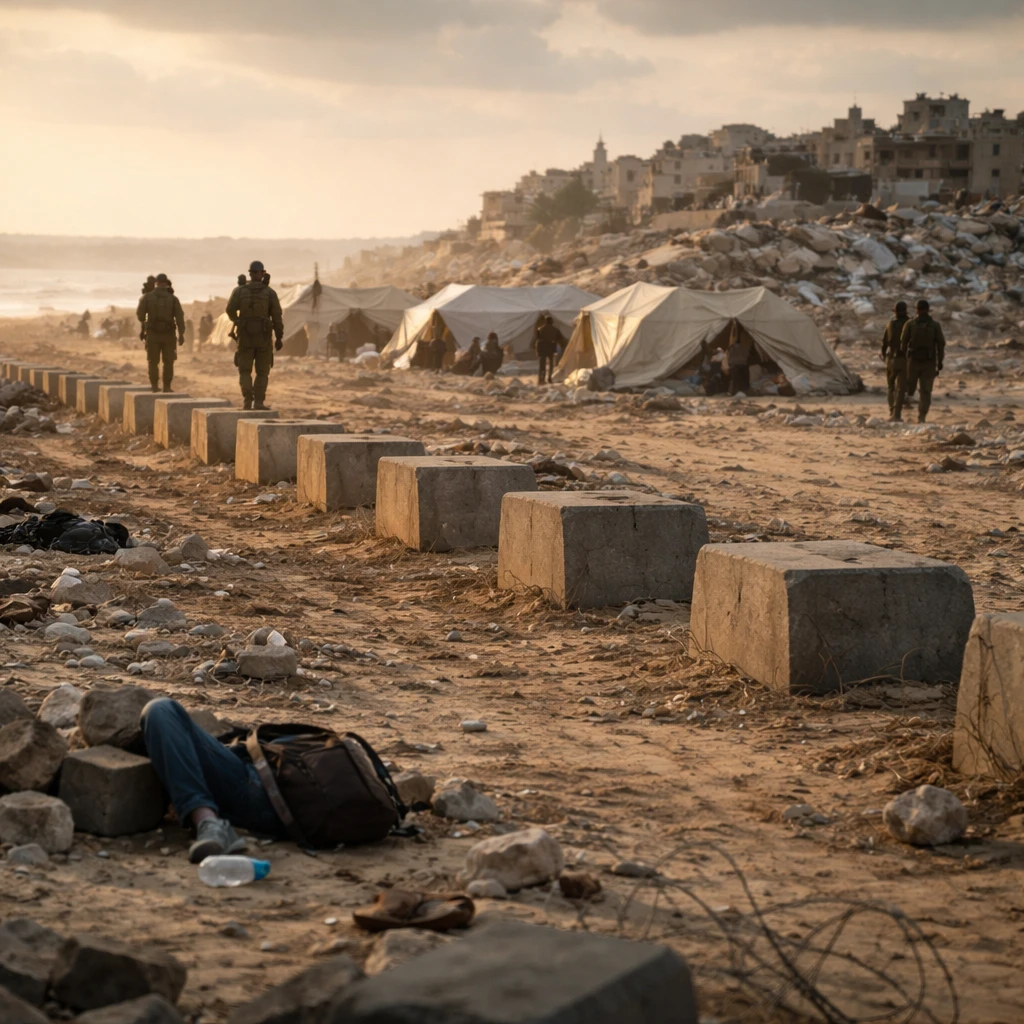
Israel has marked its armistice boundary with Hamas since the truce by placing spaced concrete blocks on the ground to form a yellow line. Troops remain deployed to the east of that line, while Hamas controls the coastal strip to the west. The military, however, has at times pushed those concrete markers deeper into territory controlled by Hamas. Israeli maps now show a restricted zone of military control that has expanded and, according to the U.N. office, currently covers almost two-thirds of Gaza.
The expansion of the zone and the shifting placement of the markers have heightened fears among displaced Palestinians living in tent encampments and in bomb-damaged homes near the yellow line. Those residents worry that they could be treated as military targets as the area available to the civilian population becomes more constrained.
Israel's military, which has not immediately commented on the U.N. allegations, maintains that fires by its troops near the armistice line are intended to prevent militant attacks and neutralize threats. Israeli officials refer to territory seized in Gaza, Syria and Lebanon as "buffer zones" designed to reduce the risk of future militant operations following the October 7, 2023 assault led by Hamas that precipitated the Gaza war.
Despite the ceasefire that was brokered by U.S. President Donald Trump, attacks by Israeli forces in Gaza have continued. Israeli operations have included targeted strikes against Hamas leaders, with two leaders reported killed in the two weeks prior to the U.N. report. Gaza health authorities report that, overall, about 900 Palestinians have been killed in Israeli strikes since the truce, though they did not provide a location breakdown. Israel's military reported that four Israeli soldiers were killed by militants during the same period. Hamas has not released figures on its combatant losses.
Context and implications
The U.N. findings focus on the spatial relationship between civilian movements and a demarcated military boundary. The concern expressed by U.N. officials centers on whether civilians are being treated as legitimate targets simply because of where they are located in relation to that boundary. The limited clarity over where the demarcated line lies for local populations compounds the risk that ordinary activities could be interpreted as threatening by armed forces operating nearby.
At this stage the U.N. has framed the killings as potentially unlawful and therefore as conduct that may meet the legal threshold for war crimes, given the available information. Israeli authorities have articulated a security rationale for fire near the line. The conflicting accounts and the gaps in clarity about the boundary's placement are central to the U.N. concern.
Key points
- U.N. data records 453 verified Palestinian deaths from the ceasefire through February 5; 152 of those were near the demarcated armistice boundary, including 102 men, 15 women, 24 boys and 11 girls. Sectors impacted: humanitarian response and civilian protection.
- The U.N. human rights office warned that the information raises serious concerns that Israeli troops may be shooting presumed civilians for being near the so-called yellow line - conduct the office said would amount to unlawful killings and potentially war crimes. Sectors impacted: defense and international legal oversight.
- Israeli forces say their actions aim to counter militant threats and have described seized territory as buffer zones; maps show a restricted zone now covering nearly two-thirds of Gaza, increasing pressure on displaced civilians near the line. Sectors impacted: humanitarian aid and displacement services.
Risks and uncertainties
- Unclear boundary demarcation - Palestinians do not always know precisely where the yellow line starts, ends or how it moves, increasing the risk of inadvertent civilian casualties. Affected sectors: humanitarian relief and civilian protection.
- Allegations of unlawful killings - if the U.N. concerns are substantiated, they could prompt legal and diplomatic consequences and complicate oversight of military operations. Affected sectors: defense procurement and international legal institutions.
- Continued strikes despite ceasefire - attacks have persisted after the truce, including targeted killings of militant leaders, maintaining a climate of insecurity and operational risk for civilians in the area. Affected sectors: humanitarian logistics and regional security planning.
Reporting note
The U.N. human rights office provided the data set covering verified killings through February 5. Gaza health authorities supplied the overall casualty figure of about 900 Palestinians killed since the truce, without a location breakdown. Israeli military comment on the U.N. allegations was not immediately available.