
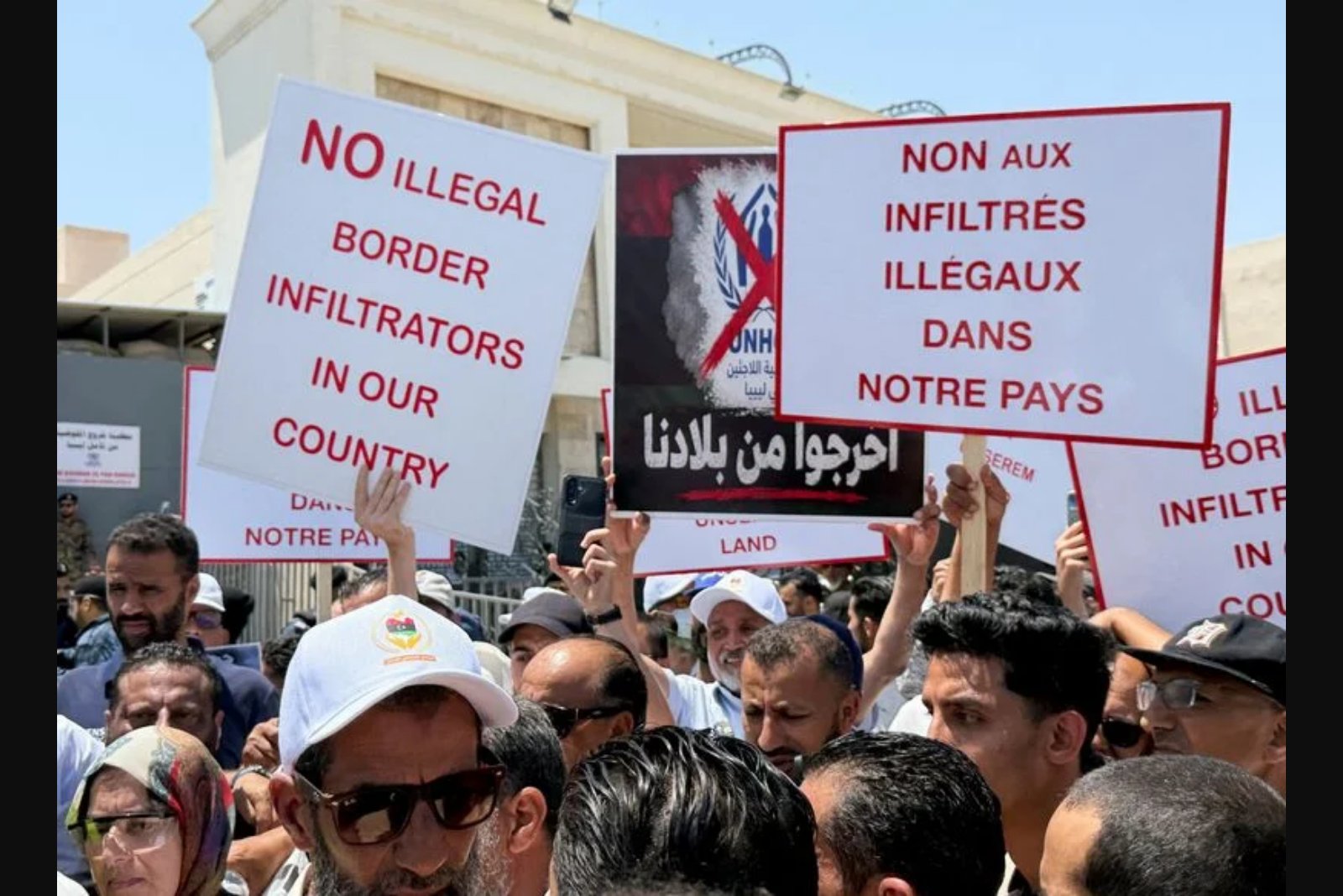
The United Nations on Friday expressed deep concern over violent demonstrations held outside its facilities in Libya this week, attributing a significant part of the unrest to disinformation circulating on social media.
In Tripoli on Thursday, several hundred Libyan demonstrators surrounded and blocked the office of the U.N. refugee agency (UNHCR) during a protest aimed at migrants who travel to Libya seeking employment or a route to Europe. The blockade was described as the largest among a number of recent demonstrations targeting migrants, who some Libyans hold responsible for social and economic strains that have become more apparent during 15 years of conflict and political fragmentation in the country.
At a routine briefing in New York, U.N. spokesperson Stephane Dujarric said: "We are deeply concerned by the violent protests that took place yesterday outside the UNHCR and UNSMIL headquarters in Tripoli." He reiterated the organization's stance that "the U.N. strongly condemns any attack or threats against personnel or premises."
Dujarric also highlighted the broader information environment surrounding the incidents, adding: "We are concerned by the spread of misinformation and disinformation regarding the work of the United Nations in Libya." He characterized efforts to combat misleading or false narratives in Libya as "extremely challenging" and urged social media platforms to cooperate in addressing the problem.
UNSMIL - the United Nations Support Mission in Libya - issued a clarification on Thursday, stating that there is no U.N. resettlement program operating in Libya. UNSMIL noted that UNHCR focuses on assisting people fleeing conflict with solutions located outside Libya, including evacuation to third countries and voluntary returns when conditions permit.
The situation in Libya has evolved since the 2011 uprising that had NATO backing, with the country becoming a transit point for hundreds of thousands of migrants escaping conflict and poverty, particularly from sub-Saharan Africa. Many undertake hazardous journeys across deserts or attempt the Mediterranean crossing. At the same time, Libya's economy - heavily dependent on oil - attracts workers seeking employment, with migrants often taking on low-paid, manual roles in sectors such as cleaning and construction that many Libyans are unwilling to fill.
The recent demonstrations and the United Nations' public remarks underscore tensions between local communities and migrant populations, as well as the challenges the U.N. and its agencies face in communicating their mandates and activities within a fragmented information landscape.
Summary
Violent protests outside UN offices in Tripoli prompted the United Nations to warn that social media-driven disinformation is contributing to misunderstandings about its role. Hundreds blocked the UNHCR office on Thursday in the largest of several recent protests against migrants, amid long-standing conflict and economic strain in Libya.
Key points
- Hundreds of demonstrators blocked the UNHCR office in Tripoli on Thursday in a protest against migrants seeking work or passage to Europe.
- The U.N. condemns attacks or threats against its staff and premises and says misinformation and disinformation about its work in Libya are spreading.
- UNSMIL clarified there is no U.N. resettlement program in Libya; UNHCR assists people fleeing war with evacuation to third countries and voluntary return when possible.
Risks and uncertainties
- Continued spread of misinformation could lead to further threats against U.N. personnel and facilities - affecting humanitarian and diplomatic operations.
- Ongoing social and economic tensions tied to prolonged conflict may fuel additional demonstrations targeting migrant populations - with implications for local labor markets and security.