
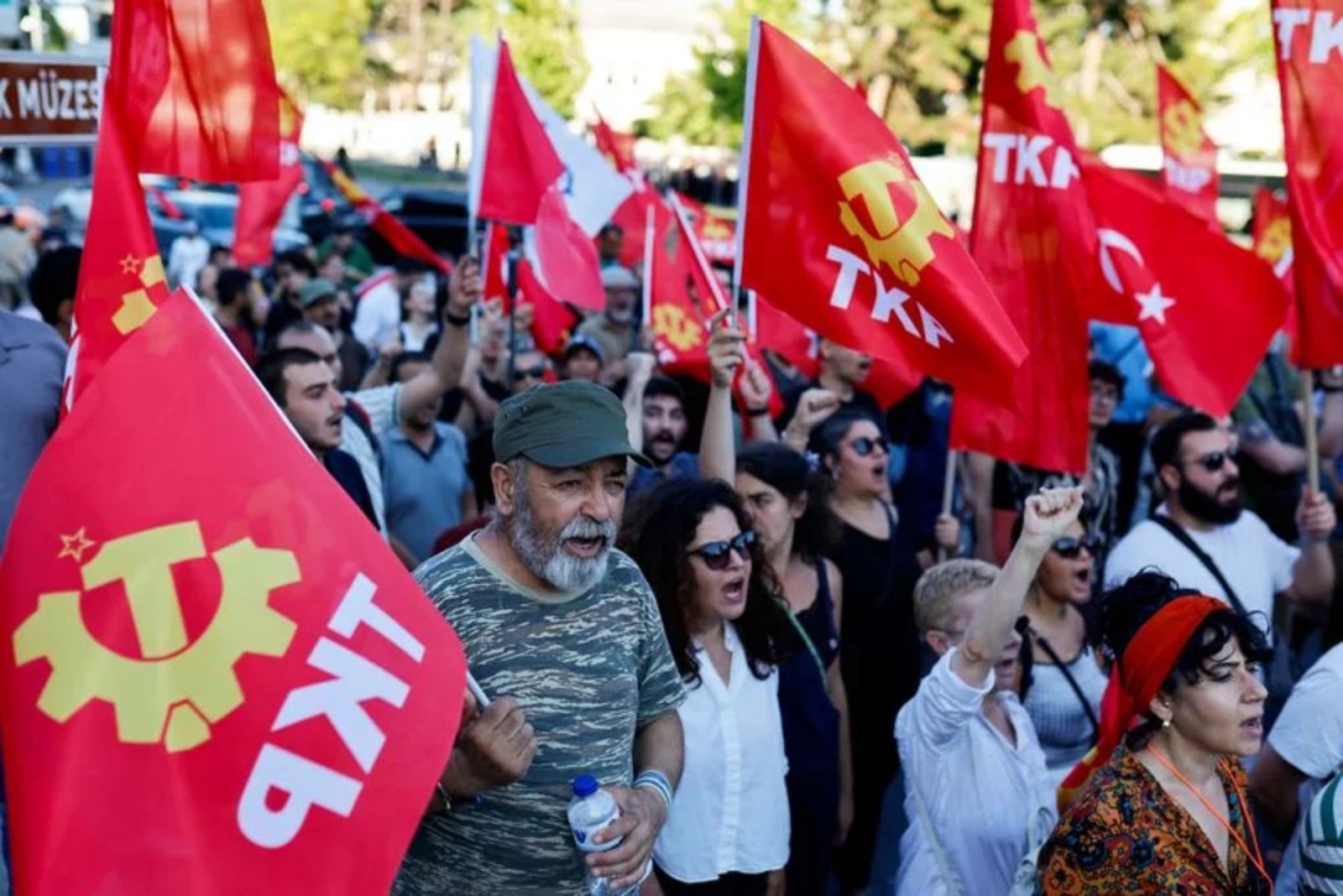
Turkish authorities detained in excess of 100 people taking part in an anti-NATO march in Ankara on July 5, the Communist Party of Turkey (TKP) said in a statement. The demonstration occurred as Ankara prepared to host a NATO summit that will bring leaders from 32 allied nations and representatives from partner countries to the capital for a two-day meeting on Tuesday and Wednesday.
Authorities have escalated security measures across the city in the run-up to the summit. Officials have imposed bans on demonstrations, put up barricades in large areas of the city, and closed key roads - measures that the government has used to reduce the risk of disturbances during the gathering.
According to the TKP, the party organized a march in Kizilay square, a central and symbolic location in Ankara. The party statement said more than 100 of its members, including party administrators, were detained during the protest. Video footage circulating from the scene showed protesters waving flags and chanting slogans such as "Murderer NATO, get out of country" and "No passage to NATO," while riot police moved in and deployed tear gas to disperse crowds.
Beyond Ankara, the TKP organized a separate protest in Istanbul where several hundred people marched from Taksim Square to Dolmabahce. In the Kadikoy district of Istanbul, two other demonstrations by leftist groups also took place. Police maintained a heavy presence at the Istanbul events, but reports noted that there were no scuffles during those protests.
TKP Secretary General Kemal Okutan addressed supporters in Istanbul, saying: "We have gathered today in many parts of Turkey to protest against NATO. We said that we would not hand over Ankara to supporters of NATO, that we would not allow Ankara to remain silent. We have fulfilled that promise."
The government did not immediately issue a response to the TKP statement or to the reported detentions. Law enforcement activity linked to allegations of militancy has continued in recent weeks: last month authorities arrested 103 people during anti-terror raids in Ankara in which 225 individuals were detained in total, according to official accounts referenced in media reports.
Separately, media reported that 39 people, including journalists from independent outlets, activists, and academics, were detained in anti-terror operations across the country. Critics of the detentions included Tuncer Bakirhan, co-chair of the pro-Kurdish DEM Party, and the court-appointed chairman of the main opposition Republican People’s Party (CHP), Kemal Kilicdaroglu, who described the measures as unacceptable limits on fundamental rights on the eve of the NATO summit.
On social media, Bakirhan wrote: "The country has been fully turned into a detention centre by using the NATO summit as an excuse. We are living through days of undeclared martial law." Turkish prosecutors have previously characterized the operations as part of efforts to uncover militant group activities, while not linking those statements directly to the summit.
Context and immediate effects
The converging developments in Ankara and Istanbul show a pattern of intensified security operations and opposition-led demonstrations in the days before an internationally attended summit. Road closures, demonstration bans, and mass detentions have been a visible component of the security posture in the capital, while police presence in Istanbul was enough to deter physical confrontations during marches there.