
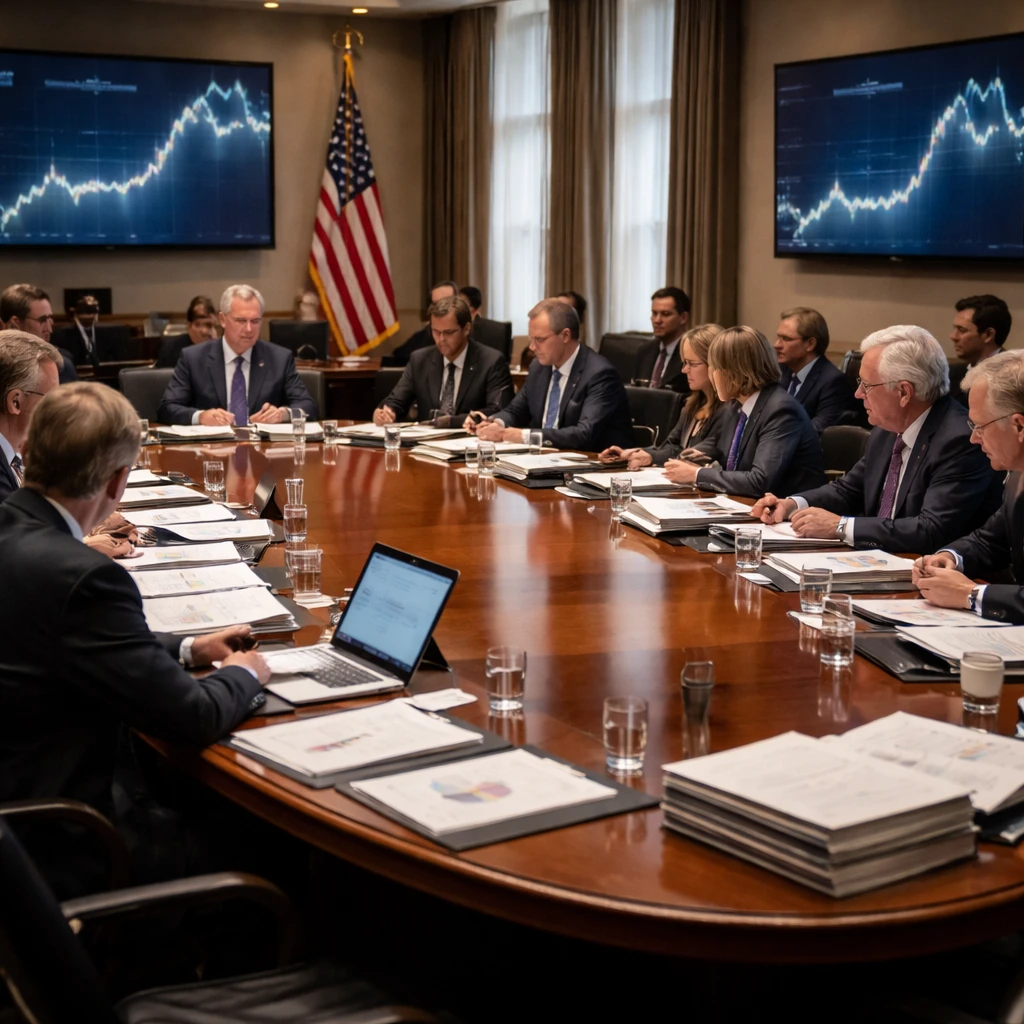
The Federal Reserve's meeting minutes for July 28-29 show an escalation of concern about inflation among policymakers, with a notable contingent prepared to raise interest rates and a broader group warning that further tightening would be necessary if inflation does not fall to the central bank's 2% objective.
According to the minutes released on Wednesday, the participants who favored increasing rates during the meeting "remarked that price pressures appeared broad-based" and argued the policy-setting Committee should adopt "a more restrictive policy stance to meet its commitment to achieving its price-stability and maximum employment goals on a sustained basis." Those officials cautioned that failing to act could expose the economy to "a steeper and potentially more costly sequence of tightening moves at a later stage."
At that session the Fed voted to keep its benchmark interest rate in the 3.50%-3.75% range. Three policymakers dissented from the decision, preferring a quarter-percentage point hike.
The minutes noted that a larger cohort of participants - characterized as "many" - assessed that additional policy tightening would likely be necessary if inflation did not ease toward the 2% target. This view underscores a shift in the internal debate after a period earlier in the year when officials expected that easing inflation could allow for rate reductions within the year.
Balance sheet review and the principal tool of policy
Minutes covering the second meeting chaired by Kevin Warsh also document discussions about broader operational issues the chairman has signaled he wants to explore. Participants regarded an upcoming task force review of how the Fed manages its balance sheet as "an opportunity for a comprehensive discussion."
Despite interest in balance sheet management, many attendees reiterated that the principal instrument for adjusting monetary policy should remain changes in the target range for the federal funds rate, rather than active manipulation of the Fed's asset holdings.
Meeting frequency, procedure and no immediate changes
Warsh solicited Committee input on whether reducing the number of formal Fed meetings from eight a year to six - affording two full months of incoming data between meetings - might be preferable. The minutes make clear no decisions were reached on that proposal and that the 2026 meeting schedule would remain unchanged.
Where the policy debate stands
The minutes record no support for cutting rates at the July meeting, reflecting how the policy debate has moved since the year began. Officials had earlier anticipated the possibility of lowering borrowing costs in the current year as inflation slowed, but that prospect has diminished as price pressures have continued to build.
The minutes link part of this persistence in inflation to geopolitics, noting that price pressures intensified particularly after the Trump administration joined Israel in a war with Iran. They record that oil and gas shipments through the strategic Strait of Hormuz remain constrained almost six months after the onset of the conflict.
Near-term expectations and market pricing
Officials are expected to hold the policy rate steady again at the September 15-16 meeting following recent data showing a modest easing in inflation alongside an unexpected decline in payrolls in July. Those data have left Fed officials divided on whether additional hikes will be required to curb inflation, while also making them more cautious about the labor market's strength and the risks to sustaining full employment.
With limited forward guidance from Chairman Warsh, who has been cautious about discussing the path of monetary policy, investors are pricing in the possibility that rate increases could resume as soon as the October 27-28 meeting.