
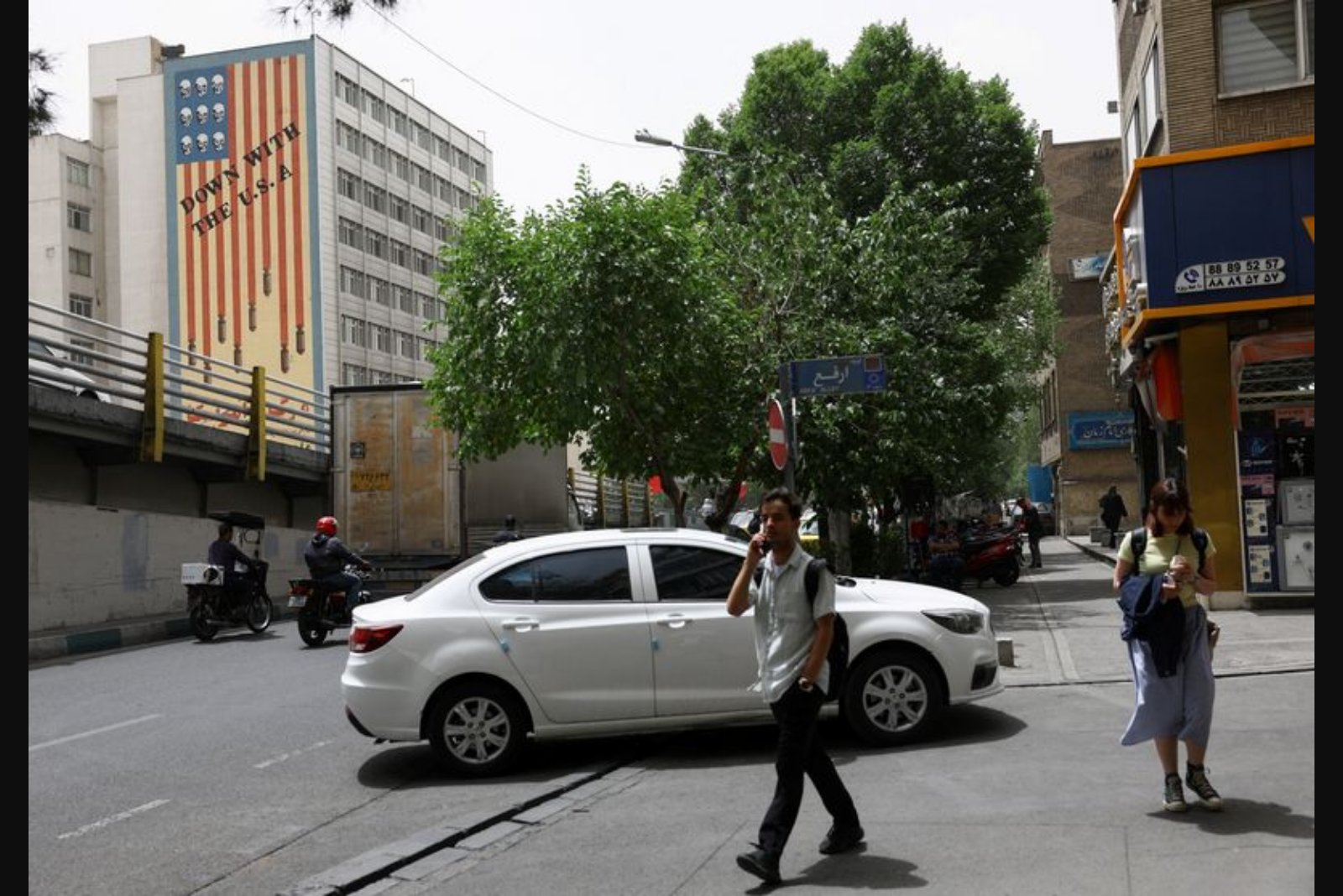
Tehran is examining a fresh American proposal as talks to end the war remain stalled, officials said on Thursday, while President Donald Trump signalled he could afford to pause for a few days for the right answer from Iran but threatened a swift return to hostilities if a deal was not reached.
Iranian state media Nour News quoted Foreign Ministry spokesperson Esmaeil Baghaei as saying, "We have received U.S. views and are reviewing them." He added that Pakistan, which hosted talks last month and is acting as an intermediary for messages between Tehran and Washington, is continuing to facilitate communication, with several rounds of exchanges having taken place. Pakistan's interior minister visited Tehran on Wednesday as part of that mediation effort.
Negotiations to halt the conflict have made limited headway nearly six weeks after a fragile ceasefire took effect. Meanwhile, a sharp rise in oil prices has prompted concern over mounting inflation and the wider economic consequences for the global economy.
Speaking to reporters at Joint Base Andrews, President Trump said he was prepared to give Iran a brief window to reply but repeatedly warned that he would move quickly if the response did not satisfy U.S. demands. "Believe me, if we don’t get the right answers, it goes very quickly. We’re all ready to go," Trump said, and when asked how long he would wait he replied, "It could be a few days, but it could go very quickly."
Trump also reiterated his objective to prevent Iran from obtaining a nuclear weapon, saying, "We’re in the final stages of Iran. We’ll see what happens. Either have a deal or we’re going to do some things that are a little bit nasty, but hopefully that won’t happen." He added, "Ideally, I’d like to see few people killed, as opposed to a lot. We can do it either way."
Iran's Revolutionary Guards issued a counter-warning to any renewed aggression, stating that if attacks against Iran were repeated, the promised regional war would expand beyond the region this time. This statement was presented as a direct response to the possibility of resumed strikes.
Tehran said it submitted its latest offer to Washington this week. The Islamic Republic's descriptions of that proposal indicate it largely reprises terms President Trump had previously rejected. Those demands include control of the Strait of Hormuz, compensation for war damage, the lifting of sanctions, the release of frozen assets and the withdrawal of U.S. forces.
Strait of Hormuz and shipping
The Strait of Hormuz - a narrow waterway that carried about a fifth of global oil and liquefied natural gas shipments before the war - has been nearly closed since the conflict began, producing the most severe disruption to energy supplies in modern history.
On Wednesday, Iran published a map showing what it called a "controlled maritime zone" at the strait, announcing that passage would require authorisation from an authority established to govern the area. Tehran said it intends to reopen the strait to countries that comply with its terms, and that access might include payments for passage - a proposal the United States has said it would not accept.
Despite the restrictions, at least two Chinese supertankers carrying a combined total of around 4 million barrels of oil cleared the strait on Wednesday. A South Korean tanker carrying 2 million barrels of crude loaded in Kuwait was also reported to be transiting the passage in cooperation with Iran. Shipping monitor Lloyd's List recorded that at least 54 ships transited the strait last week - about double the number from the previous week. Iran reported 26 ships passed through in the past 24 hours, a figure that remains far below the pre-war daily average of 125 to 140 passages.
Human toll and military objectives
Before the ceasefire, combined U.S.-Israeli bombing killed thousands of people in Iran, according to the reporting. Israeli operations have also resulted in thousands of deaths and forced hundreds of thousands from their homes in Lebanon during an invasion aimed at pursuing the Iran-backed Hezbollah armed group. Iranian strikes directed at Israel and neighbouring Gulf states have killed dozens of people.
President Trump and Israeli Prime Minister Benjamin Netanyahu have described their war aims as limiting Iran's support for regional militias, dismantling its nuclear programme, degrading its missile capabilities and creating conditions to make it easier for Iranians to overthrow their rulers. Despite these stated objectives, Iran has retained its stockpile of near-weapons-grade enriched uranium and preserved its capacity to threaten neighbouring states with missiles, drones and proxy militias. Tehran's clerical leadership has weathered the conflict period without signs of organised internal opposition since the war began, following the suppression of a mass uprising earlier in the year.
Outlook
For now, officials on each side maintain firm positions and rely on intermediaries to continue messaging. Pakistan remains the principal conduit for communications between Tehran and Washington, and multiple rounds of exchanges have taken place. The fate of the latest U.S. proposal now rests with Iranian officials who, according to their state media, are reviewing the offer.
How quickly the situation evolves - whether via diplomacy or renewed military action - will shape short-term prospects for global energy markets and shipping, as well as broader concerns about inflation and economic stability raised by rising oil prices.