
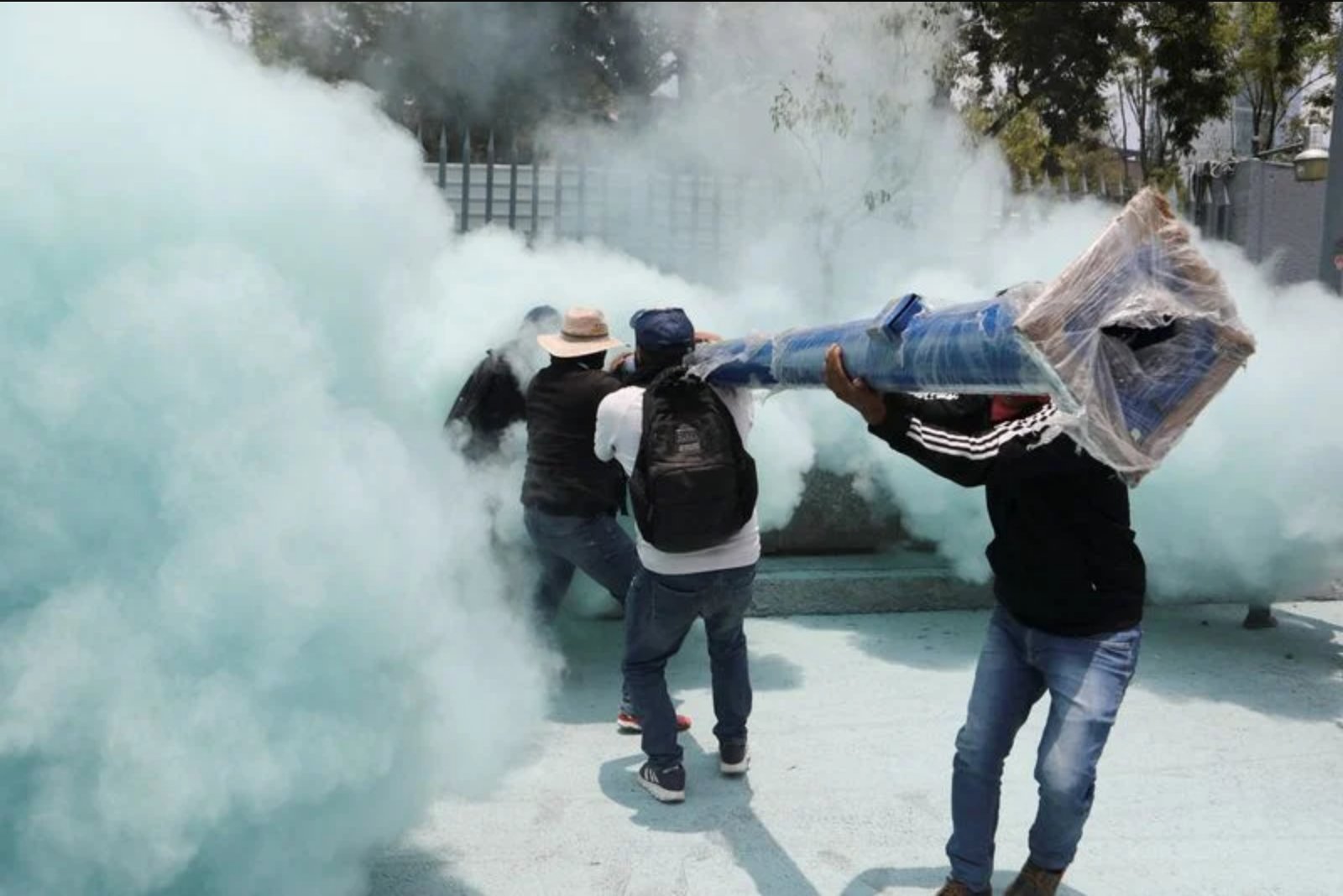
Mexico City - Eight days before the capital is scheduled to host the World Cup opening match between Mexico and South Africa on June 11, mass demonstrations, road closures and last-minute construction activity caused widespread disruption across Mexico City, forcing commuters into lengthy delays and complex detours.
On Wednesday, teachers and retired members of the judiciary joined other groups in large-scale actions concentrated along some of the city's busiest arteries. The protests - unrelated to the sporting event itself - have at times blocked critical thoroughfares, generating traffic gridlock and prompting businesses to erect protective barriers along affected avenues.
Protest demands and warnings
Teachers, including a dissident faction of the national teachers' union known as the CNTE, say they will maintain or increase demonstrations unless authorities deliver on longstanding commitments. In statements shared on social media, the CNTE warned of mass demonstrations timed with the World Cup opening if their demands are not addressed.
The union is pressing the government to honor a campaign pledge to overturn a 2007 law that restructured pension and social security rules for public-sector workers, and is also seeking salary increases. Rodrigo Arias, a teacher from Oaxaca with four decades in the classroom, told reporters outside the Interior Ministry that successive governments - both the administration of former President Andres Manuel Lopez Obrador and that of President Claudia Sheinbaum - had promised to repeal the reform but had not followed through.
"The current government made a campaign commitment - both the government of (former President) Andres Manuel Lopez Obrador and President Sheinbaum's - they said they had that commitment to teachers to strike down that reform ... but it never happened," Arias said. "There is neglect. There is a policy of managing timelines, of making commitments that are never truly kept. We will keep mobilizing until we are heard - even with the World Cup on the horizon."
CNTE leaders were meeting with officials at the Interior Ministry while supporters outside maintained pickets, according to accounts of the day's events.
Locations and local effects
Protests and blockades have been particularly visible along Insurgentes and Paseo de la Reforma, two emblematic boulevards that handle heavy daily traffic. On Tuesday, protesters toppled towering statues of football players on Paseo de la Reforma. Organizers and some participants said those who brought down the statues were not CNTE members and that the union does not seek to destroy property or provoke confrontation, but businesses along the avenue nonetheless put up metal and wooden barriers to shield storefronts.
Elsewhere, retired judges and magistrates were staging demonstrations in the city center, demanding severance payments and pensions in the wake of a sweeping 2024 judicial reform that reorganized the nation's justice system.
Affected commuters described growing frustration. "The traffic is really affecting us; we're losing too much time," said Armando Escobedo, a delivery driver, as he navigated a detour around closed streets. "You have to be empathetic with the teachers, but they do hurt us at work," he added.
Infrastructure works and safety concerns
Mexico City has undertaken multiple infrastructure projects ahead of the World Cup, but several remain unfinished. Renovations at Benito Juarez International Airport - the country's largest and busiest airport - along with repairs to the metro system and major avenues are still underway. On Tuesday, a metal structure from a pedestrian bridge at the airport collapsed, injuring a motorist, an incident that underscores ongoing safety and completion concerns.
Authorities face the challenge of balancing security and order with the right to protest, as they prepare for a schedule of 13 World Cup matches across Mexico - five in Mexico City and four each in Guadalajara and Monterrey.
Official response
President Sheinbaum said at her daily morning press conference that she would not be provoked into ordering a crackdown on demonstrators. Government officials have engaged in talks with some protest leaders in an effort to reach agreements that might reduce the potential for disruptions as the tournament approaches.
Outlook
With the city in the global spotlight and high-profile events on the calendar, both protest organizers and municipal authorities navigate competing pressures: activists pressing for long-standing policy changes and benefits, and officials managing a complex set of infrastructure upgrades and security preparations that have yet to be completed. Until substantive agreements are reached and construction fully wraps up, disruptions to traffic, airport operations and commuter routines are likely to continue.