
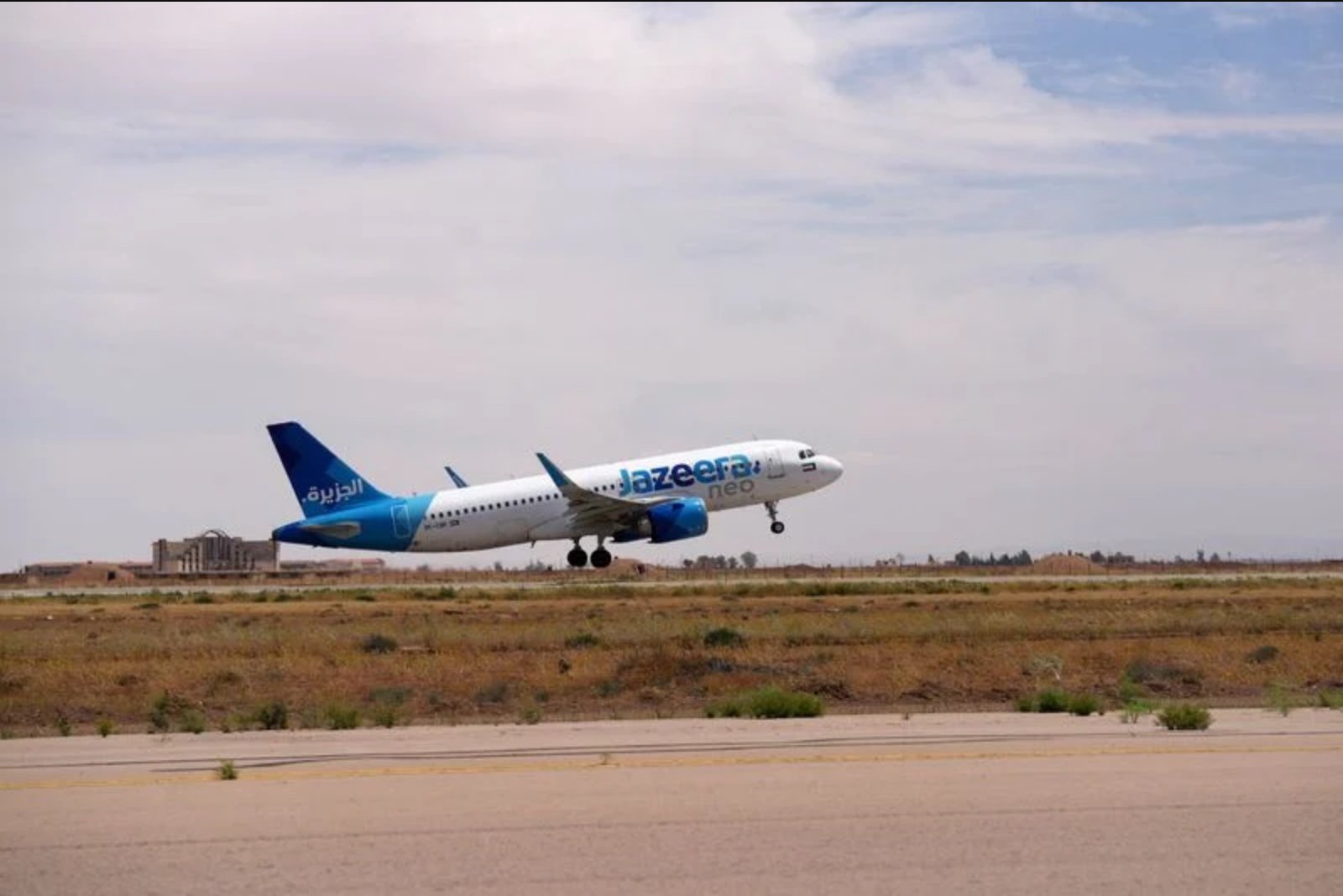
Syria experienced a marked increase in overflight activity in May, with official figures showing 11,801 aircraft transited the country’s airspace. That total is more than double the 4,267 flights registered in February, the last full month before the Iran conflict disrupted regional aviation patterns, and represents an increase of roughly 375% compared with May of the previous year.
The uptick follows a period in which Syria’s skies had been largely avoided. The country’s airspace was effectively off-limits throughout a 14-year civil war that concluded with the ousting of President Bashar al-Assad in late 2024. The new pattern of flights represents a significant operational shift for carriers that had steered clear of Syrian routes for more than a decade.
There is also an immediate commercial angle for Syria. Emerging from wartime restrictions, the new government implemented a flat overflight charge of $499 per flight earlier this year. Applying that fee to last month’s traffic suggests potential overflight receipts could have reached as much as $5.9 million in May, based on a straight multiplication of flights by the published flat fee. The General Authority for Civil Aviation declined to comment on the revenue potential or on the revised charges.
Airlines reassessed route options after U.S. and Israeli airstrikes at the start of the Iran conflict on February 28 led to the temporary closure of airspace over Iraq and the Gulf during March. Following a ceasefire and the reopening of some airspace in April, many carriers operating between Gulf hubs and Europe have favored corridors across central Syria rather than routes over Iraq. Flight-tracking services Flightradar24 and AirNav show a substantial shift, particularly for flights departing Dubai and Doha - two of the region’s busiest aviation hubs.
Carriers have chosen these more direct corridors in part to reduce journey times and fuel consumption, an operational priority amid a surge in international oil prices tied to disruptions from the Iran conflict. The shorter routing over Syria can help airlines limit the fuel cost impact of higher crude prices.
Despite the growing number of transits, aviation risk monitors caution that Syrian airspace remains hazardous. OPSGroup, an aviation risk monitoring advisory organization, has stated that the airspace is still classified as operating under "procedural control only" - the most basic level of air traffic control. Officials say that overall traffic levels are still under half of what they were before Syria’s civil war, and the recent rise in flights is mainly being driven by Gulf-based carriers. European carriers continue to face guidance from their safety regulator recommending avoidance of the country and surrounding region because of the Iran conflict. Asian and North American carriers are also largely keeping clear of Middle Eastern airspace.
Syrian authorities, however, portray the increase as an early sign of renewed confidence in their skies. General Authority for Civil Aviation head Omar al-Hosari said the rise in overflight traffic marks the start of a real shift in how airlines view Syrian airspace, describing it as a viable and dependable route once again within the regional air traffic network. He said that GACA had updated air routes, reassessed traffic patterns, strengthened navigation and surveillance systems, and improved air traffic control, while adopting risk-based safety assessments aligned with standards set by the International Civil Aviation Organization.
Recent infrastructure work included upgrades at Damascus International Airport after the arrival of advanced radar and navigation equipment from Turkey late last year, according to Turkish Transport Minister Abdulkadir Uraloglu. As part of changes to how overflight charges are handled, GACA has outsourced the collection of fees to Syrian handling agents and contracted external partners including OPSGroup and International Flight Planning Solutions, a private Lebanese flight-planning firm.
The flat fee of $499 per flight is split in documentation seen by handling agents into a $430 charge and a $69 communication fee, and is applied regardless of aircraft type, size, or operation. Handling agents frequently add further charges on top of the GACA-imposed levy, according to those documents. Under the Assad administration prior to the recent changes, smaller aircraft were charged $75 to fly over Syria, while larger planes saw levies of roughly $1 to $1.25 per metric ton, figures cited by OPSGroup and a Syrian aviation official speaking on condition of anonymity.
The GACA documents also show a 50% reduction in levies for domestic flights and for aircraft registered in Syria, and full exemptions for flights operated by heads of state, official delegations, and search and rescue missions. Beyond these internal adjustments and the shifting routing choices of Gulf carriers, considerable uncertainty remains. Airspace over Syria continues to be judged risky by some international aviation safety authorities, and many global carriers remain cautious about resuming operations that cross the country’s skies.
Summary
Syria recorded 11,801 flights crossing its airspace in May, a substantial rise from February and from the previous May. The new government has introduced a flat $499 overflight fee, which could translate into significant potential revenue. Airlines rerouted after airspace closures tied to the Iran conflict, and while improvements to navigation and surveillance have been reported, risk monitors continue to classify Syrian airspace as operating at a basic level of control.
Key points
- Syria logged 11,801 overflights in May, more than double February levels and about 375% higher than May last year.
- The government imposed a flat overflight fee of $499, which could have yielded up to $5.9 million from last month’s traffic when calculated by multiplying flights by the fee.
- Flight-tracking services indicate many flights between Gulf hubs and Europe now cross central Syria, shortening routes and lowering fuel use amid higher oil prices.
Risks and uncertainties
- Security and safety risk - International advisories still recommend avoiding Syrian airspace, and OPSGroup says the airspace operates with only procedural control. This affects airlines, insurers, and passenger confidence.
- Traffic concentration risk - The current rise in flights is largely confined to Gulf carriers; European, Asian, and North American airlines largely continue to avoid the region, limiting the breadth of the recovery.
- Revenue volatility - While the flat fee may generate significant receipts, collection practices involve handling agents that can add fees and the General Authority has not publicly confirmed revenue figures, creating uncertainty for fiscal projections related to overflight income.
Tags: Syria, aviation, airlines, airspace