
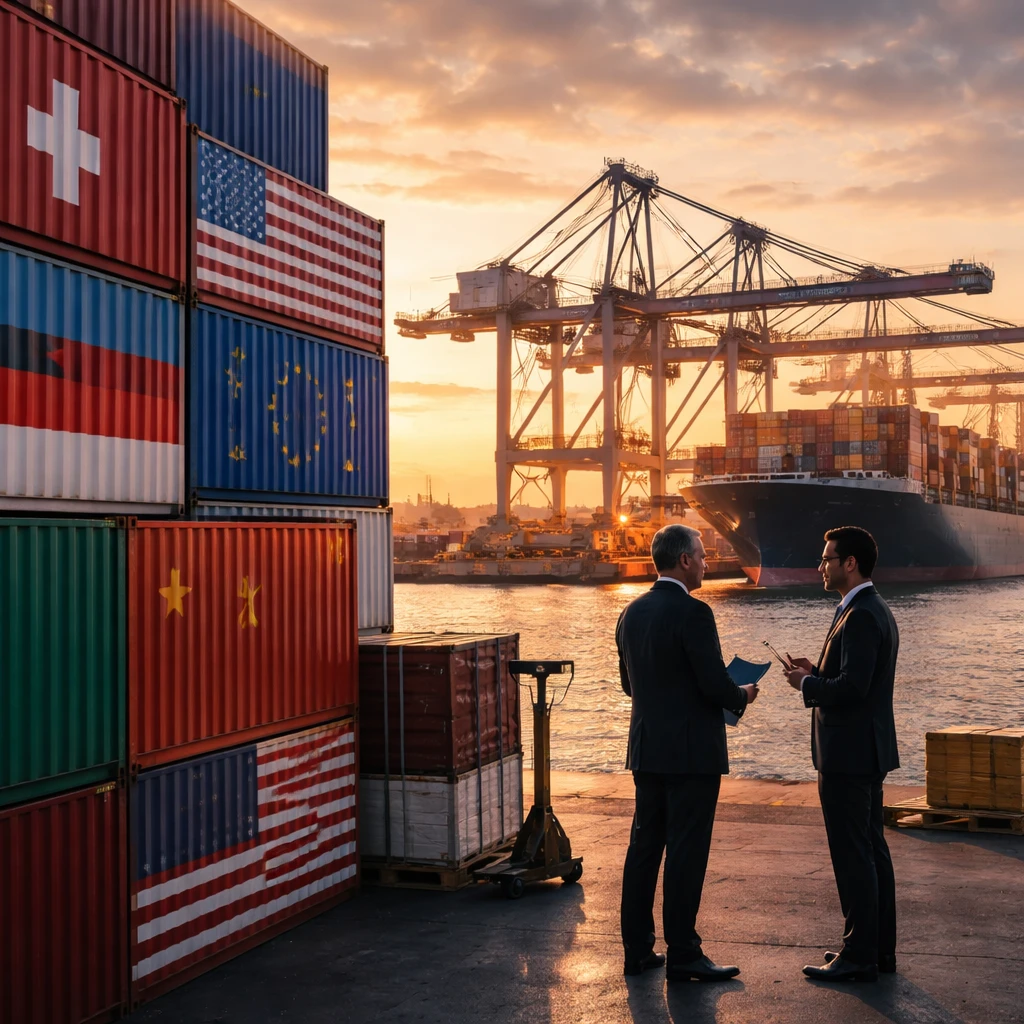
Switzerland has reiterated that talks with the United States are ongoing to finalize a comprehensive trade pact, the Swiss economy ministry said, even after Washington advanced a new tariff proposal targeting imports from major trading partners.
The U.S. proposal would levy tariffs of at least 10% on goods from some 60 partners - a move described by U.S. officials as the largest effort to reinstate a protectionist agenda following the overturning of prior levies by the U.S. Supreme Court. Under details published by the Office of the U.S. Trade Representative, products originating in China, India, Japan, South Korea, Brazil and Switzerland would face a 12.5% tariff. Separately, imports from Canada, Mexico, the European Union, Taiwan and the United Kingdom were listed to receive a 10% tariff following a Section 301 probe into products alleged to contain inputs produced with forced labor.
In response to the U.S. announcement, a spokesperson for Switzerland's economy ministry said Bern remains engaged in negotiations aimed at producing an outcome that will reliably govern bilateral economic relations over the long term - irrespective of unfolding legal and political developments in the United States. The spokesperson also rejected the findings of the investigations referenced in the tariff action, stating that Swiss practices do not harm manufacturers in the United States.
Switzerland's main business federation, Economiesuisse, echoed the government's position, asserting there is no evidence that U.S. goods compete in Switzerland against products incorporating inputs derived from forced labor. The lobby pointed to what it called unequal treatment in the proposed tariff structure, noting that the levies outlined for Switzerland would be higher than those set for the European Union and deeming that disparity unjustified.
The Swiss statements underline a diplomatic effort to separate ongoing trade negotiations from recent U.S. policy moves. Officials in Bern are portraying the talks as aimed at a stable, long-term regulation of economic ties, while also contesting the factual basis of the Section 301 findings as they pertain to Swiss supply-chain practices.
For businesses and market participants, the proposed U.S. tariffs introduce uncertainty for cross-border trade flows and tariff exposure across multiple sectors. Negotiations between the two governments will determine whether a negotiated framework can shield bilateral commerce from the immediate effects of the proposed levies or whether industries will have to adjust to a new tariff environment.