
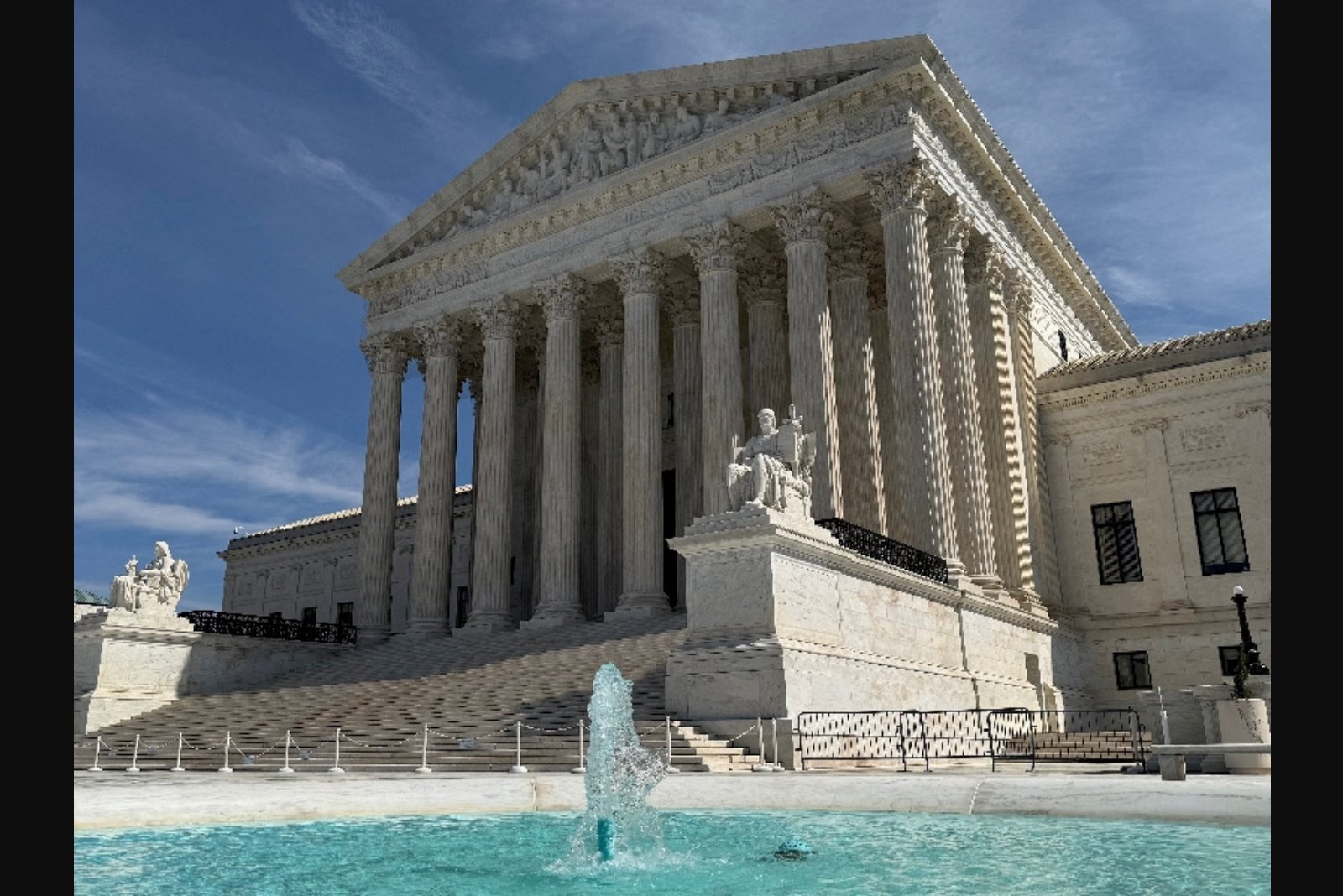
The U.S. Supreme Court on Thursday sided with a Black man on death row in Mississippi who had argued that prosecutors improperly struck Black potential jurors during jury selection in the trial that led to his 2006 conviction and death sentence. The justices concluded that Mississippi state courts did not adequately evaluate the claim under Batson v. Kentucky, the 1986 Supreme Court ruling that bars excluding jurors on the basis of race.
Writing for the majority, Justice Brett Kavanaugh said that the lower courts "unreasonably applied the clearly established Batson precedents and unreasonably determined that Pitchford waived his opportunity to rebut the prosecutor's asserted race-neutral reasons" for dismissing four Black potential jurors. Kavanaugh added that "whether due to confusion, oversight, an overly hurried jury selection process or some other cause, things broke down." He was joined by Chief Justice John Roberts and the court's three liberal justices to form the 5-4 majority.
Justice Neil Gorsuch wrote a dissent, joined by Justices Clarence Thomas, Samuel Alito and Amy Coney Barrett. Gorsuch argued that Pitchford had not satisfied the stringent standards set by a 1996 federal statute that tightened the criteria for federal review of state convictions.
Only one member of the 12-person jury that convicted and sentenced Pitchford to death was Black. At the time of the trial, Black residents comprised roughly 40% of the population of the county where the case was heard. Pitchford's case drew attention to those demographic contrasts and to the way the trial court and state appellate courts addressed Batson claims.
Pitchford, now 40, was 18 when he was arrested and charged in connection with a 2004 armed robbery at the Crossroads Grocery near Grenada in north-central Mississippi. His accomplice fatally shot the store's owner, Reuben Britt, who was white. The Supreme Court's decision effectively reinstated a 2023 ruling by U.S. District Judge Michael Mills that had set aside Pitchford's conviction on the basis that the state courts violated Batson.
The federal 5th U.S. Circuit Court of Appeals in New Orleans later reversed Judge Mills' decision in 2025. With the high court's reversal of that appellate outcome, Pitchford is now positioned to receive further proceedings in state court focused on whether the jury selection process complied with Batson's protections.
Pitchford's attorney, Joseph Perkovich, said the defendant "is now entitled to a fair trial in the state court." Perkovich welcomed the Supreme Court's ruling and added, "We are very pleased to see the court recognize the extreme failure of the state courts to enforce essential protections under the Constitution."
The case bears similarities to a 2019 decision in which the Supreme Court overturned the conviction of Curtis Flowers, another Black man from Mississippi, concluding that the prosecutor had unlawfully excluded Black potential jurors. Doug Evans, the prosecutor in the Flowers case who was found to have improperly struck Black jurors, was also the prosecutor in Pitchford's trial; he is now retired.
This ruling centers on procedural application of Batson and on whether state courts met the constitutional standard in evaluating claims of racially motivated jury exclusions. The decision returns the matter to the state court system for further action consistent with the Supreme Court's interpretation of Batson, while dissenting justices underscored the procedural hurdles raised by the 1996 federal law governing collateral review.