
S&P Global Ratings on Thursday affirmed Bahrain's sovereign credit ratings at 'B/B' for both long- and short-term foreign and local currency debt, and kept the outlook on the long-term rating stable.
The ratings agency said the war in the Middle East has disrupted Bahrain's shipping routes and damaged infrastructure, effects that will slow economic activity and materially hinder efforts to consolidate public finances in 2026. Reflecting those developments, S&P revised its real gross domestic product forecast for Bahrain in 2026 to a 3.3% contraction, down from a prior projection of 0.5% growth. This revision follows a preliminary growth estimate of 3.5% for 2025.
On the fiscal front, S&P now projects a general government deficit of 8.4% of GDP in 2026, wider than the 6.9% deficit it had assumed at its previous review and marginally narrower than a preliminary figure of 8.9% for 2025.
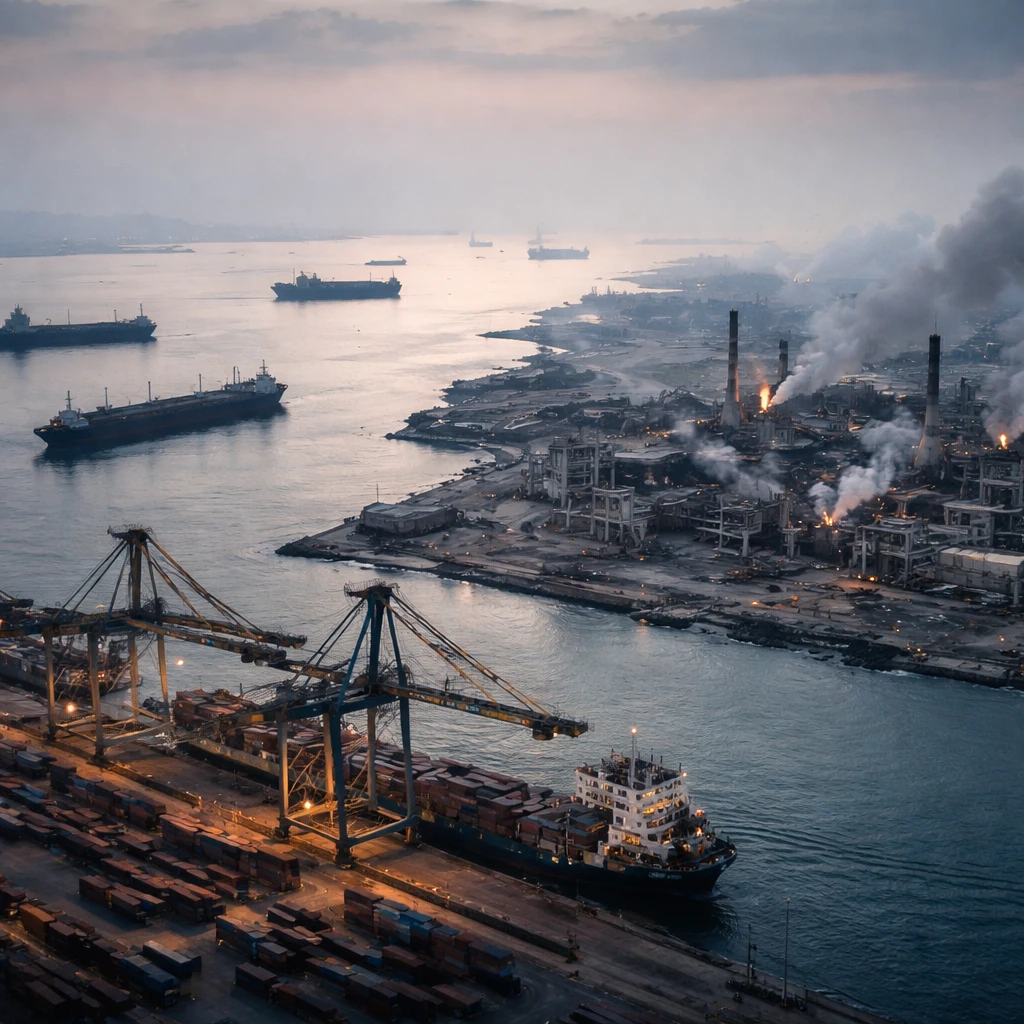
The agency identified disruptions to exports as a key driver of the downgrade in near-term activity. An effective closure of the Strait of Hormuz has impeded Bahrain's oil and aluminum shipments. Bahrain curtailed crude oil production in March as a precautionary move, and S&P forecasts that average crude output for 2026 will remain depressed at about 130,000 barrels per day. State-owned aluminium producer Alba sustained damage in Iranian attacks, which S&P says will contribute to reduced output levels.
Despite these shocks, S&P expects Bahrain to continue receiving support from fellow Gulf Cooperation Council sovereigns. It points to a five-year currency swap agreement signed on April 8 between the Central Bank of the United Arab Emirates and the Central Bank of Bahrain for 2 billion Bahraini dinars as a concrete support measure.
S&P also noted that Bahrain's gross international reserves stood at about $6.5 billion as of March, a position it describes as robust and one that provides the government with flexibility to meet upcoming foreign currency redemptions averaging $2.5 billion per year over 2026-2028.
In laying out its baseline assumptions, S&P said it expects supply disruptions in the Strait of Hormuz to ease in the second half of the year, though it warns that periodic volatility is possible. Under that scenario, the agency projects net general government debt will rise from 127% of GDP in 2025 to 150% of GDP by 2029.
On the external side, S&P forecasts the current account surplus will narrow to 0.2% of GDP in 2026 before improving to an average of 2.1% over 2027-2029.
Context and implications
The affirmation of the 'B/B' ratings with a stable outlook reflects S&P's assessment that Bahrain's external and policy buffers, together with regional support, mitigate immediate risks to sovereign creditworthiness even as near-term growth and fiscal metrics deteriorate. The agency's projections point to a materially larger fiscal deficit in 2026, lower hydrocarbon and aluminium output due to disrupted exports and plant damage, and a marked increase in public-debt burdens by the end of the decade.