
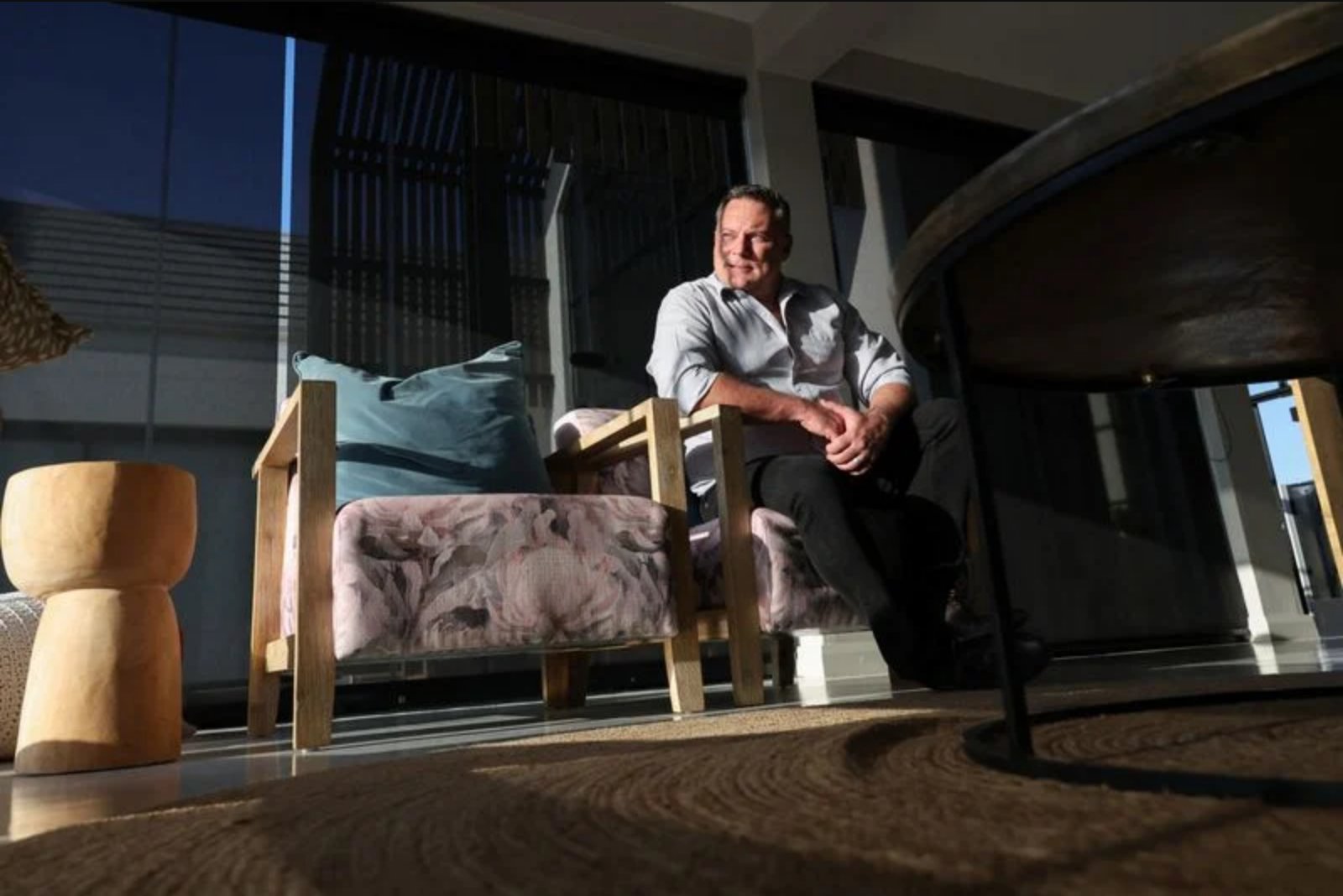
CAPE TOWN, June 2 - SJ Du Venage, a 56-year-old member of a provincial council in South Africa and a former youth leader in the far-right Conservative Party, has pursued relocation to the United States under a refugee programme established by former President Donald Trump. Du Venage, who now represents the Freedom Front Plus in the Western Cape, said his application stems from persistent fears about his safety as a white South African, fears that he says date back to his upbringing during the apartheid era.
Du Venage described a childhood shaped by anxiety about what might transpire if white South Africans lost control of the country, and said those concerns have continued despite an absence of concrete, sustained mistreatment. He is one of a number of Afrikaners applying to a programme that Mr. Trump ordered to assist South Africa's white minority - a group the former president has claimed faces racial persecution, an assertion the South African government rejects as unfounded.
All of Mr. Trump's individual allegations of abuses - including claims of state-sponsored violence and widespread land seizures - have been disproven, according to public statements referenced in this coverage. Nonetheless, Du Venage said he felt unsafe and welcomed the U.S. offer. "When Trump's offer came, it was an opportunity from heaven," he said, speaking from a rented house on the coast in Saint Helena Bay, north of Cape Town.
Du Venage said he sat for a seven-hour interview with U.S. Citizenship and Immigration Services (USCIS) in Pretoria in February as part of an eligibility assessment. He has sold his home and completed the medical and background checks the U.S. requires, and is now awaiting a determination on his refugee claim.
Describing himself as a life coach and former personal trainer, Du Venage said his application rests on a fear of future persecution rather than on direct past harm - a basis the U.S. embassy has said can qualify an applicant for the programme. He noted a threatening message he received from a stranger after organising a memorial for a white farmer whose 2020 killing became a racial flash point. "I was asked in the questionnaire who do I think wants to kill me, and I don't really know," he said, and added that he believed his activism on the issue of farm murders had made him a target.
Farm murders involving white farmers account for a small portion of South Africa's overall homicide figures, which disproportionately affect Black South Africans. Nonetheless, those killings have become a mobilising issue for right-wing activists both within the country and abroad.
The United States has accepted more than 6,000 South Africans as refugees since last year, according to U.S. State Department data cited here, and Washington recently raised the annual cap for this pathway to 17,500 to admit more white South Africans, even while other broader refugee programmes remain frozen.
In South Africa, the scheme is widely regarded by officials and critics as a preferential immigration channel for Afrikaners - a white community largely descended from Dutch settlers - and the government disputes claims that the group faces systematic persecution. Fanie Du Toit, executive director of the Institute for Justice and Reconciliation, described a well-organised lobby in South Africa that is "emphasising white victimhood," a campaign he said has been "hugely emboldened by Donald Trump." Du Toit is associated with "Afrikaners for South Africa," a group that speaks out against the victimhood narrative.
Data cited by the institute from a 2022 nationally representative survey indicate that roughly three in four white respondents said they never or rarely felt unsafe walking in their neighbourhoods, and a similar share described their living conditions as good. By contrast, about one third of Black respondents characterised their living conditions as good, according to the same survey.
Even among Afrikaner political leaders, the appeal of emigration appears limited. Corne Mulder, leader of the Freedom Front Plus, said he appreciated the attention from Mr. Trump but would rather see assistance directed at supporting Afrikaners within South Africa, noting that only a small minority actually want to leave the country.
Du Venage is not an elected public representative, his party says, but he serves on internal party structures. He acknowledged that relocating to the United States would be difficult and said he hopes to be placed in a location with a climate similar to Cape Town's. "The feedback that we get is there is a small percentage that's very lucky, that land in a nice place with a lot of support, but a lot of our people are really struggling," he said.
Summary
SJ Du Venage, a Freedom Front Plus provincial council member and former Conservative Party youth leader, has applied to a U.S. refugee programme created by former President Donald Trump, citing fear of future persecution. He has completed interviews and required checks and is awaiting a decision. The U.S. has admitted over 6,000 South Africans under the pathway and has raised the cap to 17,500; South African experts and survey data challenge the narrative that white South Africans face systemic oppression.
Key points
- SJ Du Venage applied for U.S. refugee status and underwent a seven-hour USCIS interview in Pretoria; he has sold his home and finished medical and background checks and is awaiting acceptance.
- The U.S. has admitted more than 6,000 South Africans under this initiative since last year and increased the annual cap to 17,500, even as other refugee programmes are frozen.
- South African analysts and survey data challenge the claim of systemic persecution of white South Africans; a 2022 survey found roughly three in four white respondents rarely felt unsafe and similarly rated their living conditions as good, compared with about one third of Black respondents who described their living conditions as good.
Risks and uncertainties
- Pending USCIS decisions create uncertainty for applicants regarding relocation timing and outcomes - this affects individuals and could influence demand in housing and resettlement services where applicants settle.
- Conflicting narratives about victimhood and safety may deepen social and political tensions within South Africa, presenting uncertainties for public policy and community cohesion.
- Policy changes in the United States - including cap adjustments and freezes on other refugee programmes - create an uncertain immigration environment for prospective applicants.
Tags: SouthAfrica, Immigration, Refugees, Politics, Afrikaners