
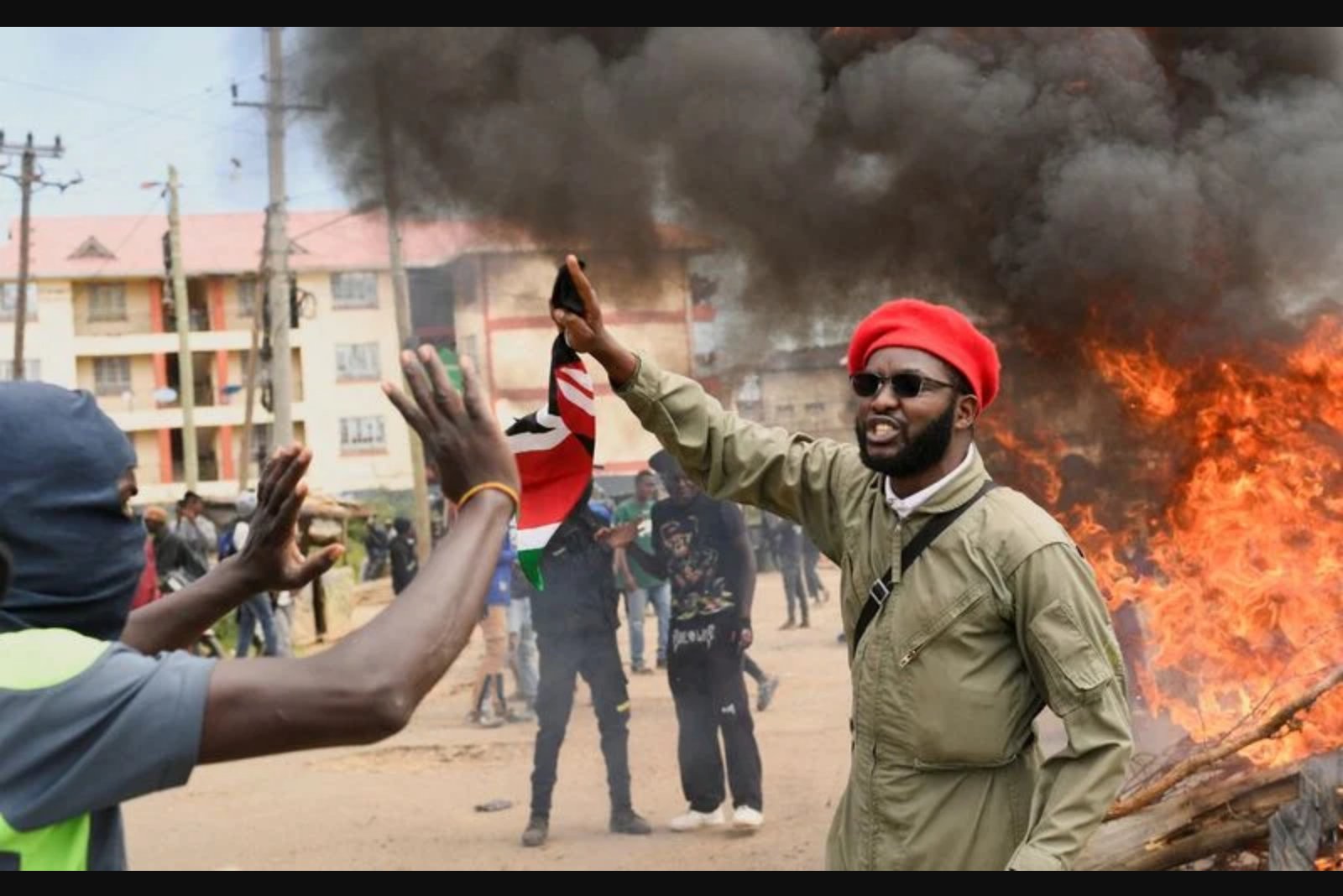
Kenyans received the government’s first direct comments about a planned U.S.-backed Ebola quarantine facility on Monday after residents and local leaders in Nanyuki protested the proposal and a court issued a temporary suspension.
President William Ruto said the establishment of the quarantine site at Laikipia Air Base in central Kenya was part of broader preparedness measures and reflected a long-running public health partnership with the United States. He described the planned facility as comparable to other isolation and treatment sites already operating across the country.
"The facility that is at Laikipia Air Base is not a facility different from all the other facilities that we have across Kenya," Ruto told reporters in northern Kenya late on Monday, urging citizens not to doubt the government's readiness to respond to possible Ebola cases.
The approval for the facility followed a formal U.S. request that Kenya host a site to accommodate Americans who may have been exposed to Ebola. That approval was granted last week by the Kenyan authorities, prompting public debate and resistance in the area surrounding the base.
Residents and local leaders in Nanyuki gathered on Monday to voice opposition to the quarantine plan, saying they fear the facility could put the local community at risk and questioning why Kenyan territory should be used to quarantine U.S. citizens. Their protest came amid mounting public criticism and a legal challenge seeking to block the project.
Ruto said he had agreed to host the facility after U.S. President Donald Trump requested Kenya's support, invoking decades of joint cooperation on health initiatives including HIV/AIDS, Ebola and COVID-19. He emphasized that the site would not only serve foreign partners but would also be available to Kenyans, if needed.
The president noted that Kenya had prepared isolation, surveillance and treatment infrastructure spanning 23 counties and reiterated the government's duty to be ready for any potential Ebola importation, including among Kenyans living or serving in the Democratic Republic of Congo.
The Democratic Republic of Congo and Uganda are managing an outbreak of the rare Bundibugyo strain of the Ebola virus that has so far claimed 48 lives and been declared a public health emergency of international concern by the World Health Organization. The outbreak has, according to available reports, been outpacing the global response, which began later than ideal.
Legal action has directly affected the project. A court last week issued a temporary suspension of the plan after plaintiffs argued that the proposed site could endanger public health. The president did not acknowledge the existence of that court order during his remarks.
There have also been reports of recent U.S. military activity near Nanyuki. Flight-tracking service Flightradar24 recorded a U.S. military C-130 transport plane arriving in Nanyuki as recently as Friday afternoon. Two Nanyuki residents reported sighting military aircraft flying toward the base over the weekend; independent confirmation of whether those were U.S. aircraft was not available in the accounts provided.
On security and prevention measures, Ruto said Kenya has tightened screening at its land and air borders and is processing roughly 3,000 people a day through those checks. He added that there have been no detected Ebola cases in the country to date.
"We are a responsible government. We know what we are doing," Ruto said, stressing the administration's commitment to preparedness while dismissing criticisms of the plan.
Context and next steps
The combination of local opposition, ongoing legal proceedings and international cooperation frames an evolving policy and public-health debate. The temporary court suspension places the project into a period of legal and political uncertainty while government officials maintain that the facility conforms with existing national preparedness actions and bilateral health cooperation.