
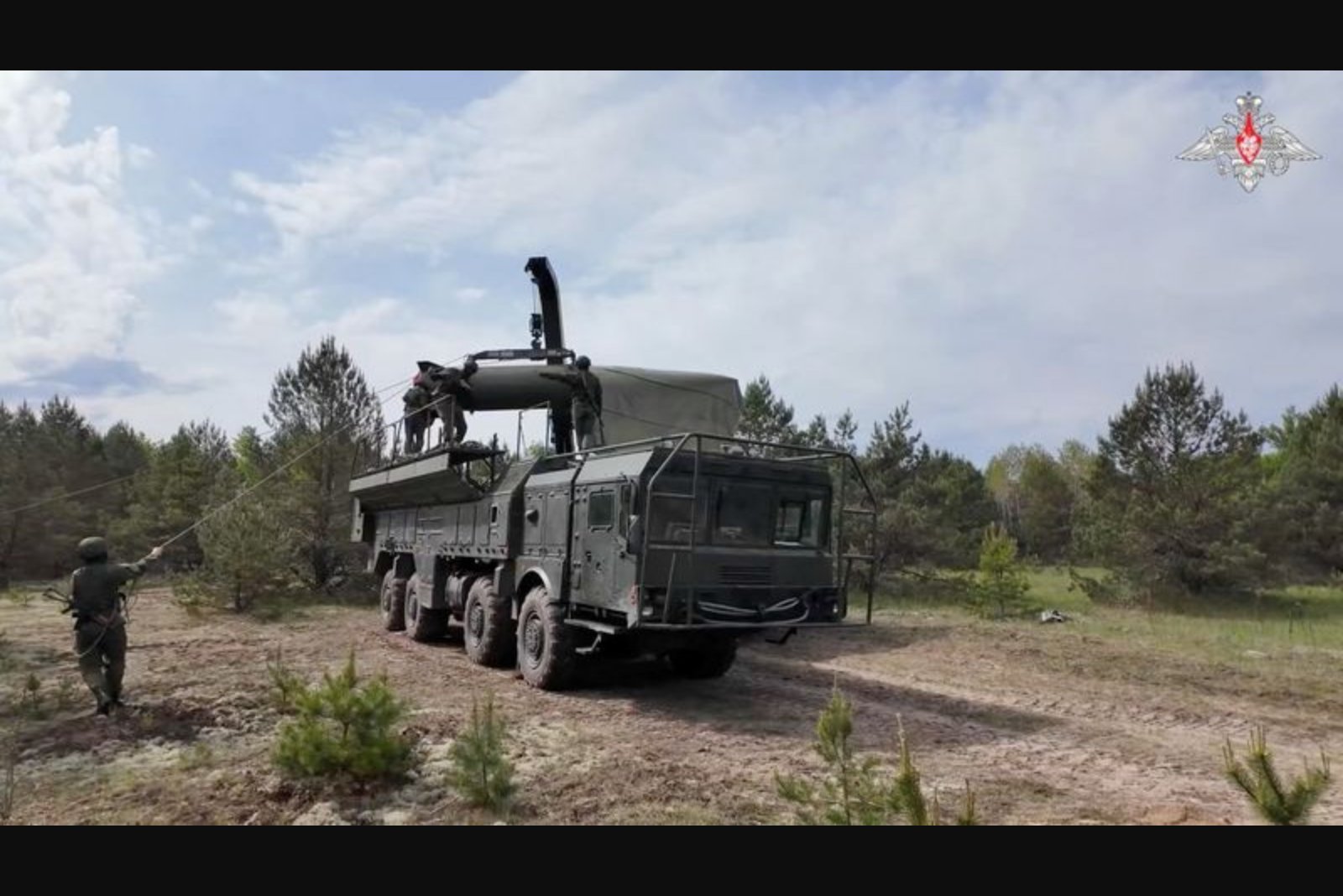
MOSCOW, May 21 - Russia on Thursday transported nuclear munitions to field storage sites in Belarus and staged a public display of strategic weapons systems as part of a broad set of nuclear drills, officials said, in a move that has intensified friction with European NATO members.
The Kremlin is conducting what it described as some of its biggest nuclear exercises in years, mobilising 64,000 personnel to practise the "preparation and use of nuclear forces in the event of aggression." Video and statements released by the Russian defence ministry showed a range of strategic platforms on display, including a Borei-class nuclear-powered ballistic missile submarine, Il-38 anti-submarine aircraft, a MiG-31 fitted with a Kinzhal hypersonic missile, and RS-24 Yars intercontinental ballistic missiles.
The defence ministry said in a statement that: "As part of the nuclear forces exercise, nuclear munitions were delivered to the field storage facilities of the missile brigade’s position area in the Republic of Belarus." The ministry said the exercises draw on the Strategic Missile Forces, the Northern and Pacific fleets, long-range aviation, and units from the Leningrad and Central military districts.
In Belarus, a missile unit is conducting training to receive special munitions for the mobile Iskander-M tactical missile system, with drills including the loading of munitions onto launch vehicles, according to Russian accounts. Moscow noted that Russian nuclear exercises typically use dummy warheads.
Footage released by the defence ministry included a range of scenes - from nuclear submarines, aircraft and warships to a tarp-backed military truck moving with what was described as minimal security. Authorities said the exercises run for three days and began on Tuesday, taking place across Russia and Belarus.
Russian officials framed the drills as operating against the backdrop of what Moscow describes as an existential struggle with the West over Ukraine. Since the start of the war, President Vladimir Putin has repeatedly referenced Russia’s nuclear capabilities as a warning to Western countries to avoid exceeding unspecified limits in their support for Kyiv. Ukrainian officials and some Western leaders have dismissed such signals as irresponsible sabre rattling.
The exercises also come as tensions in the Baltic region have escalated. Russia has accused Baltic countries of permitting Ukraine to fly over their territory to strike targets in northern Russia - an allegation NATO has denied. Baltic state governments, which are strong supporters of Ukraine, counter that Russian forces have redirected Ukrainian drones into their airspace away from intended targets in Russia.
The Kremlin publicly criticised comments by Lithuania’s top diplomat after Foreign Minister Kestutis Budrys said NATO needed to demonstrate it could penetrate the Russian exclave of Kaliningrad. The Kremlin described Budrys’s remarks as "verging on insanity." Kaliningrad, situated between Lithuania and Poland on the Baltic coast, has a population of around one million and is heavily militarised, serving as the headquarters of Russia’s Baltic Fleet.
Reporting details reflect statements and material released by Russian authorities and public comments by regional officials. The account notes the defensive ministry’s descriptions and footage as provided by Moscow.