
Summary
Russian forces have intensified air strikes on major Ukrainian population centers while achieving only modest, incremental gains on the battlefield. The spike in long-range and urban strikes comes as Moscow’s troops are making far smaller territorial advances than they did a year ago, analysts and open-source monitors say. That combination - devastating attacks from the air alongside a sluggish spring offensive in Donbas - may weaken Russia’s negotiating position if the trend continues.
Air attacks and civilian toll
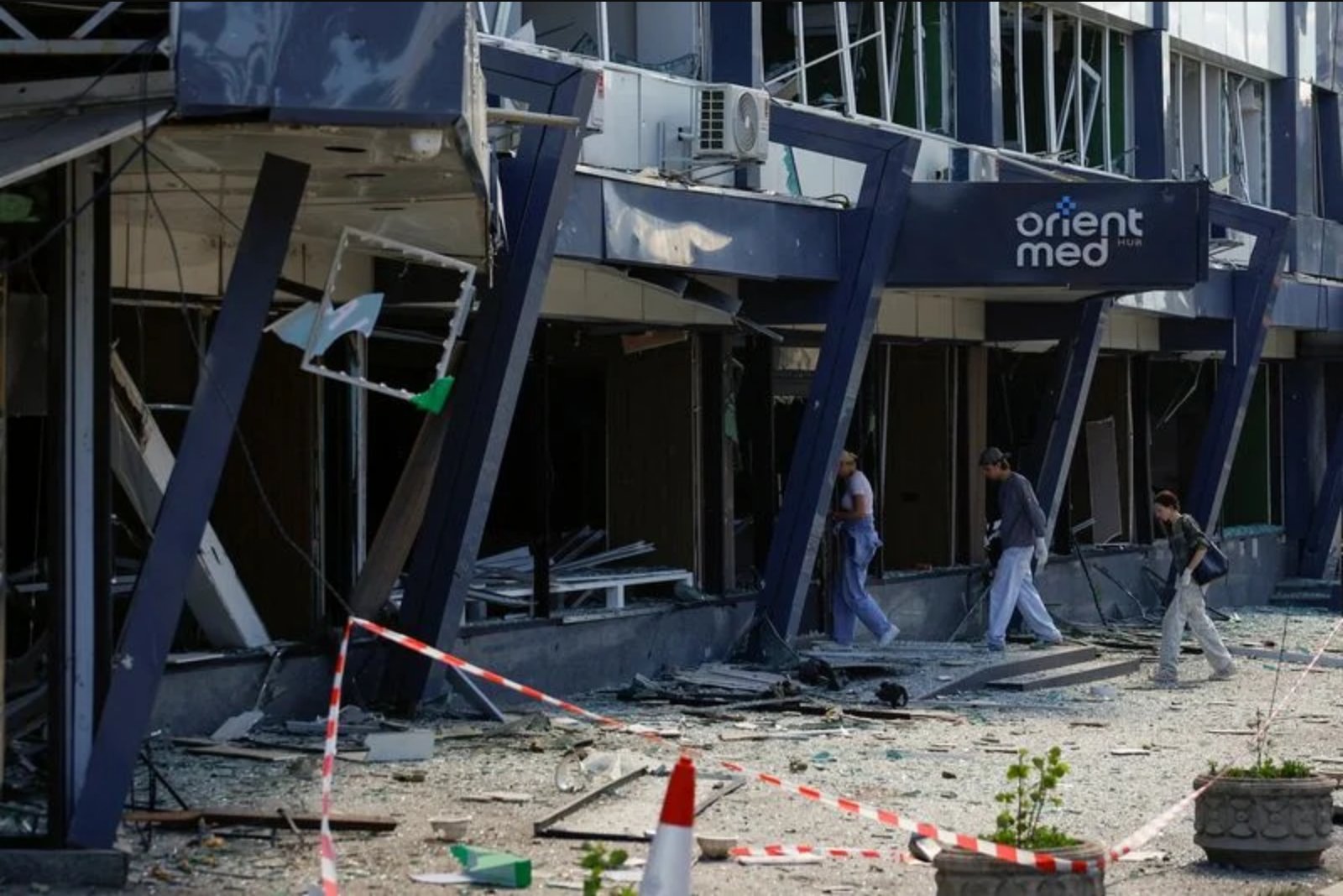
On Tuesday, a series of heavy strikes struck cities across Ukraine, producing a substantial civilian toll. The attacks killed 23 people and wounded more than 130, according to reports. Cities targeted in recent weeks have included the capital, Kyiv, and the southeastern industrial city of Dnipro. The recent assault on Kyiv was the third major strike on the capital within a month.
Analysts and think tanks say the intensification of air strikes on urban and economic targets appears partly designed to blunt Ukrainian advances and to distract from Russia’s difficulties on the ground. In one instance this week, Ukrainian drones attacked an oil export terminal in St Petersburg hours before an annual economic forum opened, a move observers said was intended to apply pressure and embarrass Moscow.
Ground momentum slows
Despite ongoing operations in parts of Donetsk, the pace of territorial capture has slowed markedly. Data shared by the Black Bird Group, a Finnish conflict-analysis team, show that Russian forces took 82 square kilometers of Ukrainian territory in May. That compares with 94 square kilometers in April and 25 square kilometers in March. Those monthly gains are far smaller than the advances recorded during the same months last year, when Russian troops captured 538 square kilometers, 226 square kilometers, and 185 square kilometers respectively.
John Helin, an analyst and co-founder of the Black Bird Group, warned that without a significant increase in momentum, the Kremlin’s objective of seizing Donbas this year appears increasingly out of reach. Around one fifth of Donetsk remains under Ukrainian control, according to the reporting.
Assessments from Western think tanks and open-source groups
The Institute for the Study of War (ISW), a Washington-based think tank, assessed that Moscow’s recent campaign of escalating strikes on Kyiv and other cities serves at least two purposes: to distract from setbacks on the battlefield and to respond to long-range Ukrainian strikes inside Russia. ISW said that President Vladimir Putin is using large strike packages against Kyiv to try to break Ukraine’s will to fight and to mask apparent weaknesses.
Open-source monitor DeepState reported that Russian forces achieved their smallest monthly gains since October 2023 in May - just 14 square kilometers - despite a 37.5% rise in the number of Russian assaults. DeepState suggested that reporting delays on Ukrainian advances could mean Kyiv reclaimed more ground in May than Russia captured, marking a potential first since Ukraine’s failed 2023 counteroffensive.
DeepState’s mapping shows Ukrainian forces made small additional gains in May around the village of Novoselivka, roughly 50 kilometers southwest of Pokrovsk, building on earlier gains in the same area following a successful winter counterattack.
Operational challenges and contested terrain
Observers describe the frontline as a drone-infested, highly contested stretch roughly 1,200 kilometers long where control is often fragmented. In many sectors a so-called grey zone exists where small pockets of troops from both sides are intermingled across several kilometers, making accurate assessment of concrete territorial changes difficult.
Within that environment, the Kremlin has concentrated its spring offensive on what Moscow describes as the Donbas "fortress belt" - a series of strategic towns and cities that stretch from Slovyansk and Kramatorsk in the north to Kostiantynivka in the south. Kyiv continues to refuse to cede the remaining areas of Donbas that Russia seeks to control.
Political and strategic implications
Analysts warn that the slower operational tempo on the ground could erode Russian leverage in future negotiations. President Putin has stated that the conflict cannot conclude unless Russia gains control of the whole Donbas region, which comprises Donetsk and Luhansk. Ukrainian forces still control roughly one fifth of Donetsk, complicating Moscow’s stated objectives.
Brigadier General Andriy Biletsky, commander of Ukraine’s Third Army Corps, told reporters last month that Ukraine had about a six-month window to push Russia onto the back foot and to strengthen Kyiv’s position ahead of any talks. That assessment underscores the limited timeframe some Ukrainian commanders believe exists to shift momentum in Kyiv’s favor.
Industrial strains and weapon stocks
Observers also point to longer-term constraints on Russia’s capacity to sustain large-scale operations. Mathieu Boulègue of the Center for European Policy Analysis said Moscow is contending with reduced industrial capacity under Western sanctions and falling inventories of many categories of weaponry. He argued that those pressures are gradually changing the Kremlin’s cost-benefit calculus when it comes to continuing the conflict.
How those industrial and logistic strains will influence operations at the front - including the mix between ground advances and aerial campaigns - remains a central question for analysts tracking the conflict.
Outlook
For now, Russia continues to press an air campaign against Ukrainian cities and key infrastructure while advances on the ground proceed at a much slower pace than a year ago. The combination of devastating urban strikes, contested frontline dynamics, and indicators of dwindling Russian gains poses uncertainties for both battlefield trajectories and diplomatic leverage in any future settlement talks.