
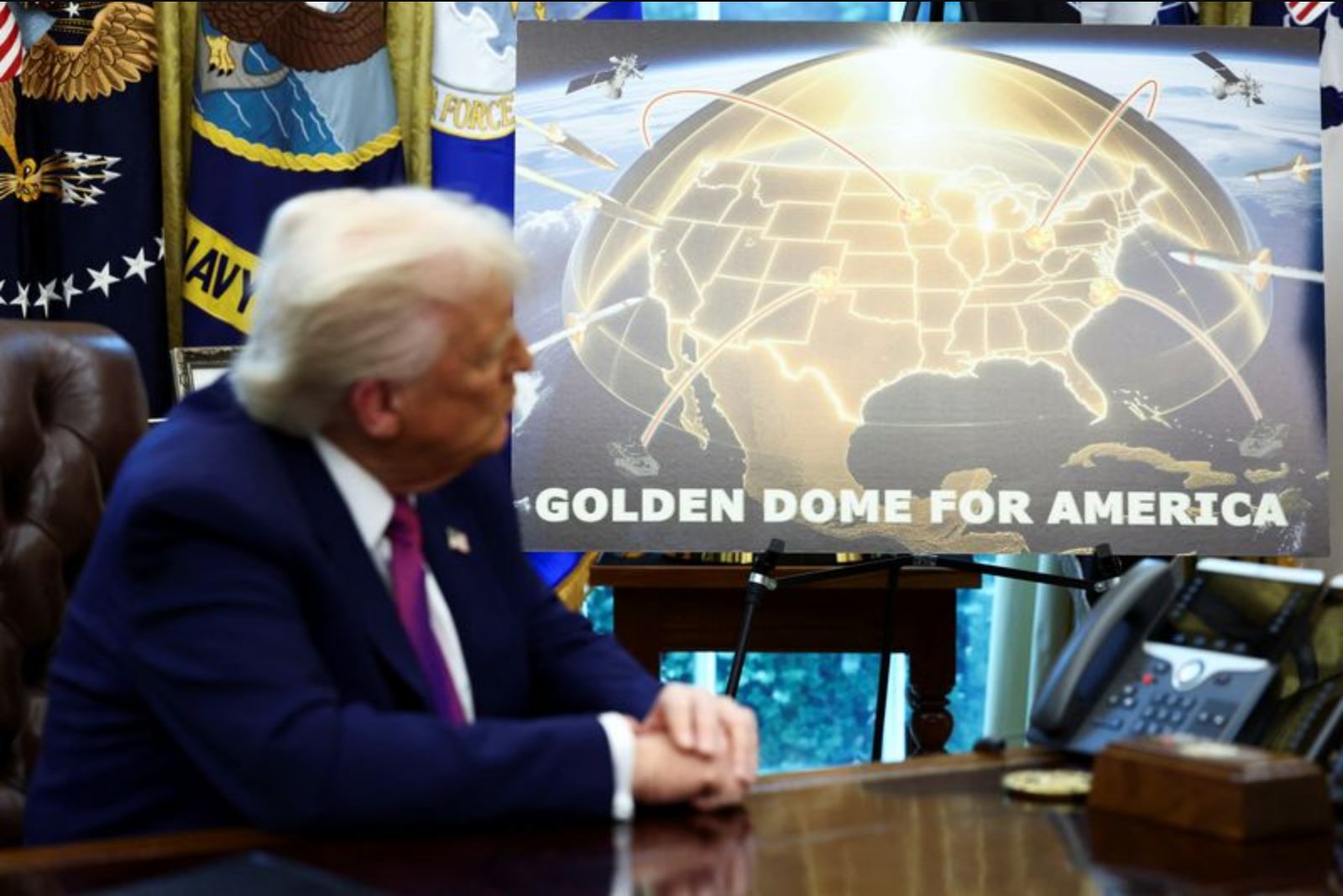
MOSCOW, May 20 - Russia and China said on Wednesday that U.S. President Donald Trump’s plans for a so-called Golden Dome missile-defence system posed a clear threat to strategic stability and that Washington had been irresponsible by not negotiating a replacement for a key nuclear arms treaty.
The joint declaration came after President Xi Jinping received President Vladimir Putin with an honour guard and a gun salute at the Great Hall of the People in Beijing, where children waved Chinese and Russian flags.
In their statement the two governments set out their objections to the Golden Dome concept, describing it as an expansive project that would combine ground-based defences - including interceptor missiles, sensors and command-and-control systems - with space-based elements designed to detect, track and potentially neutralise incoming threats from orbit. The space components, the statement said, would encompass advanced satellite networks and orbiting weapons.
"The parties believe that the U.S. 'Golden Dome' project, which aims to build an unlimited, multi-level, multi-sphere, and global missile defence system to destroy all types of missiles, including all types of 'peer adversaries' missiles, at all stages of their flight and before they are launched, poses an obvious threat to strategic stability," the statement read.
The joint statement continued, "These plans completely contradict the key principle of maintaining strategic stability, which requires the interconnectedness of strategic offensive and strategic defensive weapons."
China and Russia also criticised what they described as the "irresponsible policy" of the United States in permitting the 2010 New START arms control treaty to expire earlier this year without an agreed successor. The two countries said they regretted the absence of a replacement framework to manage nuclear arms relations.
On the question of future arms control talks, Russia said it supported China's position that China would not seek to take part in any potential bilateral U.S.-Russian nuclear arms control negotiations. The joint statement also noted that U.S. critics of renewing New START argue the United States needs relief from treaty constraints to address what those critics contend is China's rapid nuclear expansion.
Separately, the two countries warned that certain unnamed nuclear powers had plans to forward deploy ground-based intermediate- and shorter-range missiles, a step they said would threaten other states. They also condemned attempts by some states to position capabilities intended to enable "preemptive or preventive missile strikes in order to decapitate and disarm the enemy," calling such moves highly destabilising and a strategic danger.
On Wednesday, Russia released footage it said showed troops fitting nuclear warheads to mobile Iskander-M missile launchers, loading them and moving them to launch sites as part of a major nuclear exercise carried out across Russia and Belarus.
Context and implications
The joint Russian-Chinese statement frames Golden Dome as a comprehensive and global defence architecture that, in their assessment, would upset the balance between offensive and defensive strategic forces. Their comments also link that perceived imbalance to the wider problem they identify in the lapse of the New START treaty, and to concerns about the forward deployment of shorter-range missiles and the risks posed by preemptive strike postures.
Information in this article is limited to the contents of the joint statement, the public welcome ceremony in Beijing, the description of the Golden Dome plan as provided, and the footage Russia released relating to the Iskander-M deployments.