
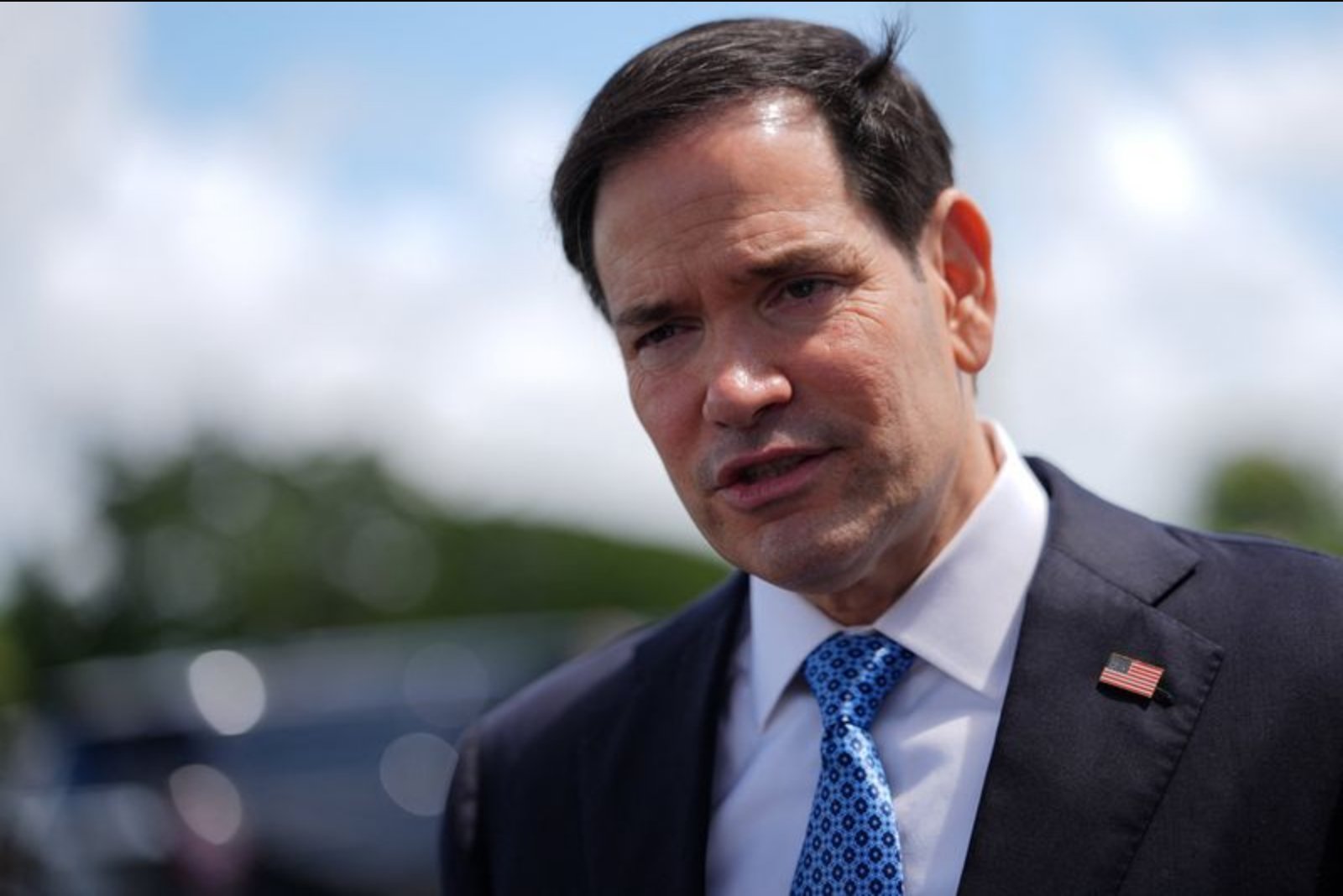
U.S. Secretary of State Marco Rubio is scheduled to meet NATO foreign ministers on Friday in Helsingborg, Sweden, marking his first gathering with the alliance since President Donald Trump raised doubts about NATO’s cohesion amid divisions over the Iran war and following the U.S. announcement to withdraw 5,000 troops from Europe.
Speaking to reporters in Miami before traveling to the Swedish meeting, Rubio said the president was "very disappointed" with alliance members that have not permitted U.S. forces to use bases on their territory, calling out Spain by name. "You have countries like Spain denying us the use of these bases - well then why are you in NATO? That’s a very fair question," he said. Rubio also acknowledged that other NATO members have been cooperative, adding that the matter needed to be discussed.
Trump has publicly criticized NATO allies for not doing more to support the U.S.-Israeli military campaign, and has said he is considering withdrawing from the alliance and has questioned whether the United States would be bound to honour its mutual defence pact. NATO officials, however, have stressed that the United States did not ask the 32-member alliance as a whole to join the Iran war. Many members have nevertheless upheld commitments allowing U.S. forces to use their airspace and military bases.
At the Helsingborg meeting, European foreign ministers are expected to try to mollify the U.S. by emphasizing that they are prepared to assist with freedom of navigation operations in the Strait of Hormuz when conditions permit, and to accept a greater share of responsibility for European security. Iran has restricted traffic through the strait during the war, a development that has factored into discussions about maritime security.
European concern over the U.S. president’s stance on NATO has been amplified this year by the U.S. plan to withdraw 5,000 troops from Europe, a move U.S. officials linked to criticism from German Chancellor Friedrich Merz of Trump’s Iran war strategy. Allies have also been unsettled by how the troop movement was communicated - with U.S. statements initially saying troops would be withdrawn from Germany, followed by a later message that a brigade deployment to Poland would be delayed.
Washington has additionally announced that a planned deployment of long-range Tomahawk missiles to Germany will not go ahead. The United States also plans to reduce the pool of military capabilities it makes available to NATO in a crisis, according to three sources familiar with the matter.
NATO’s top commander, U.S. Air Force General Alexus Grynkewich, sought this week to reassure European allies about the recent U.S. decisions. He said any further drawdowns of U.S. forces would be spread out over years to provide allies time to develop replacement capabilities. "As the European pillar of the alliance gets stronger, this allows the U.S. to reduce its presence in Europe and limit itself to providing only those critical capabilities that allies cannot yet provide," Grynkewich told reporters at NATO headquarters on Tuesday.
As ministers convene in Sweden, key issues on the agenda include allied access to bases and airspace, plans for cooperation in maritime corridors such as the Strait of Hormuz, and how NATO partners can fill capability gaps if the U.S. lowers the volume of forces and resources it commits to the alliance in a crisis. The meeting comes amid heightened diplomatic strains caused by public criticism from the U.S. president and a series of military planning changes that have surprised several allies.
Rubio’s comments, and the sequence of U.S. decisions on troop movements and weapons deployments, underline the immediate topics NATO ministers will need to address as they seek to clarify burden-sharing, operational access and the alliance’s forward posture in Europe and in critical maritime routes.
The outcome of the discussions in Helsingborg will shape how NATO members coordinate on operational access for U.S. forces, maritime security in contested waterways, and the pace at which European partners must accelerate capability development to offset a reduced U.S. footprint.